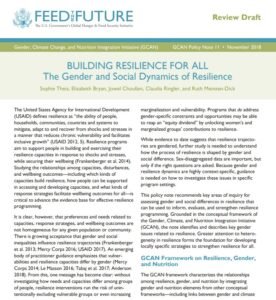
Without investigating how needs and capacities differ among groups of people, resilience interventions run the risk of unintentionally excluding vulnerable groups or even increasing marginalization and vulnerability.
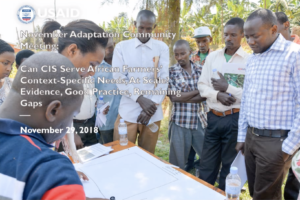
Access to relevant climate services for farmers in sub-Saharan Africa has increased substantially over the years, yet uptake and integration in decision making remains highly variable.
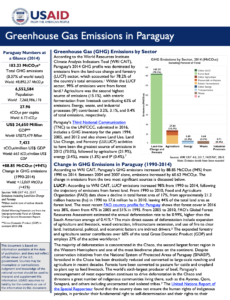
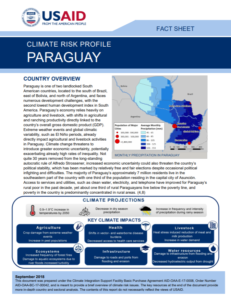
This factsheet breaks down greenhouse gas (GHG) emissions in Paraguay in 2014 by sector, emissions trends, how emissions relate to gross domestic product (GDP) and the country’s mitigation strategies.
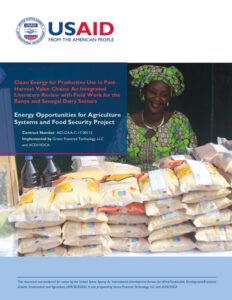
This report highlights key findings from research conducted on the USAID-funded Energy Opportunities for Agricultural Systems and Food Security Project (E4AS Project).
This profile provides an overview of climate risks in the Kyrgyz Republic, including how climate change will potentially impact six key sectors in the country.
This panel brings together representatives from across USAID to share perspectives and lessons on how to catalyze SBC as a tool to enhance resilience to climate change.
On October 18, 2018, the CEADIR Discussion Series hosted a webinar on CEADIR’s economic analysis of mangrove restoration versus an earthen dike alternative.
This profile provides an overview of climate risk issues in Egypt, including how climate change will affect coastal zones, water resources, agriculture, and the health and tourism sectors.