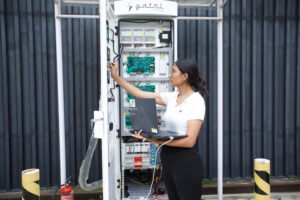
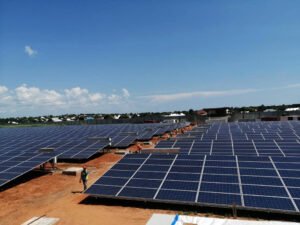
The USAID Sustainable Energy for Indonesia's Advancing Resilience (USAID SINAR) activity provided support to the Ijen project, which is expected to leverage $227 million in financing and achieve generation capacity of 110 MW.
Did you miss the Climatelinks December newsletter? Please find a recap of the December ‘Year in Review’ theme. You won’t want to miss this short list of top resources and blogs from the month.
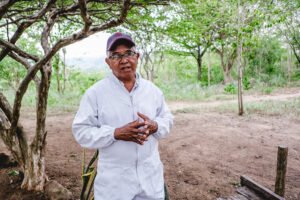
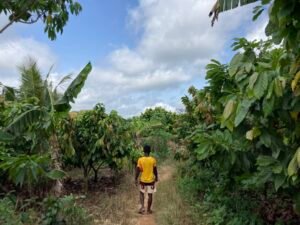
In Montes de María, José Ibañez is rebuilding one corner of the forest through beekeeping and the use of cross-pollination to improve the lives of farmers and protect the forests that remain.
Climatelinks has published over 1,200 blogs, including nearly 150 this year. These blogs provide valuable insight for practitioners working at the intersection of climate and development. Here are some of the most visited blogs published in 2024.
Climatelinks’ blogs synthesize knowledge, tools, lessons learned, and best practices that are relevant for climate change and development practitioners. Here are a few insightful blogs you may have missed in 2024.
USAID’s CASA supports the AAI to unlock critical adaptation funds from the GCF. In 2024, CASA continued this work by helping accredited entities apply for funding from GCF
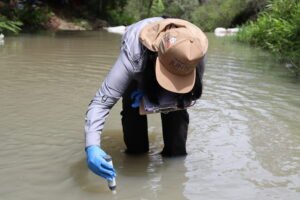
To address the area’s climate risks, USAID’s Resilient Waters Program conducted a Livelihoods-focused Climate Risk Assessment to inform and stress test the KAZA TFCA’s Livelihood Diversification Strategy.
Climatelinks’ resource library curates and archives technical guidance and knowledge related to USAID’s work at the intersection of climate and development. Climatelinks published more than 100 resources in 2024. Here are a few you may have missed.
In two years of operations, USAID’s Climate Finance for Development Accelerator has mobilized $380.7 million of sustainable investment towards its goal and worked with partners to strengthen local ecosystems in over 60 countries.
As leaders gather in Azerbaijan for COP29, climate finance remains a priority conversation for governments, donors, and other stakeholders. Access to finance is a critical adaptation bottleneck across USAID partner countries in Africa.
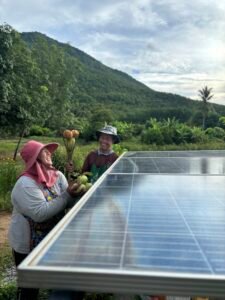
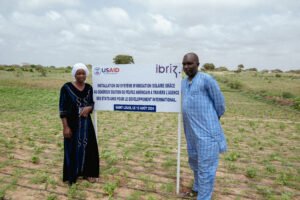
USAID’s Scaling Up Renewable Energy Senegal program works at the intersection of agriculture, water, and energy through its efforts to solarize water pumps.
USAID-NREL's RE Data Explorer is a great example of how digital technologies can play a role in promoting clean energy and addressing the climate crisis.
At previous COPs, USAID launched or announced its participation in a variety of climate initiatives that help create a more climate-secure future. Here’s a roundup of Climatelinks blogs highlighting their progress.
CACCI was launched at COP26 with the goal of identifying promising mitigation and adaptation investment opportunities with private sector partners to help countries meet their climate commitments and strengthen their climate resilience.
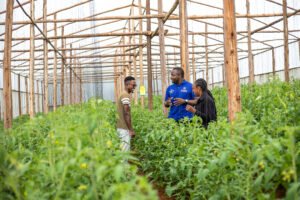
Forecasting tools and simple, low-cost interventions can help farmers adapt to some of the worst impacts of climate change-driven extreme weather events in Central America.
The Millennium Challenge Corporation and USAID launched a new report, Resilience at Scale, to outline this paradigm shift to accelerate and scale up resilient infrastructure in developing countries.