This brief discusses policy-level changes to enhance and strengthen the role and functioning of extension and advisory services in addressing climate change adaptation and mitigation.
From 2014 to 2019, Feed the Future implemented the groundbreaking Resilience in the Sahel Enhanced (RISE I), a five-year, $348 million effort to help vulnerable communities break the vicious cycle of crisis.
In FY 2023 USAID supported its partners to: prevent 295 million tons of greenhouse gas emissions, help communities in more than 60 countries build their resilience to climate impacts, conserve 82 million hectares of tropical rainforests, and mobilize $16.7 billion in outside public and private finance on top of USAID’s work.
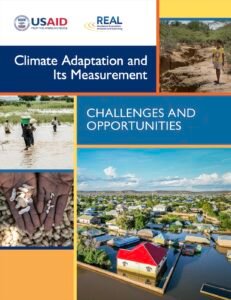
This document provides an overview of the challenges and current approaches to climate adaptation measurement, as well as guiding principles and their real world application for program implementation and monitoring.
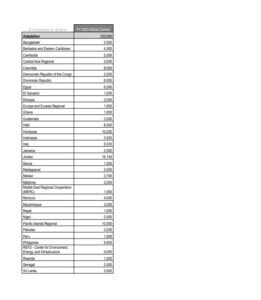
In FY23, USAID budgeted $579 million for adaptation, clean energy, and sustainable landscapes programs to address the most urgent needs posed by the climate crisis.
In the first half of Fiscal Year 2024, CASA continued to provide high-quality, on-demand strategic support and leadership to USAID Missions, Bureaus, and Operating Units.
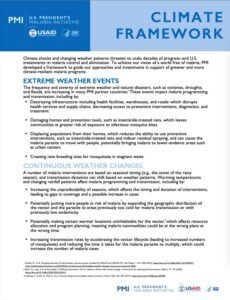
Climate shocks and changing weather patterns threaten to undo decades of progress–and U.S. investments–in malaria control and elimination. To achieve our vision of a world free of malaria, PMI developed a framework to guide our approaches and investments in support of greener and more climate-resilient malaria programs.
The ability to fail as a pre-condition for the development of highly innovative solutions is well documented in many sectors. The key question driving the investigations in the work is: Are we allowing enough failure for innovation to thrive?
Innovation Hubs provide new ways to understand stakeholder needs and challenges, foster co-creation of ideas to action, incubate and accelerate ideas, foster policy innovation, design and implement pilots, and enhance access to finance.
The Prosperous and Resilient Landscapes activity reduces land-based greenhouse gas emissions and increases carbon sequestration in Guatemala, while boosting economic growth.
NREL performed an initial feasibility analysis and stakeholder engagement project to evaluate the potential for agrivoltaics in mini-grid contexts in Haiti.