The ADAPT Asia-Pacific project not only supports government agencies in the preparation of specific climate change adaptation projects, but also aims to build capacity of governments in the Asia region to independently access climate adaptation financing.
CityLinks, funded by USAID, allows cities in developing and transitioning countries to draw on the resources of U.S. local governments to develop sustainable solutions tailored to the real needs of their communities.
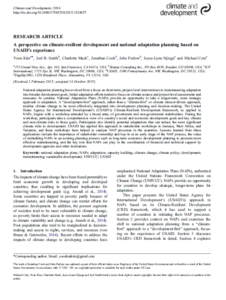
National adaptation planning has evolved from a focus on short-term, project-level interventions to mainstreaming adaptation into broader development goals.
On February 18, 2016, USAID's Adaptation Community Meeting held a discussion on the economic impact of seasonal drought forecast information in Jamaica with speakers James Buizer and Tauhidur Rahman.
Following December’s Paris Climate Agreement, what are the financial realities of public and private investment in sectors and initiatives that support climate change mitigation and adaptation?
Gender mainstreaming in the energy sector is taking place from national policies, to institutional reforms and project development, increasing energy access and providing low emission development pathways for many around the world.
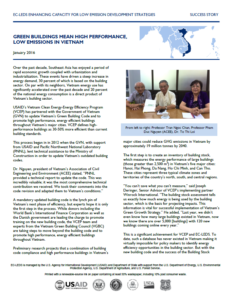
Research suggests that a combination of updated building code compliance and newer, high performing buildings in Vietnam could yield a significant reduction in greenhouse gas (GHG) emissions by 2040.
The fourth publication in the USAID Adapt Asia-Pacific Adaptation Finance Knowledge Series presents the methodology used in the Pacific Cost-Benefit Analysis Initiative (P-CBA) training workshops.
This guidebook is designed to help utilities in coastal and small island states identify and assess climate change impacts that threaten their operations.