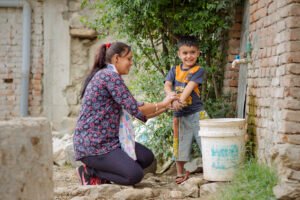
USAID uses evidence from the latest research on behavior change to inform human-centered climate solutions across sectors—including in water security, sanitation, and hygiene.
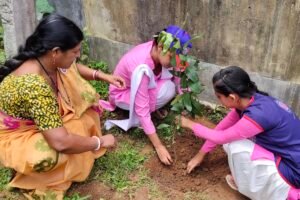
A better understanding of agency through a gendered lens will enable health-focused social and behavior change programs to produce transformative results.
The world is witnessing the highest levels of migration on record, and climate change will increasingly drive this trend. Estimates indicate that by 2050 over 216 million people could move within their countries for climate-related reasons.
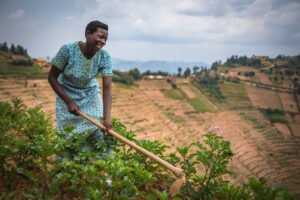
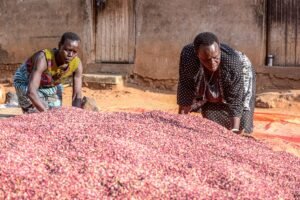
A USAID project in Uganda is helping smallholder farmers boost their resilience to an increasingly unpredictable climate by using a market systems approach that addresses obstacles to adopting CSA practices.
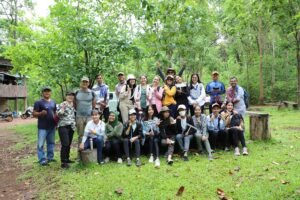
Forests and wildlife are important parts of Cambodia's national heritage, but they are rapidly disappearing from the country’s landscapes and protected areas, due to overexploitation, land use change, climate change, and conservation crimes.
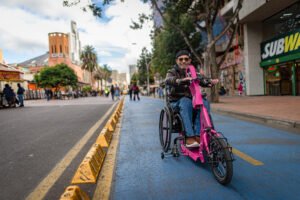
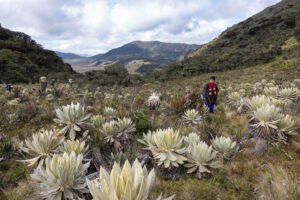
Bike sharing systems play a pivotal role in promoting sustainable transportation within cities, especially in regions where the demand for innovative mobility options is pressing. The city of Bogotá, Colombia has established an extensive bike sharing system, showcasing the city's commitment to sustainable and accessible urban mobility.
Please find a recap of the August 2023 ‘Land’ theme below. You won’t want to miss this short list of top programs, resources, and blogs from the month.
The world faces a profound climate crisis that requires collective action and integrated solutions. Here are three ways that USAID’s investments in integrated family planning approaches are addressing the climate crisis.
The USAID/Uganda Biodiversity for Resilience (B4R) Activity supports the National Forestry Authority to conserve Central Forest Reserve water towers, including in Karamoja.
Here are four ways USAID supports African leaders across the continent to advance their ambitious climate goals and move toward a cleaner, safer, more equitable Africa.
The Board for International Food and Agricultural Development (BIFAD) Subcommittee on Systemic Solutions for Climate Change Adaptation and Mitigation in Agriculture, Nutrition, and Food Systems has released a draft commissioned report, "Operationalizing USAID’s Climate Strategy to Achieve Transformative Adaptation and Mitigation in Agricultural and Food Systems." Please join a hybrid public meeting on September 11, 2023, from 10:00 am –3:30 pm EDT to share and discuss the main findings, targets, and recommendations.
In April 2022, USAID released their new Climate Strategy which will guide the Agency’s approach to reducing global greenhouse gas emissions, improving overall operations, and helping partner countries build resilience to climate change through 2030. InterAction began refining and deepening our community’s understanding of climate change’s impacts, sharpening our recommendations for a comprehensive USG response.
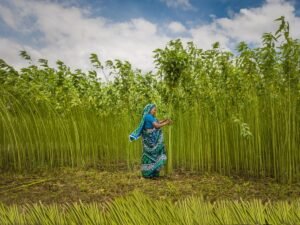
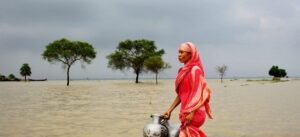
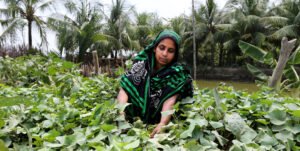
Bangladesh is a land-scarce country with a high-density population. However, land use changes and the impacts of climate change are rapidly reducing the amount of arable land. Bangladesh requires an increased investment in sustainable land use planning to both increase economic growth and ensure food security for its growing population.
This interview with Serge Ramanantsoa, USAID/Madagascar, is part of the DDI/EEI/LRG Women’s Land Rights Champions series, which profiles staff across USAID Missions and operating units who are working to advance women’s land rights.
The interconnectedness of life on Earth has never been more apparent, and the Famine Early Warning Systems Network (FEWS NET) is using this perspective to explore how climate-sensitive health threats that impact food security and human well-being can be better predicted to help save lives.