Explore these resources, blogs, and events covering topics at the intersection of climate change and health, shared with us by Climatelinks community members.
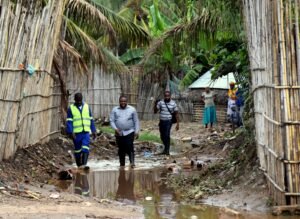
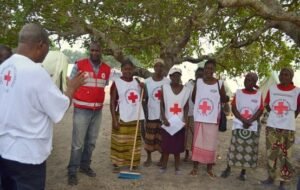
Facing an unusually heavy rainy season, an ongoing cholera outbreak and growing concern about the spread of malaria and other diseases, the Government of Mozambique is turning to USAID for strategies to address climate and weather risks in health sector decisions.
To help decision makers target resources to areas of Sub-Saharan Africa where they are needed most, USAID is supporting a hotspots mapping initiative to identify places where the potential for weather variability and climate change pose the gravest threat to human health.
A new report, Risk Expands but Opportunity Awaits: Emerging Evidence on Climate Change and Health in Africa by USAID’s Adaptation, Thought Leadership, and Assessments (ATLAS) project captures health risks associated with climate and weather variability.
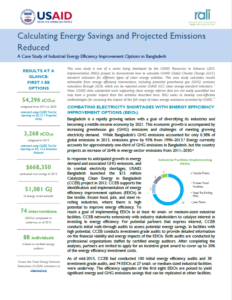
USAID supported an assessment of the energy and greenhouse gas emission benefits associated with eight energy efficiency improvement options using the online Clean Energy Emission Reduction (CLEER) Tool.
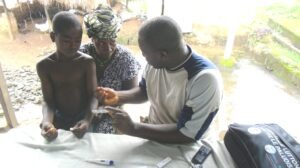
Dr. James Colborn studies how factors such as ecology, immunology, and human behavior interact and contribute to outbreaks of malaria. An increasingly important component to his work is the role ocean temperatures, weather variability and other climate trends play with malaria risk and infection.
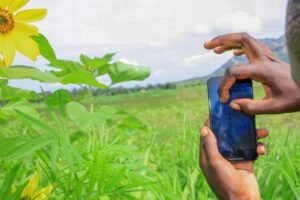
In March, we focused on USAID’s approach to improving sustainable land managment for climate change resilience and mitigation, and the use of mobile technology to strengthen land tenure and management.
At the March Adaptation Community Meeting, Ryan Bartlett shared how WWF, in collaboration with Columbia University’s Center for Climate Systems Research, is taking on the challenge of developing and sharing easy-to-use and understandable climate information.
South African government leaders recently learned how they can efficiently advance their low emission development planning by using the Clean Energy Emission Reduction (CLEER) Tool.
This month Climatelinks focuses on approaches to land management for achieving climate change benefits and resilience. We are highlighting ways in which climate change affects land and natural resources and how improved land management increases resilience and mitigates climate change.
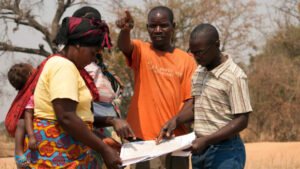
Relative to other countries in the region, Zambia has an abundance of fertile land, water, and a favorable climate for agricultural production. Yet, despite these favorable conditions, crop yields are well below global averages and 80 percent of rural Zambians live in extreme poverty.
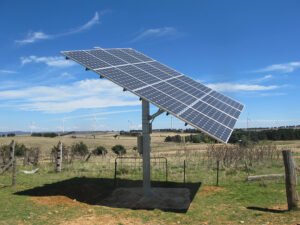
The International Jobs and Economic Development Impacts (I-JEDI) tool, a publicly available economic model, helps policymakers and practitioners analyze economic impacts of renewable energy development.
The new RE Explorer is a user-friendly tool that addresses these needs by using spatiotemporal renewable energy data to visualize, execute, and support analysis of renewable energy potential under various user-defined scenarios.
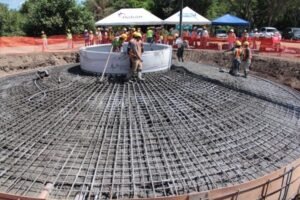
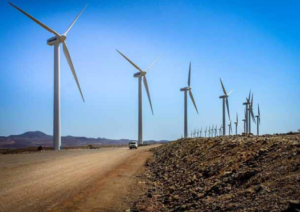
A new case study analyzes the benefits of the Lake Turkana Wind Power Project (LTWP) and presents important lessons for maximizing social, environmental and economic returns for other large wind projects in the region and beyond.
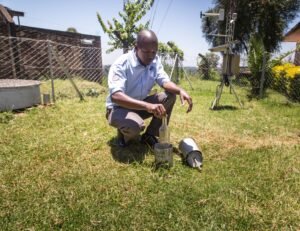
USAID is investing in a learning agenda on climate services, to learn more about their effectiveness and the socio-economic circumstances that constrain their use to inform future investments in climate services in Sub-Saharan Africa.