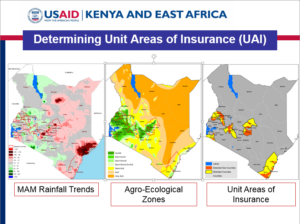
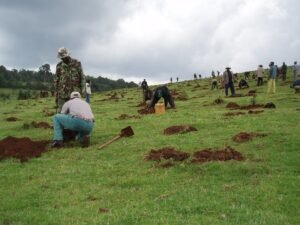
The July Adaptation Community Meeting featured USAID PREPARED’s efforts to improve access to climate information in five East African countries (Burundi, Kenya, Rwanda, Uganda and Tanzania).
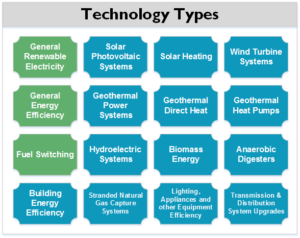
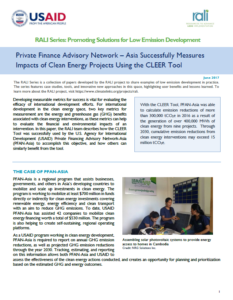
The CLEER Tool is a user-friendly online calculator based on internationally accepted methodologies enabling users to calculate emissions reduced or avoided from clean energy actions.
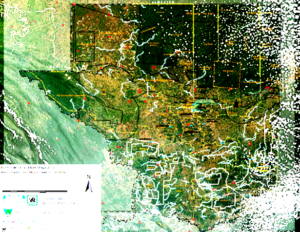
Working with Guatemala’s National Council for Protected Areas and other partners, SERVIR provided technical resources for satellite-based data products to monitor fires across Petén, where fire risk is projected to rise due to higher temperatures and longer dry spells.
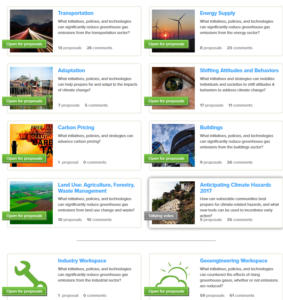
Want to problem-solve on climate change? The MIT Climate CoLab, an online crowdsourcing platform of nearly 90,000 members, launches seven new climate contests.
This July Climatelinks is focusing on ecosystem-based adaptation. Climatelinks would like to hear from you! What work are you or your organization doing around ecosystem-based adaptation?
At USAID, development practitioners assess, address, and adaptively manage climate risks to ensure that programs are resilient in the face of changing climate.
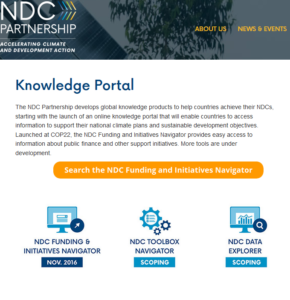
The NDC Partnership recently launched the NDC Toolbox Navigator, an online platform designed to connect those involved in planning and implementing NDCs with the tools they can use to support planning and implementation.
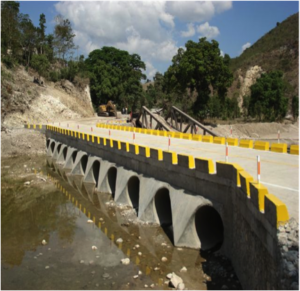
Two examples of infrastructure development demonstrate how investment in planning and engineering design, that is considerate of future climate conditions, can result in more resilient infrastructure outcomes.
Through climate risk management — a structured process to assess and address risks and identify opportunities — USAID can improve the impact and sustainability of its efforts, safeguarding billions of dollars in investments.
Climatelinks is focusing on climate risk management this month. Explore the following resources and blogs covering this topic, shared with us by Climatelinks community members.
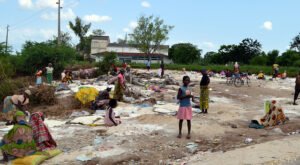
The Coastal City Adaptation Project was spotlighted at the May monthly Adaptation Community Meeting. The project has had a range of valuable, scalable experiences, particularly in its sustained support for two major cities, Pemba and Quelimane.
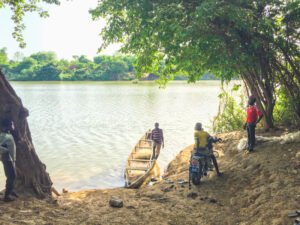
Hydropower is growing rapidly worldwide as a clean and renewable energy source that helps countries enhance energy security and curb greenhouse gas emissions, depending on location.
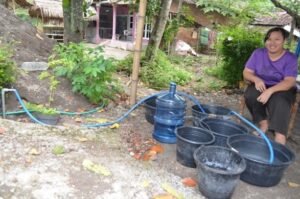
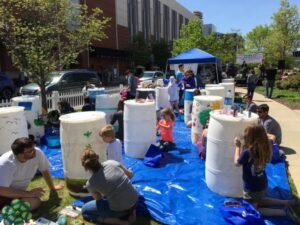
Owing to their geography and location, small island states are some of the most vulnerable countries. Barrels by the Bay has shown that even small efforts can be part of the solution.
The NDC Partnership recently launched the NDC Toolbox Navigator. The Toolbox Navigator is an online resource focused specifically on resources that support NDC implementation.
Climatelinks is focusing on climate risk management for the planning, design and implementation of international development interventions. Both through the Climatelinks portal and via Twitter @climatelinks, we highlight case studies, methods, tools and resources that support climate risk management.
At the April 20th Adaptation Community Meeting, Erica Hovani and Ekhosuehi Iyahen from African Risk Capacity (ARC) tackled the complex but increasingly important topic of insuring countries against climate risks.
The USAID Resources to Advance LEDS Implementation (RALI) Project has teamed up with the NDC Partnership Support Unit on the development of a new online navigator tool to help countries identify tools and methods to help achieve their climate commitments.
USAID’s Bureau for Policy, Planning and Learning’s Office of Learning, Evaluation and Research is now accepting submissions for the third-annual Collaborating, Learning and Adapting (CLA) Case Competition through Friday, June 16.