This report presents a strategic approach that can guide USAID missions in addressing health system stressors and shocks, while supporting countries on the journey toward self-reliant, prepared, and resilient health systems.
This resource is a disaster risk financing conceptual framework to assist humanitarian donors, practitioners, and their partners (governments, local communities, etc.) to develop and implement more effective disaster risk financing activities.
This policy brief focuses on “risk-informed” approaches that bridge the gap between long-term action to reduce exposure to hazards or their impacts and reactive humanitarian response.
From 2016 to 2023, USAID Climate Ready actively worked across the Pacific to draft and implement climate change adaptation policies, facilitate access to climate finance through project preparation and accreditation support, and improve adaptation project management capacity.
The Forest Service and partners, through the SilvaCarbon program Women in Forest Carbon Initiative, are trying to get more women involved in forest and carbon monitoring. Learn about the program that is pairing young climate professionals with mentors around the world and hear from the inspiring women who are taking part.
To date, USAID Climate Ready has assisted in the mobilization of over US$680,000 from small grants facilities for community-level adaptation projects in FSM.
This technical brief provides guidance on developing effective, evidence-based social and behavior change programming to achieve water security, sanitation, and hygiene development objectives.
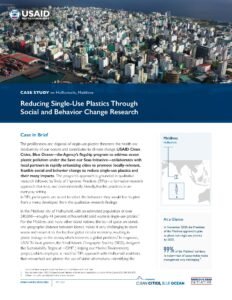
The proliferation and disposal of single-use plastics threatens the health and biodiversity of our oceans and contributes to climate change. USAID Clean Cities, Blue Ocean collaborates with local partners in rapidly urbanizing cities to promote locally-relevant, feasible social and behavior change to reduce single-use plastics and their many impacts.
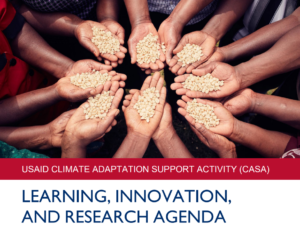
CASA’s Learning, Innovation, and Research Agenda (LIRA) identifies key questions that require immediate and sustained attention as USAID implements the adaptation component of the Climate Strategy.
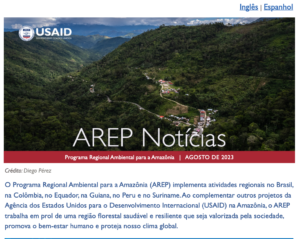
Temos muito prazer em apresentar a última edição do boletim do AREP. Neste trimestre, destacamos a parceria da USAID com comunidades indígenas para comemorar o Dia Internacional dos Povos Indígenas, em 9 de agosto, e o Dia Internacional da Mulher Indígena, em 5 de setembro.
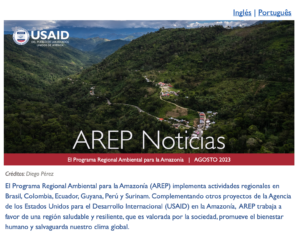
Nos complace presentar la última edición del boletín AREP. En este trimestre, destacamos las alianzas de USAID con grupos indígenas en conmemoración del Día Internacional de los Pueblos Indígenas (9 de agosto) y el Día Internacional de la Mujer Indígena (5 de septiembre).
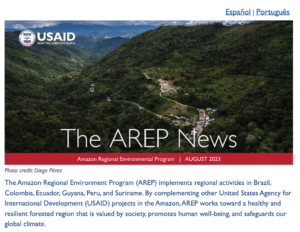
This quarter, we highlight USAID’s partnership with Indigenous groups in honor of International Day of the World’s Indigenous Peoples (August 9) and Indigenous Women’s Day (September 5).
The overall goal of the 2022–2027 Strategic Framework for the Pacific Islands is to advance a more democratic, prosperous, and resilient Pacific Island region.
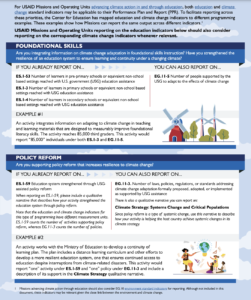
For USAID Missions and Operating Units advancing climate action in and through education, both education and climate
change standard indicators may be applicable to their Performance Plan and Report. To facilitate reporting across
these priorities, the Center for Education has mapped education and climate change indicators to different programming
examples.
This whitepaper introduces the concept of the Electric Utility Circularity (EUC) framework for executing circularity for an electric utility and provides actionable steps for stakeholder mapping, business model evaluation, organizational structuring, and managing practices.