Programa USAID Resilient Waters apoiou iniciativas de construção de comunidades e ecossistemas resilientes e com segurança hídrica na África Austral através de uma gestão melhorada dos recursos naturais transfronteiriços, um maior acesso à água potável segura e serviços de saneamento melhorados.
The USAID-funded ALIGN Project aims to expand the adoption and implementation of high-quality safeguards to protect biodiversity and livelihoods in response to the expansion of linear infrastructure throughout Asia.
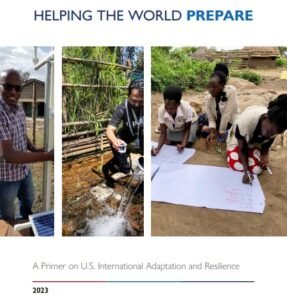
This report highlights examples of programs that the USG intends to scale and further evolve to become more fit to tackle the compound risks that vulnerable countries and communities face in this increasingly complex and interconnected world.
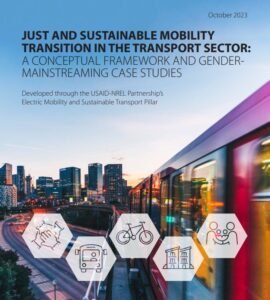
This publication highlights a just and sustainable mobility transition framework for transport practitioners and policymakers, with a focus on gender-mainstreaming considerations.
Blue carbon does not just mean mangroves, seagrass, or tidal marshes - USAID aims to quantify the blue carbon in fish stocks for the benefit of communities and the climate.
USAID is bringing together a team of global experts to help governments, the private sector, and communities accelerate responsible investment in blue carbon ecosystems.
The USAID-NREL Partnership created a training program to ready Colombia's energy sector workforce to participate in the construction, operation, and grid integration of renewable energy projects.
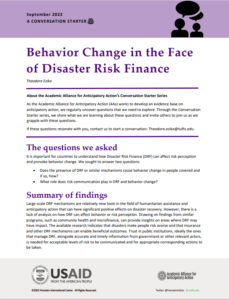
Large-scale Disaster Risk Finance mechanisms are relatively new tools in the field of humanitarian assistance that can have significant positive effects on disaster recovery.
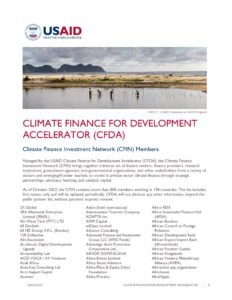
As of October 2023, the USAID Climate Finance Investment Network, managed by CFDA, contains more than 800 members. CFDA will update this list periodically as new members join the CFIN.
The demand for resilience evidence has grown exponentially as conflict, COVID-19, and the accelerating impacts of climate change have reversed development gains.
The Global Water Strategy Indicator Handbook is intended for use by USAID staff and implementing partners involved in WSSH programming to ensure correct use of USAID’s standard indicators.
In FY2023, CASA worked to implement activities that represent strategic priorities for USAID and are funded directly by REFS as well as respond to on-demand requests.
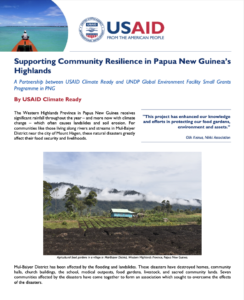
USAID Climate Ready and the UNDP Global Environment Facility Small Grants Programme in Papua New Guinea collaborated to increase funding access for community-based organizations.
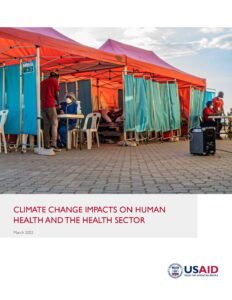
Climate change is threatening the sustainability of health systems and development goals. Health systems need to act now by building capacity for risk management, fostering multi-sectoral engagement, and identifying actions to increase system resilience.