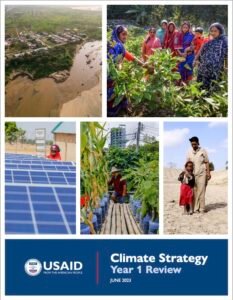
In the first year since launching its 2022-2030 Climate Strategy, USAID has increased its climate investments and is working to tackle the climate crisis in more countries than ever. Learn more in the USAID Climate Strategy Year 1 Review.
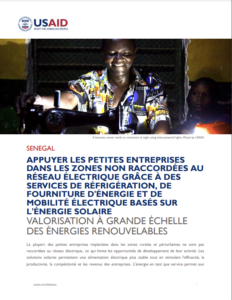
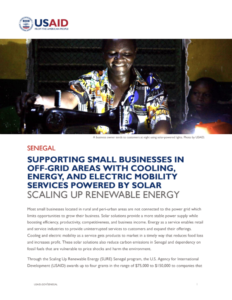
La plupart des petites entreprises implantées dans les zones rurales et périurbaines ne sont pas raccordées au réseau électrique, ce qui limite les opportunités de développement de leur activité. Les solutions solaires permettent une alimentation électrique plus stable tout en stimulant l'efficacité, la productivité, la compétitivité et les revenus des entreprises.
L'Agence des États-Unis pour le développement international (USAID) invite les organisations éligibles à soumettre leur candidature pour une subvention dans le cadre d'une opportunité de financement de SURE Sénégal intitulée.
USAID invites eligible organizations to respond to SURE Senegal’s call for applications, Promoting the Energy-as-a-Service Model to Scale Integrated Solar Energy Solutions for Small Businesses in Off-Grid Areas of Senegal. SURE is implemented by Tetra Tech. Application deadline is August 24, 2023.
Through Scaling Up Renewable Energy (SURE) Senegal, the U.S. Agency for International Development (USAID) will provide a total of $475,000 in grants to a consortium of Senegalese renewable energy project developers, and commercial and industrial (C&I) agribusinesses and fisheries working in production, processing, and distribution in rural and peri-urban areas.
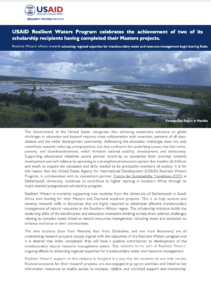
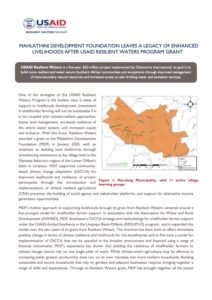
Resilient Waters awarded a grant to the Mahlathini Development Foundation (MDF) in January 2020, with an emphasis on building local livelihoods through strengthening institutions at the village level in the Mametja-Sekororo region of the Lower Olifant’s basin in Limpopo.
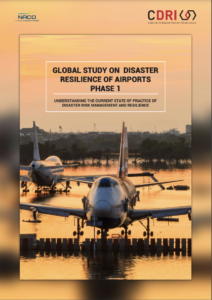
This report reflects the Coalition for Disaster Resilient Infrastructure’s efforts to provide an incisive look at the current state of practice of disaster risk management and resilience in airports.
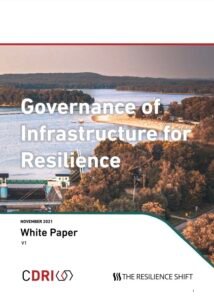
Drawing on case studies and stakeholder engagement with infrastructure decision makers and practitioners around the globe, this white paper explores the current key challenges and barriers to implementing governance of infrastructure for resilience, and the opportunities available for positive change.
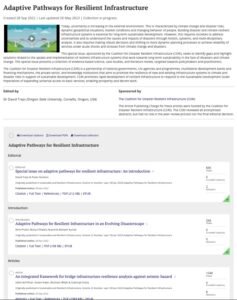
This special issue seeks to identify gaps and highlight solutions related to the uptake and implementation of resilient infrastructure systems that work towards long-term sustainability in the face of disasters and climate change. This is a collection of evidence-based science, case-studies, and literature reviews.
Coalition for Disaster Resilient Infrastructure (CDRI) has developed a Lexicon on Disaster Resilient Infrastructure (DRI) to foster a shared conceptual understanding of infrastructure-related terms and phrases.
USAID can improve development outcomes by strengthening urban resilience. Through this approach USAID can guard against risks and help capture and safeguard the benefits of urbanization, especially for the most vulnerable.
The USAID Community Partnerships to Strengthen Sustainable Development (Compass) program takes an integrated approach to supporting natural resource management in Bangladesh.
The report highlights three systems where USAID institutional and policy support is likely to lead to the kind of transformational change described in the Climate Strategy.
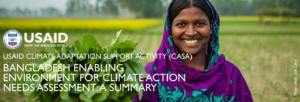
This Needs Assessment was designed to assist USAID/Bangladesh as it identifies opportunities for strategic investment to support transformational systems change.
USAID/Vietnam conducted an assessment to understand opportunities for reducing emissions in the Mekong River Delta and which interventions would yield the greatest co-benefits.