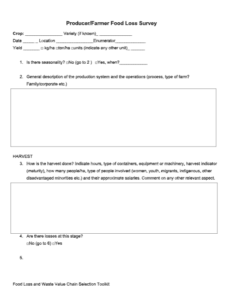
This tool helps collate data from different field collection activities to compare within and across activities for a clear picture on where loss and waste occurs in a specific value chain.
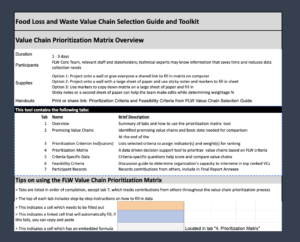
This Value Chain Prioritization Matrix supports practitioners with identifying promising value chains, prioritization criterion, prioritization matrix, criteria-specific data, feasibility criteria, and participant records.
This template offers an outline for preparing presentations for food loss and waste workshops, based on the food loss and waste value chain selection guide.
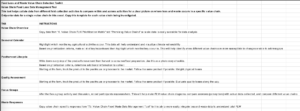
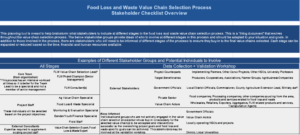
This planning tool is meant to help brainstorm what stakeholders to include at different stages in the food loss and waste value chain selection process. This is a "living document" that evolves throughout the value chain selection process.
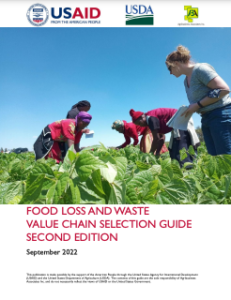
The “Food Loss and Waste Value Chain Selection Guide” is a practical resource for educating organizational stakeholders on how to integrate considerations of food loss and waste reduction within agricultural value chains when selecting priority chains to work in.
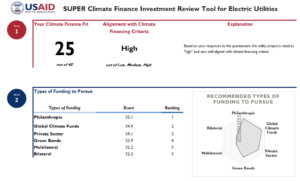
Energy sector entities can use this Tool to evaluate the feasibility of a project for climate financing, receive recommendations for how to better position the project for climate financing, and understand optimal climate financing options for the project.
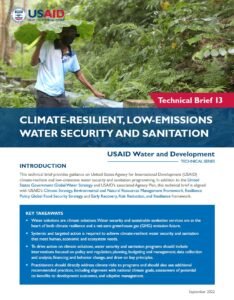
This technical brief provides guidance on United States Agency for International Development (USAID) climate-resilient and low-emissions water security and sanitation programming.
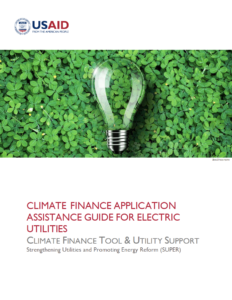
The Climate Finance Application Assistance Guide is a resource for electric utility personnel and leadership interested in accessing climate funds and tailoring projects for climate finance.
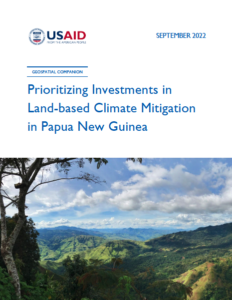
The Papua New Guinea (PNG) geospatial companion complements PNG’s Sustainable Landscapes Opportunities Analysis (SLOA), developed in 2020 with the support of USAID’s Productive Landscapes activity (ProLand). SLOA analyses are designed to aid USAID Missions in prioritizing climate mitigation programming and co-benefits for highest land-based mitigation impact.
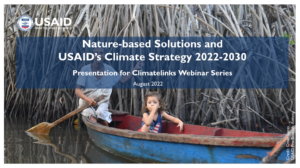
Nature-based solutions are critical for climate adaptation and mitigation efforts, and represent one of the five foundational principles of USAID’s 2022-2030 Climate Strategy. This webinar brought together USAID experts to highlight ways that USAID, Missions, and Implementing Partners are already working in this space.
La herramienta de evaluación del Índice de Capacidad de Residuos Sólidos para los Gobiernos Locales (SCIL, por sus siglas en inglés) fue desarrollada por Clean Cities, Blue Ocean, el programa insignia mundial de USAID para abordar la contaminación por plástico en los océanos. El SCIL permite a los gobiernos locales autoevaluar sus capacidades actuales asociadas con los criterios clave necesarios para desarrollar y mantener un sistema sostenible de gestión de residuos sólidos.
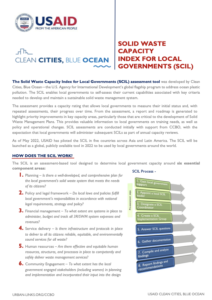
The Solid Waste Capacity Index for Local Governments (SCIL) assessment tool was developed by Clean Cities, Blue Ocean—USAID’s global flagship program to address ocean plastic pollution. The SCIL enables local governments to self-assess their current capabilities associated with key criteria needed to develop and maintain a sustainable solid waste management system.
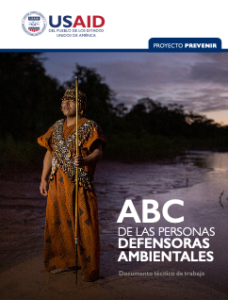
The ABC’s of Environmental Defenders addresses basic concepts, figures, and data of interest on the challenges faced by the people who protect the right to a healthy environment in the Peruvian Amazon. It presents key and up-to-date information targeted to those involved in the analysis, design, and implementation of strategies for the protection of environmental defenders.