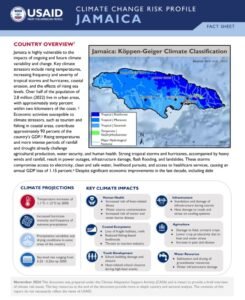
This profile provides an overview of climate risk issues in Jamaica, including how climate change will potentially impact five key sectors in the country: water resources, agriculture, human health, infrastructure and coastal ecosystems.
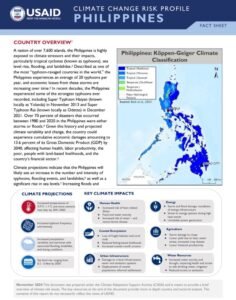
This profile provides an overview of climate risk issues in the Philippines, including how climate change will potentially impact agriculture, water, energy, coastal ecosystems, infrastructure/services and human health.
The Coastal Resilience, Carbon, and Conservation Finance activity is designed to unlock private investment in blue carbon and coastal resilience projects that protect the environment, strengthen economies, create new opportunities for communities.
This Climate Risk Assessment seeks to answer how and in what ways a changing climate limits progress toward diversifying livelihoods for KAZA’s resident communities.
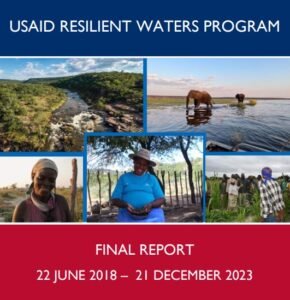
Between June 2018 and December 2023, the USAID Resilient Waters Program sought to build more resilient and water-secure Southern African communities and ecosystems.
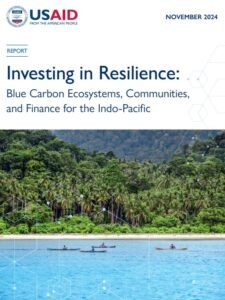
USAID’s “Investing in Resilience” report brings together the evidence and analyses that can help guide USAID Mission staff, partners, host country governments, and communities to advance blue carbon initiatives in the Indo-Pacific region.
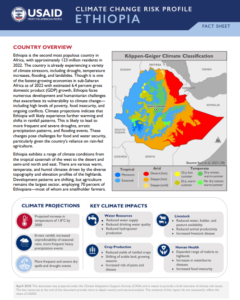
This profile provides an overview of climate risks facing Ethiopia, including how climate change will potentially impact agriculture and crop production, livestock, water resources and human health.
USAID welcomes the opportunity to work with like-minded partners to de-risk investments, strengthen enabling environments, and continue delivering exceptional technical assistance in partner countries.
The USAID Climate Finance for Development Accelerator engaged CrossBoundary under the Natural Climate Solutions Activity on behalf of USAID/Brazil to gain understanding of the investment landscape in the Brazilian Amazon biome.
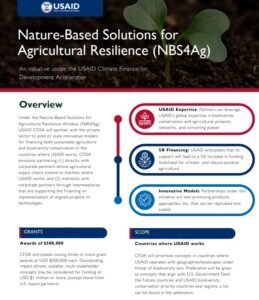
Under the Nature-Based Solutions for Agricultural Resilience Window, USAID CFDA will partner with the private sector to pilot or scale innovative models for financing both sustainable agriculture and biodiversity conservation.
This “how-to guide” is a foundational resource that builds on the lessons learned from the Sustainable Banking Alliance initiatives in Colombia and Egypt and provides guidance on how to engage with financial institutions to integrate climate finance best practices.
As decarbonization accelerates, this report seeks to fill the aforementioned gap by laying out some guidance and best practices to enhance outcomes of the growing investments in decarbonization, specifically for coal workers and communities.
A systems approach to resilient infrastructure planning represents a breakthrough opportunity to revolutionize how donors maximize their investment impact, allowing them to work smarter to achieve resilient infrastructure at scale.
The Climate Change Extended Indicator Handbook seeks to provide improved guidance that addresses common challenges that OUs and IPs face when designing, implementing, and reporting on climate activities.
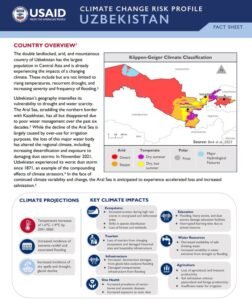
This profile provides an overview of climate risk issues in Uzbekistan, including how climate change will potentially impact five key sectors in the country: agriculture, water, tourism, ecosystems, human health, and infrastructure.