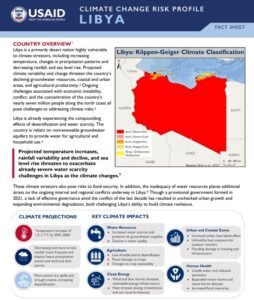
This profile provides an overview of climate risk issues in Libya, including how climate change will potentially impact agriculture, water resources, human health and coastal zones.
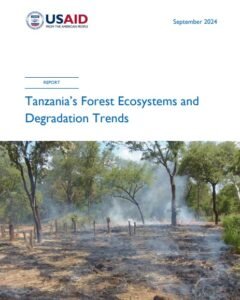
This degradation trends report is intended to supplement the Tanzania SLOA by describing the country’s various carbon rich ecosystems in the context of the widely utilized World Wildlife Fund approach to classifying biomes and ecoregions.
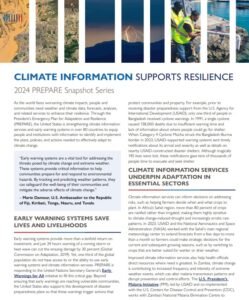
Through PREPARE, the United States is strengthening climate information services and early warning systems in over 80 countries to help people and institutions effectively adapt to climate change.
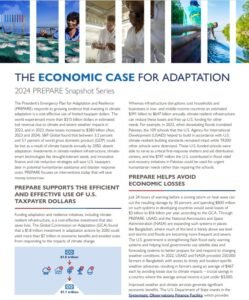
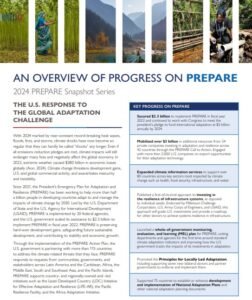
The President’s Emergency Plan for Adaptation and Resilience (PREPARE) responds to growing evidence that investing in climate adaptation is a cost-effective use of limited taxpayer dollars.
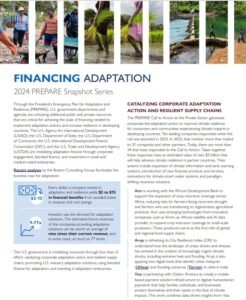
The U.S. government is mobilizing adaptation finance through corporate engagement, blended finance, and investment in small and medium-sized enterprises.
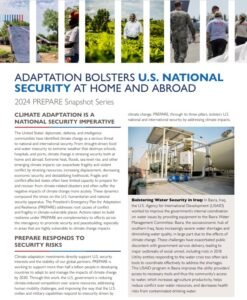
PREPARE addresses root causes of conflict and fragility in climate-vulnerable places. Climate adaptation investments directly support U.S. security interests and the stability of our global partners.
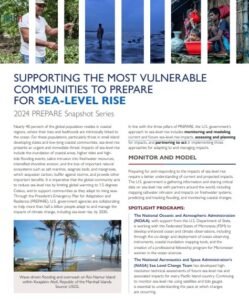
In line with the three pillars of PREPARE, the U.S. government’s approach to sea-level rise includes monitoring and modeling current and future sea-level rise impacts, assessing and planning for impacts, and partnering to implement those approaches.
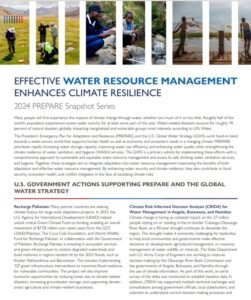
PREPARE prioritizes rapidly increasing water storage capacity, improving water use efficiency, and enhancing water quality while strengthening the climate resilience of water, sanitation, and hygiene (WASH) services.
Through the implementation of the PREPARE Action Plan, the U.S. government is partnering with more than 115 countries to address the climate-related threats that they face.
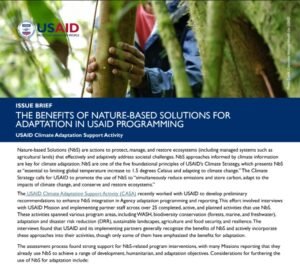
The USAID Climate Adaptation Support Activity (CASA) recently worked with USAID to develop preliminary recommendations to enhance Nature-based Solutions integration in Agency adaptation programming and reporting.
Between October 2023 and March 2024, numerous CFDA activities have taken significant steps in implementing their strategies for mobilizing climate finance.
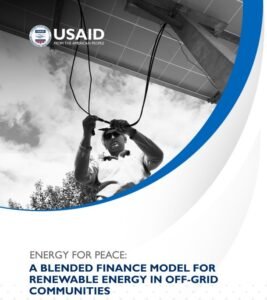
The Energy for Peace Global Development Alliance demonstrates the vital role blended finance can play in catalyzing private sector investment to deliver clean energy to hard-to-reach off grid communities that are critical for peace and development.
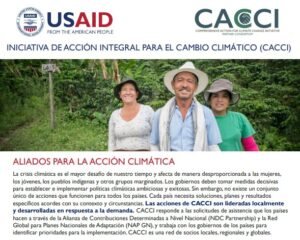
La crisis climática es el mayor desafío de nuestro tiempo y afecta de manera desproporcionada a las mujeres, los jóvenes, los pueblos indígenas y otros grupos marginados.
CACCI launched the Partnership for Climate Action to engage private sector partners to help mobilize the funding and resources needed to achieve the goals of the Paris Agreement, the USAID Climate Strategy, and CACCI.
The severity of climate change impacts vary drastically based on gender, class, race, ethnicity, disability, geography, and other categories of identity.
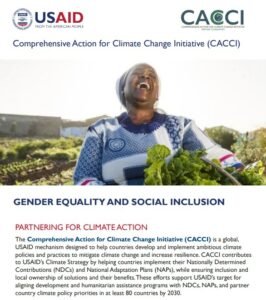
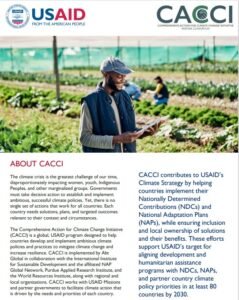
CACCI is a global, USAID program designed to help countries develop and implement ambitious climate policies and practices to mitigate climate change and increase resilience.
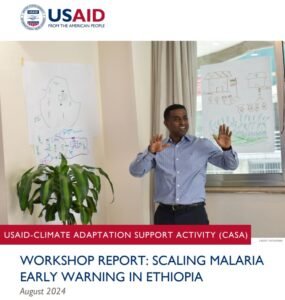
With support from USAID’s Bureau for Africa, USAID/Ethiopia is interested in working with CASA to explore ways to build capacity around the existing EPIDEMIA system and possibilities for expanding the geographic coverage of the system.