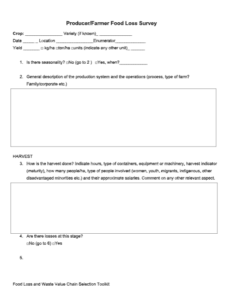
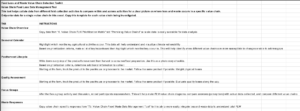
This tool helps collate data from different field collection activities to compare within and across activities for a clear picture on where loss and waste occurs in a specific value chain.
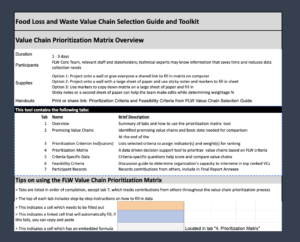
This Value Chain Prioritization Matrix supports practitioners with identifying promising value chains, prioritization criterion, prioritization matrix, criteria-specific data, feasibility criteria, and participant records.
This template offers an outline for preparing presentations for food loss and waste workshops, based on the food loss and waste value chain selection guide.
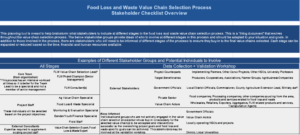
This planning tool is meant to help brainstorm what stakeholders to include at different stages in the food loss and waste value chain selection process. This is a "living document" that evolves throughout the value chain selection process.
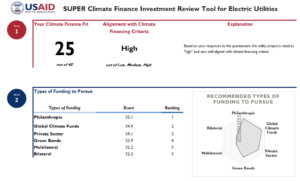
Energy sector entities can use this Tool to evaluate the feasibility of a project for climate financing, receive recommendations for how to better position the project for climate financing, and understand optimal climate financing options for the project.
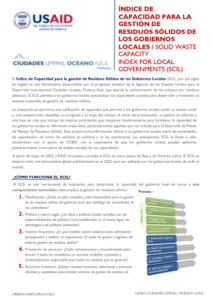
La herramienta de evaluación del Índice de Capacidad de Residuos Sólidos para los Gobiernos Locales (SCIL, por sus siglas en inglés) fue desarrollada por Clean Cities, Blue Ocean, el programa insignia mundial de USAID para abordar la contaminación por plástico en los océanos. El SCIL permite a los gobiernos locales autoevaluar sus capacidades actuales asociadas con los criterios clave necesarios para desarrollar y mantener un sistema sostenible de gestión de residuos sólidos.
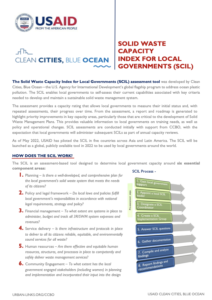
The Solid Waste Capacity Index for Local Governments (SCIL) assessment tool was developed by Clean Cities, Blue Ocean—USAID’s global flagship program to address ocean plastic pollution. The SCIL enables local governments to self-assess their current capabilities associated with key criteria needed to develop and maintain a sustainable solid waste management system.
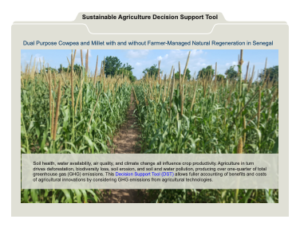
The Sustainable Agriculture Decision Support Tool assesses the financial and climate impacts of alternative agricultural technologies accounting for climate forecasts, to maximize agricultural and environmental outcomes. This report presents its application for two agricultural technologies in Senegal: (1) improved dual-purpose millet and cowpea, which have higher crop and fodder yields, on their own; and (2) improved dual-purpose millet and cowpea in conjunction with farmer-managed natural regeneration (FMNR), which involves nurturing tree growth around croplands.
This toolkit describes how users can use the Decision Support Tool to assess technologies based on agricultural and environmental outcomes and inform their scale up.
The HEARTH program fosters public-private partnerships to advance integrated investments in conservation, agriculture, health, governance, and other sectors. HEARTH aims to promote the conservation of threatened ecosystems and the well-being and prosperity of communities that depend on them.
Millennial Cities is an interactive web mapping site that provides access to important maps, data, and web mapping applications related to climate change, social justice, the environment, and more.
This Service Planning Toolkit is a resource for SERVIR Hubs as they, with their partners, strive to make an impact in designing, delivering and implementing services.
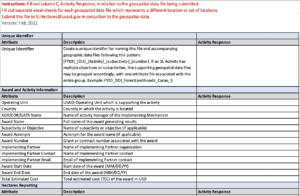
A Sustainable Landscapes Activity Attribute Reporting Template helps provide a standardized background data collection form associated with the guidance.