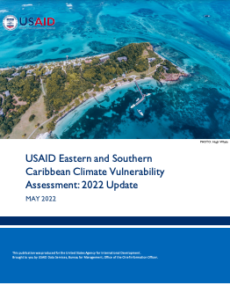
The Eastern and Southern Caribbean (ESC) Mission completed a Climate Vulnerability Assessment that provides an update on the 11 ESC countries’ exposure, sensitivity, and adaptive capacity to climate change. The assessment will help the ESC Mission and regional stakeholders better prioritize and guide climate change programming across the region.
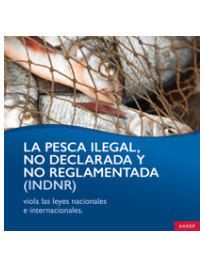
Para anunciar la nueva Alianza para la Pesca Manejada Sosteniblemente de USAID y la Administración Nacional Oceánica y Atmosférica, AREP creó una serie de infografías que crean conciencia sobre el impacto que tiene la pesca ilegal, no declarada y no reglamentada en la región amazónica.
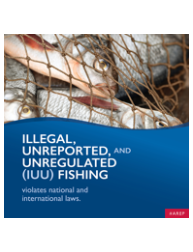
To announce USAID and the National Oceanic and Atmospheric Administration’s new Partnership for Sustainably Managed Fisheries, AREP created a series of infographics that raises awareness about the impact illegal, unreported, and unregulated fishing has on the Amazon region.
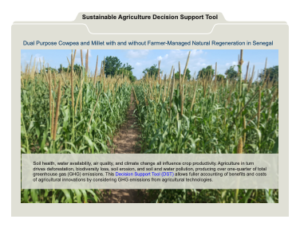
The Sustainable Agriculture Decision Support Tool assesses the financial and climate impacts of alternative agricultural technologies accounting for climate forecasts, to maximize agricultural and environmental outcomes. This report presents its application for two agricultural technologies in Senegal: (1) improved dual-purpose millet and cowpea, which have higher crop and fodder yields, on their own; and (2) improved dual-purpose millet and cowpea in conjunction with farmer-managed natural regeneration (FMNR), which involves nurturing tree growth around croplands.
This toolkit describes how users can use the Decision Support Tool to assess technologies based on agricultural and environmental outcomes and inform their scale up.
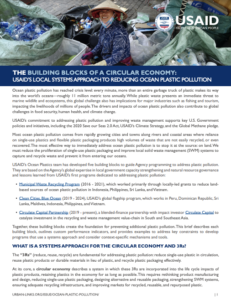
This brief describes each building block, outlines custom performance indicators, and provides examples to address key constraints to develop programs that use a systems approach and consider context-specific mechanisms and tools.
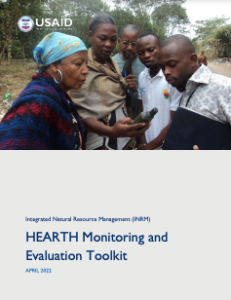
The HEARTH program fosters public-private partnerships to advance integrated investments in conservation, agriculture, health, governance, and other sectors. HEARTH aims to promote the conservation of threatened ecosystems and the well-being and prosperity of communities that depend on them.
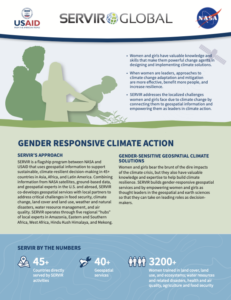
SERVIR builds gender-responsive geospatial services and by empowering women and girls as thought leaders in the geospatial and earth sciences so that they can take on leading roles as decision-makers.
Blockchain is a breakthrough technology, one that enables to reshape markets and re-define the ways we work and trade. It has been a driver of economical development and brought under the spotlight after the advancement of the controversial but nonetheless revolutionary digital currencies, the first of many applications which defined the Blockchain Technology protocols and opened the Pandora box of a digital transformation era.
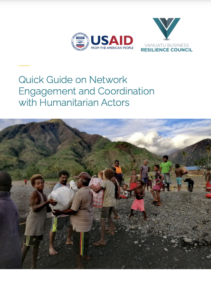
This guide is designed to highlight how a business resilience organization in the Pacific, the Vanuatu Business Resilience Council, has integrated itself into government and non-government humanitarian processes to play a meaningful role in recovery as well as support and influence resilience building overall.
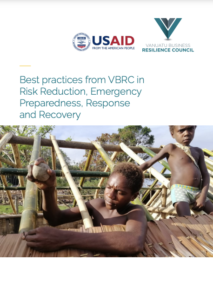
This guide is designed to highlight how a business resilience organization in the Pacific, the Vanuatu Business Resilience Council, has integrated itself into government and non-government humanitarian processes to play a meaningful role in disaster and climate preparedness, response and recovery as well as influence resilience building overall.
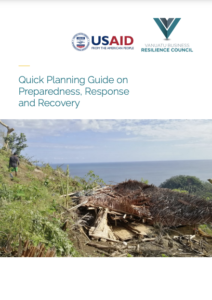
This guide is designed to highlight how a business resilience organization in the Pacific, the Vanuatu Business Resilience Council, has integrated itself into government and non-government humanitarian processes to play a meaningful role in disaster and climate preparedness, response and recovery as well as influence resilience building overall.
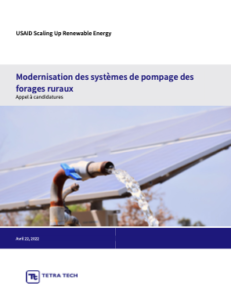
Through the Scaling Up Renewable Energy program, the United States Government, through USAID, will provide grants of up to $150,000 to support the conversion of diesel water pumping systems to solar. Additionally, USAID will provide grants of up to $100,000 to support the conversion of manual water pumping systems to solar.
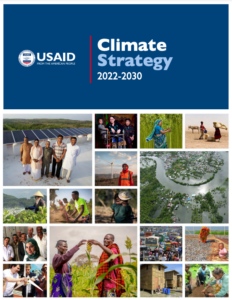
Addressing the climate crisis requires a holistic approach to development. Building off USAID's previous 2012-2018 Climate Change and Development Strategy, which focused on specific climate change mitigation and adaptation measures, the new Strategy takes an unprecedented whole-of-Agency approach.
This gender analysis was conducted using a desk review of the available literature, consultations with gender and climate experts from across USAID, including through a gender analysis workshop hosted by DDI/LRG and DDI/GenDev. As part of the climate strategy development process, USAID/GenDev hosted a gender and climate listening session with experts from around the world. Their recommendations have been integrated into this analysis.
This new Strategy takes a “whole-of-Agency” approach that calls on all corners of USAID to play a part in the response. USAID will work on the ground with partner governments and local actors to set the global trajectory toward a vision of a resilient, prosperous, and equitable world with net-zero greenhouse gas emissions.
In this webinar, hosted by USAID’s Scaling Up Renewable Energy (SURE) program, experts discuss the types and sequence of investments as well as actions required to manage the flexibility needed for successful grid integration of renewables.
L’Agence pour le développement international des Etats-Unis (USAID) lance, à l’intention des organisations éligibles, un appel à candidatures dans le cadre du programme SURE (Vulgarisation à grande échelle des énergies renouvelables) pour la modernisation du pompage des forages ruraux au Sénégal.