This report aims to improve this understanding through research and geographic information systems (GIS) analyses that pinpoint promising areas for off-grid electrification.
Following 800 renewable energy (RE) auctions in 61 countries, some common stages of design and implementation that auction programs move through as they mature can be observed. These 800 include 50 in China since 2003, 63 in Brazil since 2006, and 257 in India since its first in 2012. Although the number of auctions in each country varies, and not all countries move through all stages, there are notable patterns.
Renewable energy (RE) auctions allow policymakers to scale clean energy at competitive prices by assisting in price discovery and reducing windfall profits for power producers. Compared to negotiated procurement, RE auctions allow for a faster project execution and increase the transparency in the selection process. Unlike administrative feed-in schemes, RE auctions respond quickly to changing market prices.
This White Paper is part of a larger SUPER Climate Finance project designed to build the capacity of electric utilities in USAID’s partner countries in accessing climate finance. With this climate financing, utilities can fund projects related to climate mitigation and adaptation that would either facilitate the reduction of greenhouse gas (GHG) emissions or build resilience.
Bem-vindas e bem-vindos à edição de abril do AREP Notícias, um boletim informativo que apresenta as últimas novidades sobre o trabalho que a USAID vem realizando com seus parceiros para preservar a Floresta Amazônica.
This annex to the Climate Risk Screening and Management Tools is designed to provide you with more information on climate change implications for agriculture (including terrestrial agriculture, pastoralism, and fisheries).
This annex to the Climate Risk Screening and Management Tools is designed to provide you with more information on climate change implications for disaster readiness.
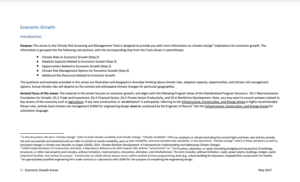
This annex to the Climate Risk Screening and Management Tools is designed to provide you with more information on climate change implications for economic growth.
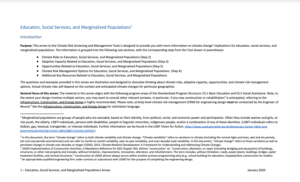
This annex to the Climate Risk Screening and Management Tools is designed to provide you with more information on climate change implications for education, social services, and marginalized populations.
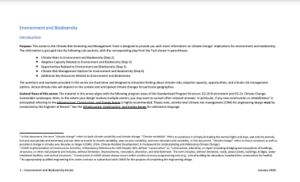
This annex to the Climate Risk Screening and Management Tools is designed to provide you with more information on climate change implications for environment and biodiversity.
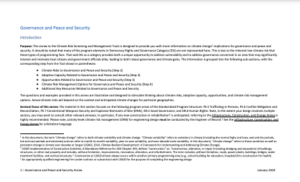
This annex to the Climate Risk Screening and Management Tools is designed to provide you with more information on climate change implications for governance and peace and security.
This annex to the Climate Risk Screening and Management Tools is designed to provide you with more information on climate change implications for health.
This annex to the Climate Risk Screening and Management Tools is designed to provide you with more information on climate change implications for Infrastructure
This annex to the Climate Risk Screening and Management Tools is designed to provide you with more information on climate change implications for water supply and sanitation.
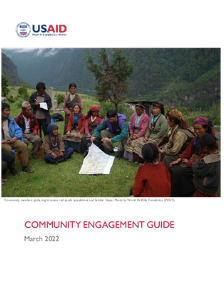
This Community Engagement Guide defines key concepts and provides an overview of approaches, frameworks, and tools for engaging communities involved in and affected by USAID projects.
Health systems strengthening activities should include climate considerations by promoting and building capacity for effective and iterative risk management across all levels, fostering multi-sectoral engagement, and identifying actions and investments over the short- and long-term to increase system resilience.
The Global Food Security Strategy (GFSS) charts a course for the U.S. government (USG) to support the achievement of global food security, the Sustainable Development Goals (SDGs), and the 2030 Agenda, in collaboration and coordination with partners across the globe.