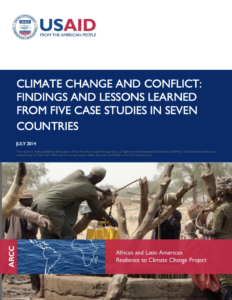
These five field-based case studies in seven countries demonstrate that trying to isolate a single chain of climate-conflict causality is not particularly helpful or productive.
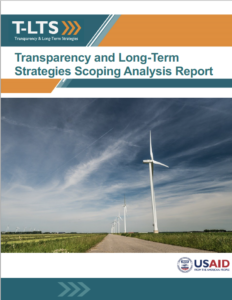
To support low-emissions development and decarbonization, countries are increasingly looking to develop long-term strategies (LTS)—a policy tool that helps a country identify development priorities and pathways to achieve mid-century greenhouse gas (GHG) reductions.
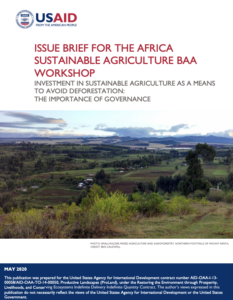
Increasing agricultural production and reducing deforestation are top priorities of the United Nations Sustainable Development Agenda and USAID’s development assistance.
This study gathered and analyzed financial data of smallholder rubber farms to assess whether it is possible to create a financial mechanism to provide smallholder loans to replant rubber trees.
In a rapidly changing environment and society, it is critical that novel and swift strategies are devised to help direct and prioritize potential greenhouse gas (GHG) mitigation activities across the world.
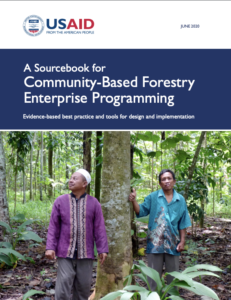
This Sourcebook aims to inform design and implementation of community forestry interventions that seek to deliver social, environmental, and economic outcomes in developing countries.
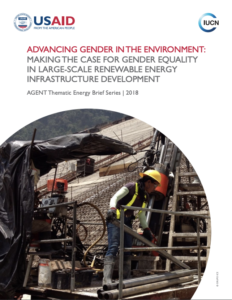
The U.S. Agency for International Development (USAID) is committed to both promoting gender equality and women’s empowerment and strengthening the energy sector in order to fuel economic growth and social development.
This brief provides an overview of the gender dimensions of planning and building large-scale renewable energy infrastructure, such as hydropower and geothermal plants, solar arrays and wind parks with the capacity to generate 10 MW or more.
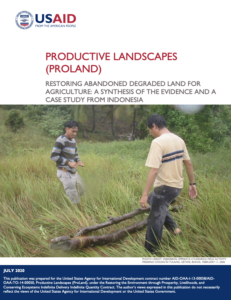
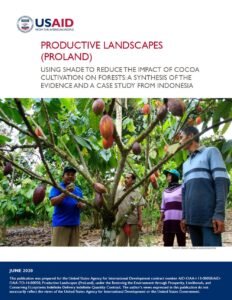
This brief is based on ProLand research on sustainable intensification, including case studies on certification, PES and the restoration of abandoned degraded land.
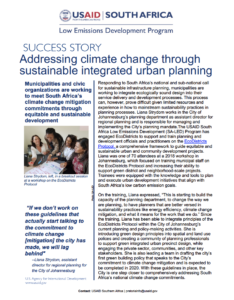
In 2018, the USAID South Africa Low Emissions Development (SA-LED) program engaged EcoDistricts, a U.S.-based non-governmental organization, to deliver a one-day training for 70 municipal staff from the City of Johannesburg in South Africa.
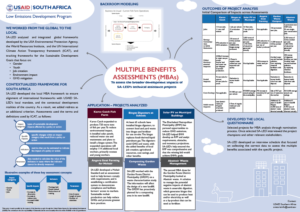
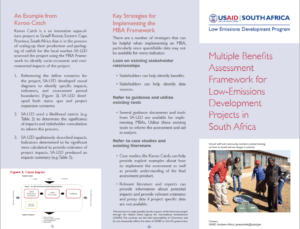
The USAID South Africa Low Emissions Development (SA-LED) program developed a Multiple Benefit Assessment framework contextualized to the South African context.
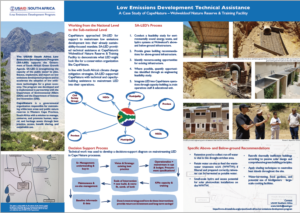
The USAID South Africa Low Emission Development (SA-LED) Program provided technical assistance in mainstreaming low emissions development to nature reserves within the Western Cape Provincial Environmental Conservation Unit, CapeNature.
In South Africa, comprehensive baseline data on energy consumption is the key to accessing grant funding from the national government’s Energy Efficient and Demand Side Management (EEDSM) program.
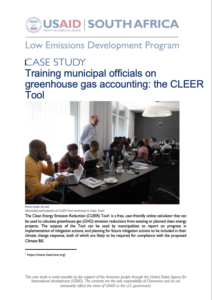
From 2016 to 2018, the USAID South Africa Low Emissions Development (SA-LED) program carried out a series of training workshops for municipal officials on the use of the Clean Energy Emissions Reduction (CLEER) Tool.