This paper reviews 59 studies that have evaluated outcomes and/or impacts of agricultural WCS in Africa, highlighting areas that have received relatively more attention, as well as persistent gaps.
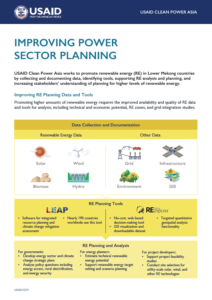
USAID Clean Power Asia works to promote renewable energy in Lower Mekong countries by collecting and documenting data, identifying tools, and supporting analysis and planning.
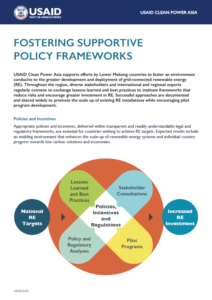
USAID Clean Power Asia supports efforts by Lower Mekong countries to foster an environment conducive to the greater development and deployment of grid-connected renewable energy (RE).
This article describes CCAFS-MOT, a tool to support farmers, policy advisors and agricultural extension services on the choice of management practices that reduce greenhouse gas emissions (GHG) without risking food security.
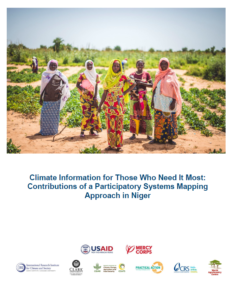
This study is designed to contribute to the operationalization of Niger's National Framework for Climate Services by filling knowledge gaps related to climate information services (CIS) end user needs.
On January 18, 2018, the Adaptation Community Meeting heard from Jeffrey Stark who discussed the challenges and opportunities of addressing the climate-conflict nexus in programming.
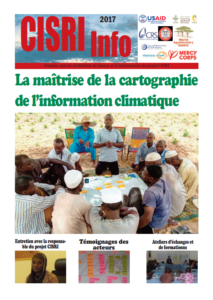
This bulletin, developed by the USAID-funded Climate Information Services Research Initiative (CISRI) project in conjunction with a local journalist, highlights outcomes from a series of systems mapping workshops in Niger.
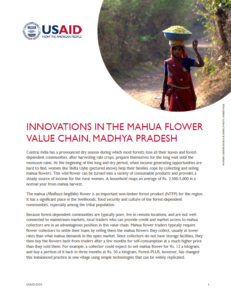
This document provides insight into the importance of the mahua flower as a non-timber forest product (NTFP) within Central India, a region with a dry season that limits income-generating opportunities.
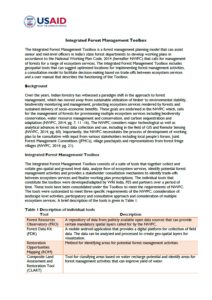
The Integrated Forest Management Toolbox is a forest management planning model that can assist senior and mid-level officers in India’s state forest departments.
This policy brief outlines key barriers and solutions to unlock private finance to support global agendas and a transition towards a sustainable low-carbon economy.
This Primer aims to help development experts determine what climate information is appropriate to use for different contexts and development objectives.
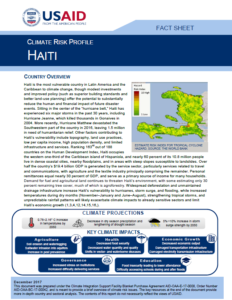
This profile provides an overview of climate risk issues in Haiti, including how climate change will potentially impact agriculture, economic growth, education, governance, and health.