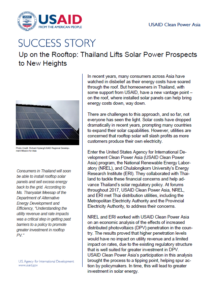
The USAID Clean Power Asia program, the U.S. National Renewable Energy Laboratory, and Chulalongkorn University’s Energy Research Institute collaborated to help advance Thailand’s solar regulatory policy.
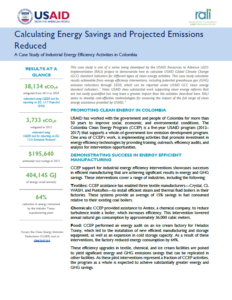
This case study details how the USAID RALI project used the Clean Energy Emission Reduction tool to quantify GHG benefits from efficiency interventions implemented by the Colombia Clean Energy Program.
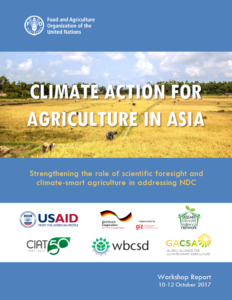
This workshop report highlights key takeaways from the 2017 regional workshop “Climate Action for Agriculture in Asia: Strengthening the role of scientific foresight and CSA in addressing NDC priorities” in Bangkok.
This video highlights efforts by the USAID CAFTA-DR Regional Environmental Program to aid countries in Central America in strengthening institutions, laws, and regulations that seek to improve the environmental performance.
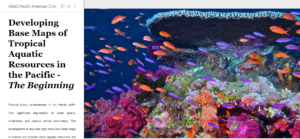
This story map website presents an interactive overview of a project aiming to develop high resolution base maps of coastal and shallow water aquatic resources in the Pacific.
IFPRI’s Gender, Climate Change, and Nutrition Integration Initiative (GCAN) is supporting the Bureau for Food Security at USAID to integrate climate-resilience, gender and nutrition considerations into US development programming.
This report highlights outputs from a deep dive workshop on “Enabling Private Sector Clean Energy Investment in Southeast and South Asia: Recommendations from Corporations and Governments” held on June 5, 2017.
This fact sheet provides information on the C40 Cities Finance Facility (CFF), a joint project that supports C40 cities in developing and emerging countries to prepare and deliver sustainable, low carbon and climate adaptation projects.
This report outlines the gender considerations of the country action process documents that support national energy planning and investments under the Secretary General of the United Nations Sustainable Energy for All initiative.
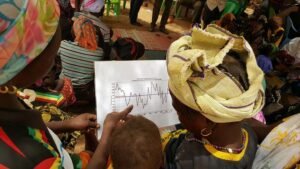
This is an activity under the United States Agency for International Development (USAID) project, ‘Assessing Sustainability and Effectiveness of Climate Information Services in Africa’.
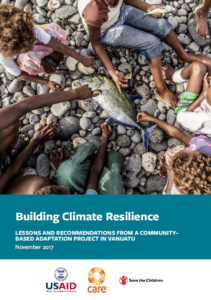
This report provides lessons learned and key recommendations from a community-based climate change adaptation project in Vanuatu implemented by CARE International and Save the Children together with support from the USAID Pacific American Climate Fund.
In this paper, the RALI team showcases how the Government of Bangladesh used a tool developed by the U.S. Environmental Protection Agency, with financial support from USAID, to address the challenge of preparing national greenhouse gas inventories in various countries.
The CLEER Tool provides simple, standardized methodologies for calculating emission reductions from clean energy activities. The tool enables users to estimate, track, and report GHG reductions from clean energy.
The USAID Clean Power Asia program works with Lower Mekong countries and other Association of Southeast Asian Nations member states to encourage power sector investments in environmentally friendly, grid-connected renewable energy sources.