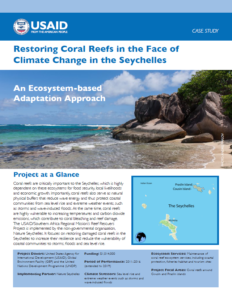
This ecosystem-based adaptation (EbA) case study highlights the USAID/Southern Africa Regional Mission’s Reef Rescuers project, which is restoring damaged coral reefs to increase their resilience and reduce the vulnerability of coastal communities.
The CLEER Tool is a web-based platform that provides a consistent and user-friendly approach for estimating and reporting greenhouse gas (GHG) emissions reduced or avoided across USAID Clean Energy programs.
The CGIAR Research Program on Climate Change, Agriculture and Food Security (CCAFS) research team investigated changes in FLW in projects supported by the United States Government’s global hunger and food security initiative.
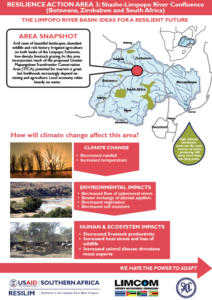
This case study presents an overview of how climate change will affect the Shashe-Limpopo River confluence in Botswana, Zimbabwe and South Africa and opportunities for action.
This policy brief draws attention to the opportunities that exist for harnessing agricultural production and regional trade to safeguard food security in Africa under climate impacts.
This presentation highlighted 1) how climate change can affect power generation resources, particularly hydropower resources; and 2) an approach that can be taken to address climate change risks.
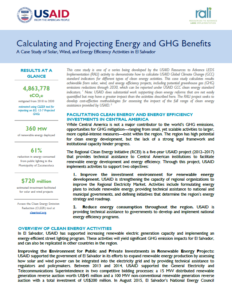
This case study calculates results achievable from solar, wind, and energy efficiency projects, including potential greenhouse gas (GHG) emissions reductions through 2030, in El Salvador.
This webinar is part of the GreeningTheGrid.org toolkit, a USAID and NREL collaboration designed to support countries in integrating renewable energy into the power system.
At the September Adaptation Community Meeting, Fernanda Zermoglio provided the latest research and findings from this work, as well as what is being done to strengthen Mozambique’s health system preparedness and response.
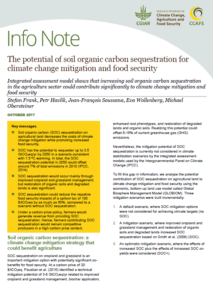
This info note explains the potential of soil organic carbon (SOC) sequestration to decrease the costs of climate change mitigation while promoting increased food security on agricultural land.
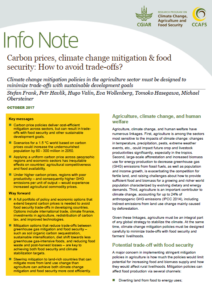
This info note explains how carbon price policies can deliver cost-efficient mitigation across sectors, but can also result in tradeoffs with food security and other sustainable development goals.
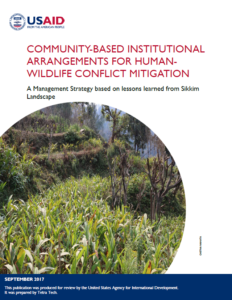
This document provides information and lessons learned on a management strategy based on the Forest-PLUS experience piloting community-based institutional arrangements for Human-Wildlife Conflict (HWC) mitigation in the Sikkim landscape in India.
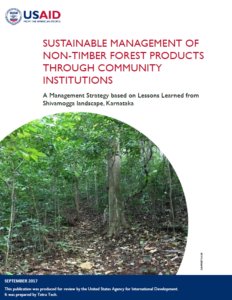
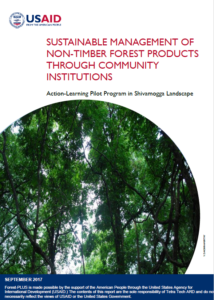
This report documents the Forest-PLUS experience of an Action-Learning Pilot Program (ALPP) on sustainable management of Non-Timber Forest Products (NTFPs) through community institutions in Shivamogga landscape, Karnataka.