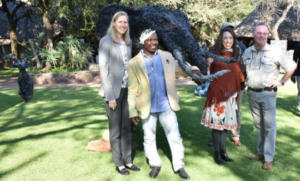
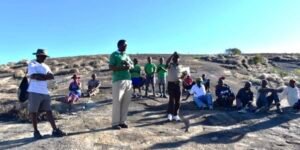
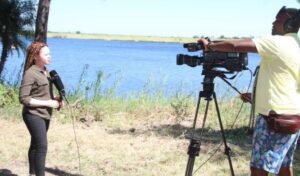
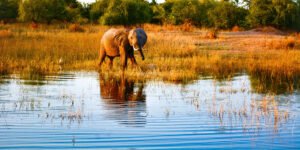
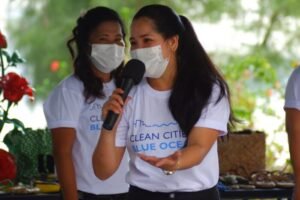
USAID’s Resilient Waters Program hosted a community-based celebration to commemorate World Environment Day in partnership with the Kwalata Community Development Initiative at Dinokeng Game Reserve in Hammanskraal, South Africa.
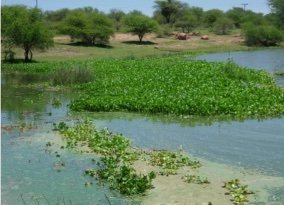
The infestation of water hyacinth in the river system suffocates indigenous aquatic life because it competes for oxygen, mushrooms, ends up blocking and ultimately causes pollution in stagnant water. This presents a major challenge for communities, biodiversity and ecosystems that utilize the waters of the Limpopo.
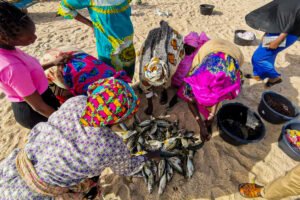
Senegalese youth are repairing degraded mangrove forests. In the process, they are empowering fishing communities to safeguard their own livelihoods ─ and fight climate change.
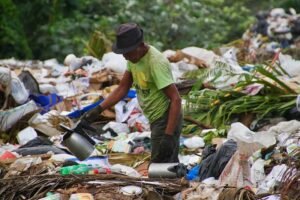
The Dominican Republic generates over 11,000 metric tons of waste daily. Of that waste, more than 2,000 metric tons are plastic — the equivalent of over 200 million plastic water bottles every day.
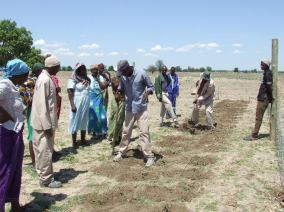
The Setswana saying “temo ke botshelo,” “farming is life,” affirms the centrality of subsistence agriculture for the lives and livelihoods of the people living in north-western Botswana.
The Matobo Hills is part of the upper Umzigwane in Zimbabwe, which is a key high-altitude catchment area in the Limpopo river basin. High altitude catchment areas are the main sources of water for a river basin, producing 100 times more water than lower lying areas, and also major storehouses of biodiversity.
USAID’s Resilient Waters Program and the Southern African Development Community’s Ground Water Institute (SADC-GMI) have been collaborating to enhance LIMCOM’s capacity to integrate groundwater initiatives into their transboundary management efforts.
The United States Agency for International Development (USAID) has partnered with the Southern African Development Community (SADC) on a five-year project to address water challenges facing communities in the Limpopo River Basin and Okavango River Basin.
USAID is pleased to announce the release of new technical guidance for developing and implementing activities that strengthen the resilience of cities and urban communities. The new guidance provides evidence-based, practical recommendations for programming across a variety of sectors in urban settings.
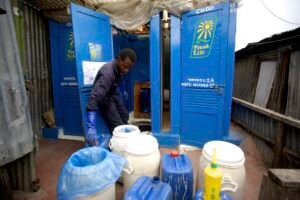
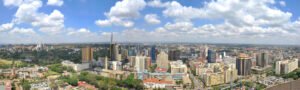
When considering urban sources of greenhouse gas emissions, sanitation is not usually the first sector that comes to mind. Transportation, sure. Electricity generation, certainly. But not waste treatment. And yet, one study showed that up to half of the greenhouse gas emissions emitted from Kampala, Uganda could be traced to sanitation.
Integrating water supply, sanitation, and hygiene development efforts with work in livelihoods, watershed management, and biodiversity conservation results in improved outcomes for each sector. Brian App shares key lessons from projects in southern Africa.
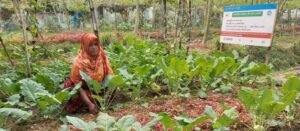
In Bangladesh’s Khulna District, Sahena Khatun, her husband and 15-year-old son had long survived on just her husband's farming income, the equivalent of $70 a month. Her own attempts to bolster her family’s income and nutrition through traditional farming had proved futile due to substandard inputs and lack of good agricultural practices.
A wetland is an area of land where water is at or near the soil surface for at least part of the year. Wetlands are a natural source of water and habitats for wildlife.
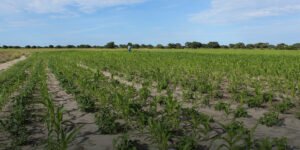
Climate change is devastating crops and livelihoods in Namibia's Kavango region. Conservation agriculture offers farmers hope and the ability to mitigate the impact of an uncertain, changing environment.
Over the last year, program grantee Communities Organized for Resource Allocation (CORA) has set out to establish a new model for local solid waste management in Parañaque City, Metro Manila, that builds on existing local infrastructure to maximize efficiency and encourages greater participation from the surrounding community.
In many Pacific Island communities, environmental knowledge is passed down through oral traditions and practical experience. This knowledge has been essential in helping these communities cope with natural disasters such as cyclones, floods, and droughts.