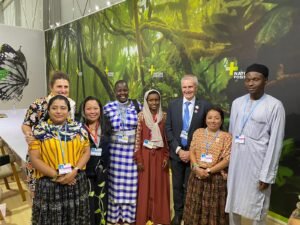
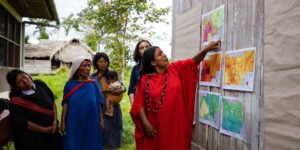
An estimated 45,000 people hoping to inform crucial discussions surrounding climate policy attended United Nations Framework Climate Change Convention’s 27th Conference of Parties (UNFCCC COP 27). Among these delegations was a group of Indigenous women leaders working to build capacities and train emerging Indigenous women leaders from sub-Saharan Africa and Latin America.
In rural Burkina Faso, most people get their drinking water through boreholes, a narrow vertical shaft drilled into the ground. Women and girls are traditionally responsible for fetching water, often traveling for miles several times a week.
Feed the Future and Agrilinks are hosting a photo contest to help tell their story. Amidst devastating climate shocks, rising food prices and protracted conflict, partnering with and empowering communities to fight against hunger is more vital than ever. Submit your photos by March 3, 2023, to highlight the progress made in building a food-secure future for all and get a chance to win up to $250!
During the annual United Nations’ Framework Convention on Climate Change Conference of Parties (COP27), the United States announced a variety of new climate adaptation initiatives, including over $150 million in new support to accelerate the President’s Emergency Plan for Adaptation and Resilience (PREPARE).
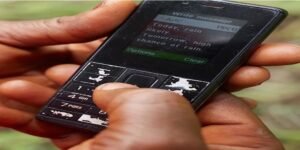
Farmers face more risk and uncertainty than nearly any other job on the planet. Weather is one of many unknowns, and the unpredictability of climate change is making it increasingly difficult for farmers to anticipate what will happen and make decisions accordingly.
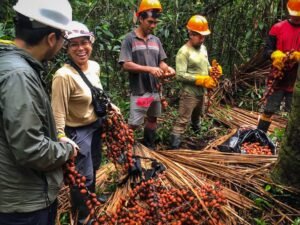
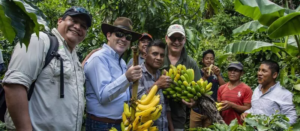
Under the USAID and NASA–funded SERVIR-Amazonia activity, scientists are working to understand how deforestation, forest degradation, and road construction affect biodiversity and ecosystem resilience, as well as to develop data and tools to support residents in achieving sustainability in the region.
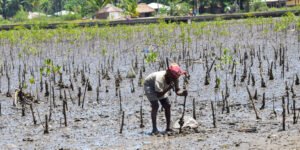
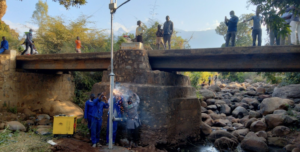
In Zimbabwe, USAID Resilient Waters is working with the Dambari Wildlife Trust to conserve and rehabilitate wetlands—a natural source of water for humans and wildlife alike.
Burkina Faso and Niger face twin humanitarian and climate crises. Policy makers, farmers and community leaders are collaborating to solve them, supported by a USAID activity implemented by Winrock.
Still reeling from the aftermath of Cyclone Idai, local authorities in Malawi have collaborated with the SERVIR program and its partner organizations to reinforce the country’s flood warning systems.
Catch the recap of the December 2022 ‘Year in Review’ theme here. You won’t want to miss this short list of top programs, resources, and blogs from the month.
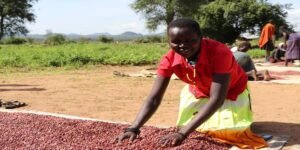
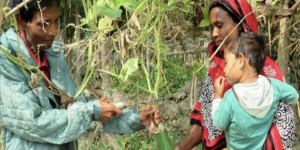
Wanting to find solutions to protect her livelihood, increase her yields, and sustain crops through severe climate events, Aliu is one of 200 local farmers working with the Feed the Future Innovation Lab for Fish.
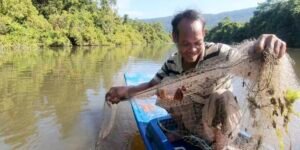
The Increasing Fisheries Sustainability for Resilience activity is one of 20 activities doing just that by empowering Cambodians with the knowledge to assess changes in the existing fishery to make any needed alterations in the fishing effort.
Strengthening and transforming systems to enhance climate resilience is crucial for vulnerable communities. Explore USAID efforts in the context of coastal communities, the power sector, urban planning, and more.
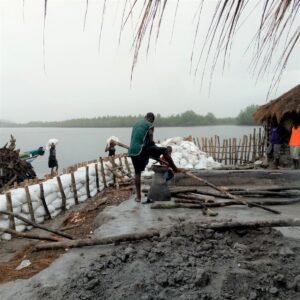
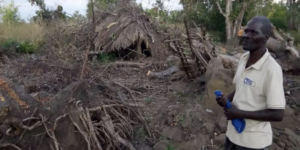
Feed the Future Innovation Lab for Markets, Risk and Resilience (MRR Innovation Lab) researchers are returning to the sites of their prior program evaluations where people who took part in the studies have since then been struck by disaster.
USAID has made climate-resilience a key focus of its 2022-2030 Climate Strategy. Reducing exposure and vulnerability to climate disasters, cutting back greenhouse gas emissions, and conserving biodiversity are all important aspects of building resiliency, and aid in the protection of sectors such as agriculture, health, energy, and water.
Deforestation threatens biodiversity and has negative health and economic impacts on communities. Nearly half of Mexico is covered by forests, which host 10 percent of the world’s biodiversity. Making Mexico a critical net carbon sink for the world.
Few are more vulnerable to climate change than people who earn their living through small-scale agriculture. This blog presents three key ideas that can jumpstart climate adaptation and resilience by addressing risk in rural communities most impacted by climate change.
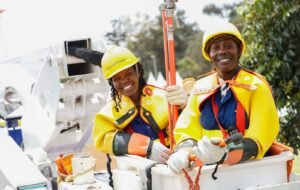
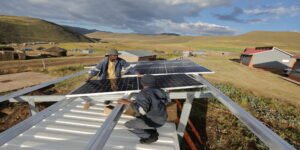
Energy access is critical for strengthening health systems in lower- and middle-income countries. Progress in maternal and child health, combating infectious diseases, and other health priorities also requires co-investment in clean, reliable energy.
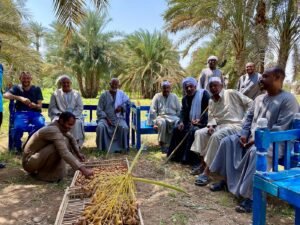
USAID is partnering with smallholder date farmers in Upper Egypt to increase the quality and quantity of this nutrient-rich and drought-tolerant fruit, and expand its local and global distribution.