In this Editor’s Pick blog, explore the ways in which USAID is strengthening and safeguarding resilience around the world through its efforts to advance climate adaptation.
Conserving biodiversity is critical to maintaining the ecosystem services that deliver climate mitigation, climate adaptation, and other human well-being benefits. At the same time, climate change undermines the resilience of terrestrial and marine ecosystems.
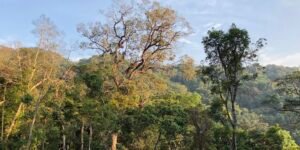
Addressing climate change and conserving forests go hand-in-hand, but what does that look like in practice? This blog outlines six approaches for using the power of nature to address the climate crisis.
Last year at the 26th UN Climate Change Conference, USAID committed to partnering with countries to reduce, avoid, or sequester at least six billion metric tons of global greenhouse gas (GHG) emissions by 2030. (Preventing six billion metric tons of GHG emissions is the equivalent of taking 100 million cars off roads for a decade, or roughly the amount of GHG emissions the United States emits each year). After making the commitment, USAID then codified it as one of its six ambitious goals in the Agency-wide 2022-2030 Climate Strategy.
Recent clean energy projects in Latin America show that even large, utility-scale renewable power projects can bring durable benefits to historically marginalized indigenous communities, if the private sector and government join forces to recognize community rights and involve indigenous groups in project design from the start.
USAID is advancing gender-responsive climate action by implementing evidence-based, high-impact programs in a range of sectors, including gender-equitable access to green jobs, land rights, natural resource management, and climate finance.
In November 2021, USAID Administrator Samantha Power announced a new commitment to make all the Agency’s work, including its work around climate change, more inclusive and reflective of the countries in which it operates. Partnering with local organizations, particularly those that represent groups whose voices have been under-represented in the past and whose lives are directly and substantially affected by climate change, is essential USAID’s efforts around climate change.
Through the Scaling Up Renewable Energy program (SURE), USAID assisted the Fund for Non-Conventional Energy and Energy Efficiency (FENOGE) to promote gender equality and female empowerment in the Colombian energy sector. Their new Gender and Diversity Policy systematically integrates diversity, inclusion, and gender equality principles and aims to promote female participation in the energy sector, reduce female poverty in the energy sector, and reduce gender-based violence.
As part of the global effort to increase climate finance flows, USAID's 2022-2030 Climate Strategy sets a target of mobilizing $150 billion in climate finance by 2030 from public and private sources. To meet these climate targets and incentivize investment, USAID is integrating climate finance throughout Agency programming and establishing key activities and mechanisms that engage the private sector.
Droughts and floods, more intense storms, increasing temperatures, and rising sea levels are devastating communities around the world, and disproportionately affecting the most vulnerable populations. In response to the severe and urgent global climate crisis, the President’s Emergency Plan for Adaptation and Resilience (PREPARE) supports developing countries and communities around the world in their efforts to adapt to and manage the impacts of climate change.
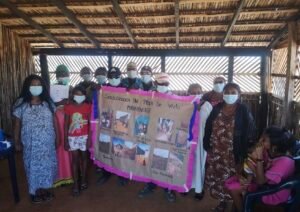
To promote a just and inclusive transition to clean energy in Colombia, USAID has partnered with the Government of Colombia to create a local workforce training program tailored to meet the needs of both the Indigenous communities and the renewable energy companies working in the province of Guajira. This work serves as a case study for other USAID Missions on how to implement an inclusive approach that engages and empowers local communities, including the most marginalized members.
Join this listening session on Monday, November 14th at 6:25–7:10 pm EET (11:25 am–12:10 pm EST). The session will seek input from COP27 attendees and the wider public on the preliminary findings of a study on systemic approaches to climate change adaptation and mitigation in agricultural, nutrition, and food systems.
The Costa Rica pilot was conducted from April 25 to May 6, 2022, and was a tremendous collaborative effort of teams from the Ministry of Agriculture and Livestock, USDA Costa Rica, local consultants from FUNDATEC, and ABA. USDA Costa Rica and the Ministry proposed to pilot the guide in the Huetar Caribbean Region.
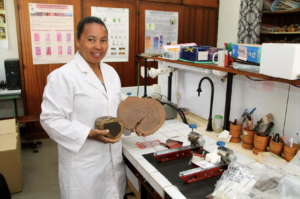
Increasing global demand for timber has led to a surge of illegal exploitation and deforestation which is accelerating climate change. To address this challenge, researchers in the USAID-supported Partnerships for Enhanced Engagement in Research (PEER) in Peru, Madagascar, and Indonesia are partnering with the U.S. Forest Service to develop tools to assist private and public organizations with wood species identification and help curb illegal logging.
To ensure a just energy transition for the Indigenous Wayuu people, USAID partnered with Colombia’s National Training Service to provide young people in Wayuu communities the skills needed to enter the labor market and become entrepreneurs in the region’s new renewable energy economy.
We are excited to announce the winners of the 2022 Climatelinks photo contest––our biggest contest yet. We received more than 200 submissions from the Climatelinks community, representing more than 45 countries.
Nature-based solutions (NbS) are one of the five foundational principles of USAID’s new 2022-2030 Climate Strategy. On August 30, 2022, USAID held a webinar to explore the ways the Agency is developing and applying NbS to the challenges of climate change.
SERVIR, a joint program of USAID and NASA, is responding to the needs of farmers in West with new efforts focused on financial instruments and private-sector engagement.
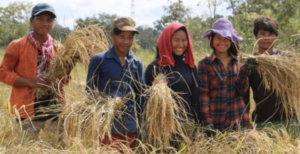
This is the story of how USAID has supported IBIS Rice since 2009 to source and sell wildlife-friendly, low-carbon emission rice from the Northern Plains of Cambodia and the company’s multi-year journey from donor-subsidized commodity producer to commercial bank investee.