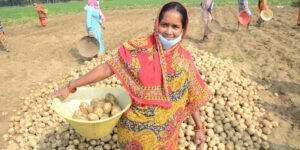
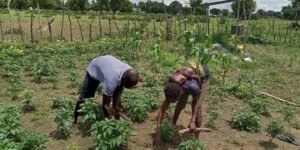
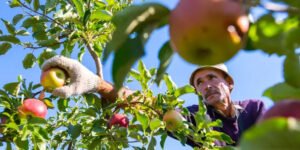
This blog highlights USAID’s work that is already underway to strengthen the resilience of women farmers through insurance and finance, as well as key learnings from CARE and FAO’s work in the space of gender and climate-smart agriculture.
This position is located within the Bureau for Latin America and the Caribbean, Office of Regional Sustainable Development, Environment and Energy Team (LAC/RSD/ENVE). LAC/RSD serves as the principal source of region-specific technical assistance in the areas of democracy, governance, human rights, violence prevention, health, nutrition, education, workforce development, economic growth, agriculture, environment, and energy.
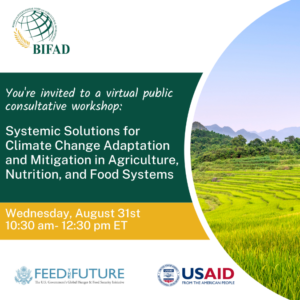
The meeting will publicly introduce the BIFAD Subcommittee on Systemic Solutions for Climate Change Adaptation and Mitigation in Agriculture, Nutrition, and Food Systems.
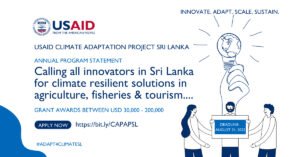
The Climate Adaptation Project seeks concept papers from qualified organizations in Sri Lanka to implement programs related to climate adaptation within the framework of the project’s objectives.
The potential for solar-powered irrigation in sub-Saharan Africa is high, as demonstrated by research conducted by ILSSI partner, the International Food Policy Research Institute (IFPRI).
The Fish Innovation Lab is working to address climate-related shocks to aquaculture and fisheries through current research to estimate aquaculture production and value chain performance in Bangladesh and promote sustainable fisheries management in East African biodiversity hotspots and climate refugia.
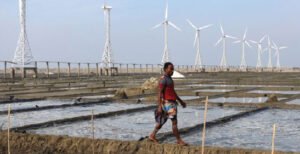
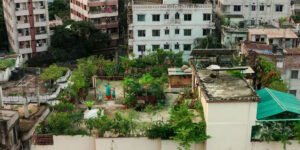
Bangladesh submitted its updated nationally determined contributions (NDCs) to the UNFCCC in August 2021 and is committed to reduce GHG emissions in the power, industrial and transportation sectors.
In its latest targeted analysis of the Ukraine crisis, the Famine Early Warning Systems Network (FEWS NET) assessed how the conflict may further contribute to food insecurity in already vulnerable countries.
Working on the ground with partner governments and local actors, USAID aims to achieve a resilient, prosperous, and equitable world with net-zero greenhouse gas emissions.
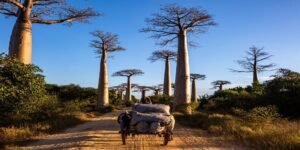
Madagascar is home to around 5% of the world’s biodiversity, but as one of the world’s poorest countries, biodiversity is under severe threat. USAID has partnered with The Foundation for Protected Areas and Biodiversity of Madagascar (FAPBM) to introduce a new approach to financing protected areas.