The U.S. Government’s Feed the Future program is making climate change a central objective of their strategy. Global food security is under stress from increasingly intense and frequent heat waves, droughts, heavy rains, and major storms, according to the new report by the United Nations Intergovernmental Panel on Climate Change.
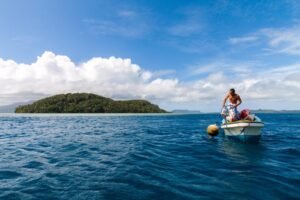
To address these challenges, USAID partnered with the Sustainable Ocean Fund (SOF), to make pioneering impact investments into marine and coastal projects and enterprises. The $132 million Fund invests in projects across Latin America and the Caribbean, Africa, and Asia and the Pacific that aim to build resilience in coastal ecosystems and create sustainable economic growth and livelihoods in the blue economy.
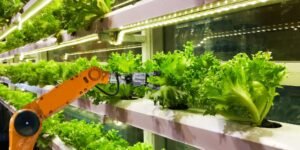
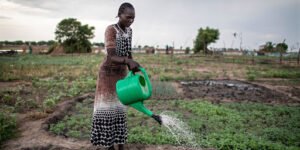
The agriculture sector across the globe not only feeds the world’s population but it also provides nearly 27 percent of worldwide employment. Yet the sector faces significant sustainability challenges: it is estimated to contribute more than one-fifth of global greenhouse gas emissions through a combination of agricultural activities and land use changes, and it consumes, on average, 70 percent of the world’s freshwater resources.
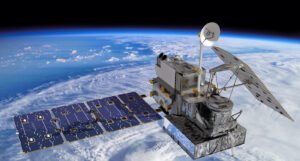
At first glance, USAID and NASA seem like an unlikely pair. NASA’s satellites watch the world from above; USAID helps farmers around the world grow crops from the ground up. But through a 15-year partnership, we’re helping solve one of the greatest threats to Earth — the climate crisis — and simultaneously strengthening resilience against poverty, hunger, malnutrition, and lack of access to safe water and sanitation.
Between 2014 and 2015, Jamaica experienced one of the worst seasons of drought in recent history. The impact on the Jamaican economy, especially rural livelihoods, was devastating. According to reports, the annual agricultural production declined by 30 percent from 2013 to 2014. This, along with brush fires, resulted in a $J1 billion ($6.5 million) loss for the economy.
While technological and institutional innovations in agri-food systems over the past century have brought dramatic advances in human well-being worldwide, these gains increasingly appear unsustainable due to massive, adverse spillover effects on climate, natural environment, social justice and public health and nutrition.
In September and October, we highlighted work focused on climate finance. We posted the first two parts of a blog series highlighting a new wave of private investment for climate solutions, answering the call to climate action and climate finance in action.
A decade after the introduction of the NAP process, now is an opportune time to reflect on lessons learned and consider how USAID and other development partners can most effectively support developing countries’ NAP processes into the future.
As an Agency that stares down the world’s toughest challenges, none pose a greater threat than climate change. The science is clear: we have a narrow window remaining to dramatically reduce global emissions or we all face catastrophic consequences — with the most vulnerable populations continuing to get hit the hardest.
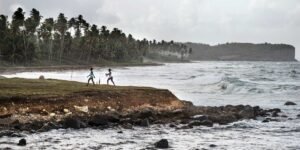
The Eastern and Southern Caribbean (ESC) countries are on the front lines of the climate crisis, experiencing some of the most severe impacts of climate change, ranging from prolonged periods of drought to increasingly strong tropical storms and hurricanes.
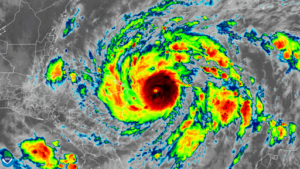
In November 2020, two back-to-back category 4 hurricanes, Eta and Iota, struck Central America, making landfall on the coast of Nicaragua, near its border with Honduras, and also affecting El Salvador and Guatemala. Altogether, they caused an estimated one billion US dollars in damage. Despite such impacts, the region was better able to prepare for and respond to Eta and Iota using space-based technologies.
USAID’s work on ocean plastic pollution operates at the intersection of several related problems and highlights opportunities for innovation in waste management.
Leveraging the learning generated from USAID’s portfolio of climate change and blended and innovative finance programs, and drawing lessons from other leaders in the space, USAID aims to facilitate additional investment into meaningful development projects that contribute significantly to climate change targets.
CEADIR’s final report contains summaries and links to seven years of assessments, analyses, tools, and training and technical assistance materials on planning, financing, and implementation of clean energy, sustainable landscapes (natural climate solutions), and climate adaptation.
The 2021 Climatelinks photo contest was a huge success! We received more than 100 stunning submissions from the Climatelinks community, representing more than 22 countries.
After more than three years supporting Southeast Asian agribusiness, forestry and other land use companies to lower their greenhouse gas emissions, USAID Green Invest Asia found this sector often lacks trust to jointly address climate risks – and opportunities – even when they share suppliers.
To strengthen communities' access to and management of water and pasture, USAID EKISIL—which means “peace” in the local language of Karamoja—initiated climate risk management (CRM) actions in the Abim, Kaabong, Kotido, and Moroto districts
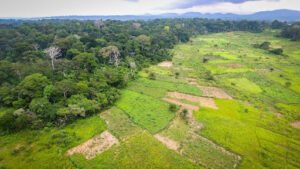
With agriculture driving deforestation, global climate protection and biodiversity conservation goals seem to collide with the drive to produce more food. Researchers warn of an impending “food security-biodiversity-climate” crisis and “looming land scarcity.”
With USAID support, a local traditional chief and his administration are using land resource rights to empower women, protect forests and wildlife, and build a chiefdom for the future.