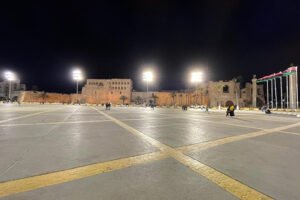
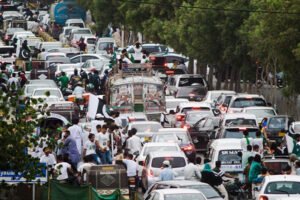
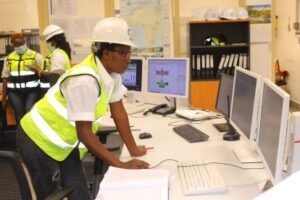
Libya has vast energy resources. With electricity prices heavily subsidized by the national government and people experiencing daily power outages, public awareness of the need to conserve energy is limited.
Climate adaptation can take many forms, ranging from disaster risk reduction to natural resources management, according to the Fifth Assessment of the Intergovernmental Panel on Climate Change.
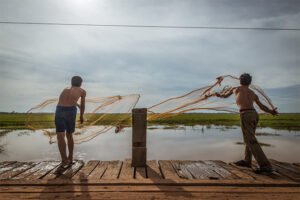
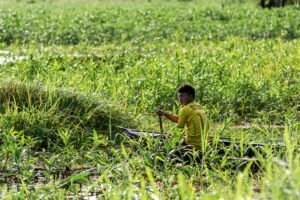
This blog is part of the Benefits of Climate Risk Management blog series that aims to provide evidence-based deep dives into USAID case studies. A USAID-funded Cambodia fisheries project outperformed productivity goals after incorporating climate-sensitive design, including planning for increased risk of drought and extreme heat events.
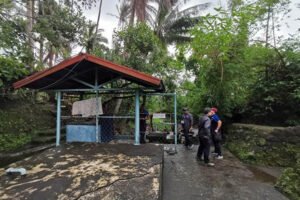
In December 2019, Typhoon Kammuri flooded parts of Legazpi City, one of the biggest natural hazard hotspots in the country. Earlier that year, USAID had helped the local water district develop an emergency preparedness plan for maintaining and restoring water services when disasters strike.
Sustainable transportation is critical for both inclusive economic growth and low-emissions development. A long-term strategy (LTS) is a policy tool that establishes a vision and pathway towards sustainable, low-emissions development to 2050, and helps national planners understand the actions needed to achieve that vision while also supporting national climate commitments.
In response to growing demand from countries seeking support for increased electric vehicle (EV) deployment to bolster climate change objectives, the USAID-NREL Partnership has developed several different projects aimed at streamlining development of EV charging infrastructure, workforce training, and grid management, which build upon the recently launched global Greening the Grid EV Toolkit.
Tremendous progress has been made globally to reduce the burden of malaria. Between 2001 and 2013, the world saw a 47 percent decline in malaria mortality.
Climate change is a complex global issue affecting all aspects of life and finding adaptive solutions can seem overwhelming. Integrating climate change adaptation into everyday life does not need to be so challenging.
Countries around the world are taking action to achieve national and international climate goals, looking beyond the next few years, and creating mid century plans. As of January 2021, 27 countries and the European Union have submitted a Long-Term Strategy to the United Nations Framework Convention on Climate Change.
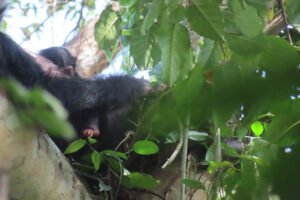
The baby chimpanzee nestled in its mother’s arms was a joyful surprise for the Bossou Forest community of southwest Guinea. On November 14, 2020, residents witnessed the first birth of a western chimpanzee in the Bossou Forest in almost a decade.
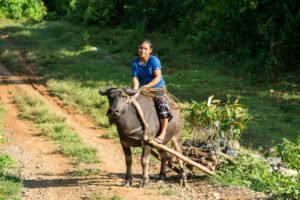
This blog series features interviews with the winners of the 2020 Climatelinks Photo Contest. This photo, submitted on behalf of the USAID Protect Wildlife project in the Philippines, is available on the Climatelinks Photo Gallery.
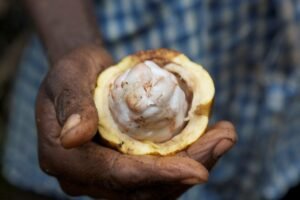
Cocoa certification may not be doing its job. The expansion of the international cocoa industry across the world’s tropical regions has caused significant destruction of tropical forests, releasing carbon dioxide into the atmosphere and destroying habitat.
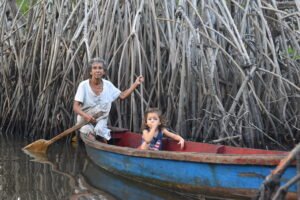
This blog series features interviews with the winners of the 2020 Climatelinks Photo Contest. This photo, submitted on behalf of Guatemala’s USAID Biodiversity Project, is available on the Climatelinks Photo Gallery.
BiodiversityLinks, USAID’s newly refreshed and relaunched knowledge portal for biodiversity conservation, features key USAID tools and resources, as well as new evidence and learning.
When women are able to fully participate and lead in the workforce, we know that businesses prosper. Research shows that gender and ethnically diverse companies outperform industry standards by 25 percent.
This blog series features interviews with the winners of the 2020 Climatelinks Photo Contest. This photo, submitted on behalf of Peru’s USAID Pro-Bosques Activity, is available on the Climatelinks Photo Gallery.
This blog series features interviews with the winners of the 2020 Climatelinks Photo Contest. This photo, submitted on behalf of SERVIR West Africa, is available on the Climatelinks Photo Gallery.
This blog series features interviews with the winners of the 2020 Climatelinks Photo Contest. This photo, submitted on behalf of iDE Nepal, is available on the Climatelinks Photo Gallery.
The Feed the Future Innovation Lab for Markets, Risk and Resilience (MRR Innovation Lab) invites researchers at U.S. universities to submit proposals for research projects that support our mission to generate and transfer into action innovations that will bolster resilience, keeping rural individuals, households, communities and markets in positions of economic viability from which they can sustain and accelerate a path of inclusive agricultural growth.