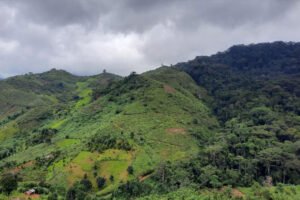
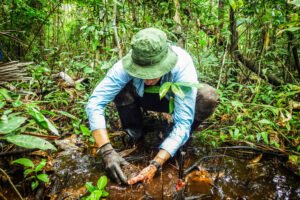
There is an urgent need to speed and scale up profitable business models that secure sustainable, deforestation-free supply chains. There is also a need to develop innovative strategies to scale landscape restoration and conservation.
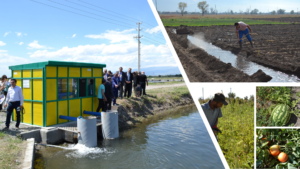
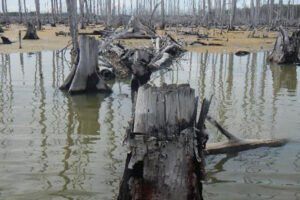
Armenia’s Ararat Valley, a 1,177 square-kilometer swath of land located to the east of Mount Ararat, is home to critical artesian aquifers and central to the country’s economic stability. The aquifers are a frequently tapped resource for public services, agriculture, and fish farming, as well as cooling of Armenia’s nuclear power plant.
Uptake of low emissions agriculture research outputs by policymakers and other stakeholders requires time. Even when researchers are interested in pursuing the scaling and use of research outputs, most are not incentivized to take this on. Allocating targeted resources and donor support, while involving science communicators and outreach specialists can be effective in overcoming constraints to delivering low emission development research to policymakers.
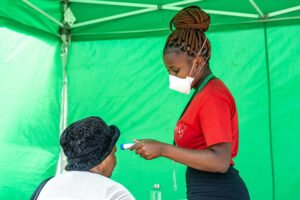
This is the first of three blogs examining the lessons and implications of the COVID-19 pandemic for sustainable landscapes programs. At a time when everyone is focused on the novel coronavirus disease 2019 (COVID-19) some might think that ongoing efforts to support programming in sustainable landscapes have little to offer at the current moment.
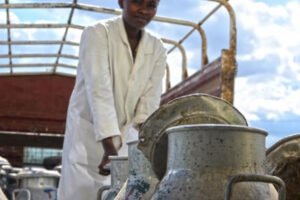
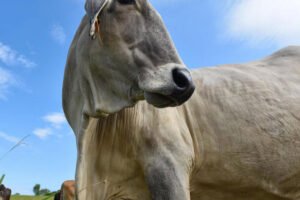
Research suggests that dairy farmers can reduce their carbon footprint by improving animal and herd management. The growing global population and increasing consumption of meat and dairy will increase global animal protein demand by 60 percent by 2030.
Natural disasters don’t discriminate based on age. Everyone in a community is affected when a typhoon hits, from the youngest to the oldest. Given that climate change is driving an increase in the number and severity of storms, floods, and drought, even young children need to learn to be prepared.
Complex relationships between the climate, population growth, land cover change, and other interactions make decisions on land use planning, water permitting, and donor investments in natural resources management challenging. Decision-making on how and where to make investments is improving in Tanzania due to development partners becoming more proficient in using sophisticated environmental analysis tools such as composite index mapping.
92 developing countries included livestock-related emissions as a target for mitigation in their Nationally Determined Contributions (NDCs). One of the biggest challenges to achieving mitigation in the sector is tracking emissions, for which national inventories are a key tool.
Perú es el cuarto país con el mayor volumen de turba tropical, cuya mayor parte se encuentra relativamente menos degradada en comparación con otras regiones del mundo. Sin embargo, esto podría cambiar. La creciente presión del desarrollo y la carencia de políticas específicas de protección ponen en riesgo a las turberas de Perú y sus reservas de carbono.
Residents of Guatemala’s dry corridor are hungry. In 2018, drought-related crop failures directly affected one in 10 Guatemalans and caused extreme food shortage for upwards of 840,000 people according to the UN’s Food and Agriculture Organization (FAO). Thousands of Guatemalans support and feed their families with subsistence farming and the alarming climate trends of the dry corridor are making each year harder to survive.
Peru stands as the country with the fourth-highest volume of tropical peat, most of which is relatively less degraded than in other regions of the world. However, this could change. Increasing development pressure and lack of peatland-specific protection policies puts Peru's peatlands— and its carbon reserves—at risk.
Back in 2015, the international community committed to a shared global vision towards sustainable development – the 2030 Agenda – including 17 Sustainable Development Goals (SDGs). The Goals identify the areas in which resources are most needed. But with the realization that meeting the Goals by 2030 would require filling an annual financing gap of 2.5 trillion dollars, the Addis Ababa Action Agenda (AAAA) called upon a broader mobilization of resources, including private ones.
Planners at USAID and in host country governments need to choose how to invest funds to reduce greenhouse gas (GHG) emissions from land. Should they focus on establishing or strengthening protected areas in the east? Restoring mangroves in the north? Improving timber harvesting practices in the south? In each country, there are many choices.
Although half of global mangrove deforestation since 2000 has been in Indonesia, Bintuni Bay and Mimika District have some of the largest intact areas of mangroves in the world. These two areas are also home to many indigenous groups and have special autonomous governance status and exceptional biodiversity.
During this next event in a series of joint Climatelinks-CEADIR webinars, the author of this assessment will present findings and opportunities. Representatives of global reinsurance companies SwissRe and MunichRe will also join to discuss their experiences with parametric insurance for utility-scale VRE in Latin America and beyond.
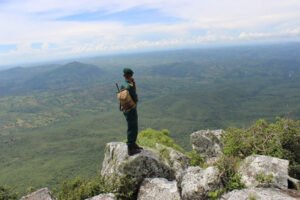
In Central Malawi, nestled below Chipata Mountain and slightly to the west of Lake Malawi, lies Nkhotakota Wildlife Reserve, Malawi’s largest remaining wild landscape and oldest wildlife reserve. The reserve was home to 1,500 elephants in the 1990s. By 2015, there were fewer than 100 left.
The ways we use land—for instance, agriculture, forestry, urban development, or ecosystem protection—has long-term impacts on global climate change. Approximately one quarter of net global greenhouse gas (GHG) emissions come directly from land use (like agriculture) and land use change (like deforestation).
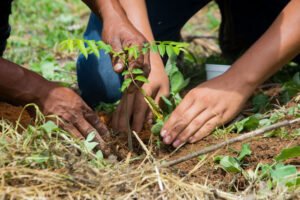
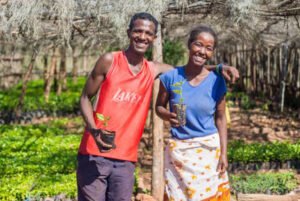
Jean Bruno, nursery agent, and his wife work at their tree nursery in Sahambavy, Fianarantsoa, Centra Madagascar. In Madagascar, where bush fire and slash hand-burn agriculture are a common practice, reforestation is crucial. The ASOTRY project, implemented by ADRA and funded by USAID/FFP, restores forests through reforestation activities.
We are in a time of crisis and great uncertainty. Faced with the current situation, we need to support Latin American countries so the food security of the population is not at risk. Ensuring production, mobility, and distribution of food is one of many current challenges.
Tanzania’s Rufiji River Delta hosts the largest mangrove forest in Eastern Africa, a critical coastal ecosystem that provides habitat for migratory birds and diverse marine life, stabilizes the shoreline, and traps sediment and nutrients washing downstream in the Rufiji River. Unfortunately, overexploitation and degradation of these mangrove forests present a persistent challenge.