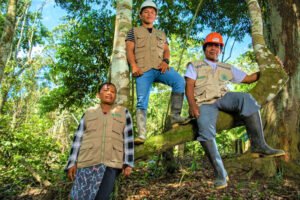
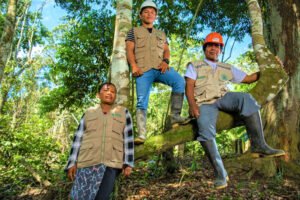
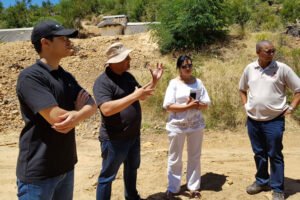
Los bosques cubren 69 millones de hectáreas en Perú, y representan casi un 60% del país (MINAM 2014). Las Regiones Loreto y Ucayali son las dos regiones amazónicas más grandes del Perú y están tradicionalmente ocupadas y protegidas por Pueblos Indígenas, asentados en comunidades nativas.
Forests cover 69 million hectares in Peru, representing nearly 60 percent of the country (MINAM 2014). Loreto and Ucayali are the two largest Amazon regions in Peru and are traditionally occupied and protected by Indigenous Peoples. These communities have ancestral ties to Amazon forests in Peru and are important allies in supporting sustainable forest management.
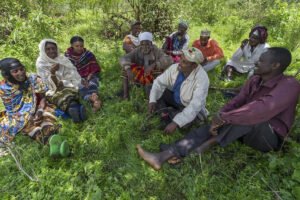
This post is written by Arely Valdivia, Communications Coordinator for CIAT Nicaragua, and was originally published on the CCAFS website. The women of the municipality of Namasigue, Honduras, have found empowerment in the Local Technical Agroclimatic Committee (LTAC) of the municipality of Choluteca.
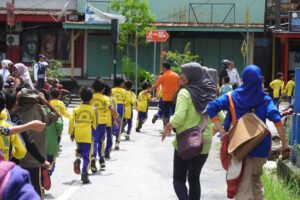
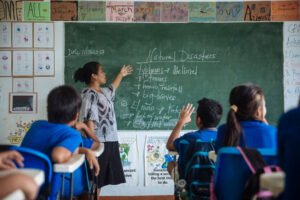
With climate change exacerbating the number and intensity of weather-related natural disasters like typhoons and floods, it is important that communities prepare for when a disaster hits. We need to think through what to do during an emergency, and how to reduce its negative long-term impacts.
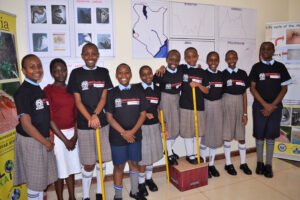
While at first glance the relationship between education and climate change may not be clear, a number of challenges and opportunities become apparent when the two are considered together. Climate change education is highly relevant to youth, who will grapple with the impacts of climate change for decades to come.
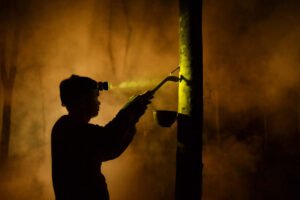
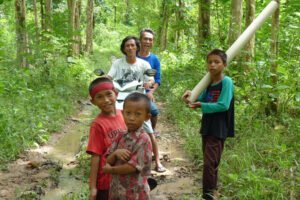
Smallholder rubber plantations represent a threat and an opportunity for carbon stock and biodiversity in Indonesia. A threat because poor agriculture and forestry practices lead to overuse of pesticides and fertilizers, water and river pollution and deforestation; and an opportunity because smallholder rubber plots hold a much higher biodiversity and carbon stock than their most common alternative: palm oil monoculture.
South Africa—the third most biodiverse country in the world—is home to more than 95,000 known species and a diverse range of biomes, from forests to deserts to river delta systems and more. The rich biodiversity of these natural areas plays an important role in the South African Government’s progressive green economy agenda, as it recognizes that those areas provide a wide range of ecosystem services for its people, including food, water, clean air, medicine, resources for livelihoods, recreation, and energy to power daily life and industry.
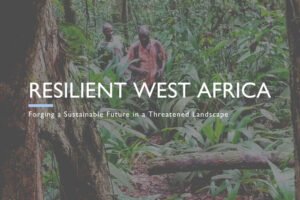
Deforestation, forest degradation, poaching, and environmental problems caused by climate change pose serious threats to many of West Africa’s already fragile ecosystems, including the region’s biodiversity-rich forests. Award-winning international journalist David Goodman learned about the severity of these threats as he traveled to the countries of Sierra Leone and Liberia to document the work of the USAID-funded West Africa Biodiversity and Climate Change (WA BiCC) Program.
There is great value in pushing for youth education in climate change action. Designing projects that focus on issues youth care about can lead to unexpected, positive outcomes. And engaging youth as active participants with the autonomy and agency to act can have lasting effects long after a development project ends.
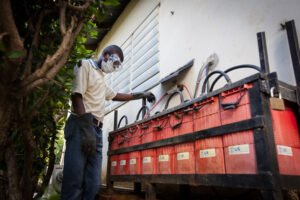
Reliable electricity can mean life or death for a patient. Healthcare facilities need electricity to power lifesaving medical equipment and preserve perishable supplies, such as vaccines. Amidst the COVID-19 pandemic, the stakes are even higher, as more people around the world need treatment and services.
The amount of development assistance available for clean energy, sustainable landscapes, and climate adaptation investment is relatively small. Partner governments have multiple urgent and competing needs for public expenditures, recently exacerbated by the global pandemic and recession.
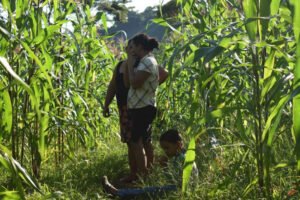
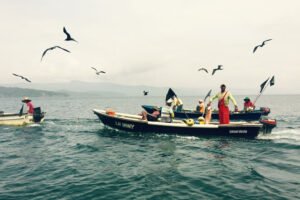
Postcards from the field feature submissions to the Climatelinks photo gallery. This photo was submitted to the “Planning a food-secure future” category of the 2019 Climatelinks photo contest.
Why do many community-based forestry enterprises (CBFEs) perform poorly even after years of donor and government investment? This was one of the questions that motivated a USAID Productive Landscape (ProLand) project investigation into CBFEs as a strategy for improving land management.
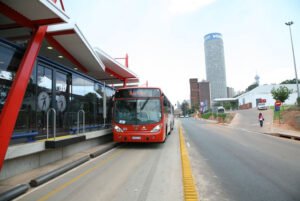
There is no doubt about it: The world is experiencing an unprecedented wave of urban population growth. Although the challenges posed by this phenomenon are great, the opportunities for advancing equity and sustainability are just as considerable. Indeed, designing “neighborhoods for all” was the central theme of a recent industry training seminar coordinated by the USAID South Africa Low Emissions Development (SA-LED) Program.
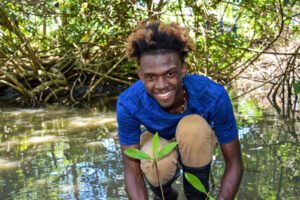
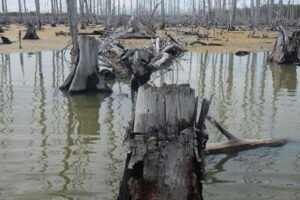
Half the world’s total mangrove deforestation since 2000 has taken place in Indonesia, where the main driver is conversion for shrimp ponds. A new cost-benefit analysis by the USAID-funded Climate Economic Analysis Development, Investment, and Resilience (CEADIR) Activity sheds light on the financial and economic value of mangrove conservation, including impacts on near-shore fishing and greenhouse gas emissions.
“Climate change does not drive conflict in a vacuum but contributes to conflict in already fragile contexts and in combination with a number of other critical factors.” This is one of five themes to emerge from a literature review as reported in a new study, which critically assesses how peacebuilding programming can also produce adaptation benefits (and vice versa).
Competition for natural resources such as water, land, and forests can be a source of contention, and sometimes even violence. Climate change can exacerbate these issues by impacting resource availability and quality. As climate variability increases, so will its potential to worsen conflict.
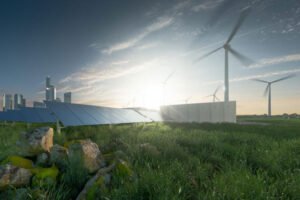
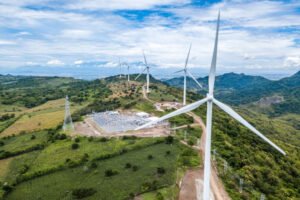
Open, transparent, and competitive renewable energy procurement, coupled with declining prices for solar and wind technologies, has facilitated billions of dollars of investment at record low prices. According to the Renewables 2020 Global Status Report, 109 countries around the world had held renewable energy auctions by 2019, up from 98 in 2018. Worldwide, auctions have become an emerging best practice to procure least-cost energy.
To support developing countries’ long-term climate mitigation strategies—plans for reaching ambitious, mid-century greenhouse gas (GHG) reduction goals—USAID’s Transparency and Long-term Strategies (T-LTS) project will soon start a number of activities. These activities include conducting workshops on regionally important topics in Asia and Latin America, helping countries link long-term strategies to their five-year emissions reduction targets, and extending sectoral planning to 2050 for better sequencing and improved coordination around climate goals.
As we all know too well, the coronavirus pandemic has left no one untouched, fundamentally altering billions of people’s daily lives, disrupting the global economy, and most notably, with millions contracting the virus and the resulting strain of severe illness, hospitalizations and the tragic loss of human life. The crisis has also laid bare many of society’s weaknesses, including economic inequalities, institutional shortcomings, and inadequate health care delivery systems, leaving vulnerable populations to bear the brunt of the effects of the pandemic.