To enable scaling of climate programs, development assistance organizations can help partner countries leverage new sources of financing, including institutional investors, impact investors, and international and domestic capital markets. However, new approaches are necessary to achieve impacts on a much larger scale.
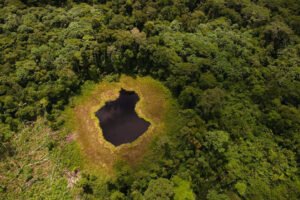
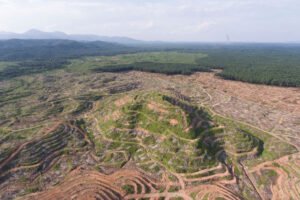
One of the major challenges in monitoring forests is identifying forest degradation processes. Degradation events can be “small, subtle, and temporary,” making their identification difficult. However, recent years have seen advancements in satellite remote sensing technology, which has in turn revealed changed patterns of illegal deforestation activity in the Amazon rainforest.
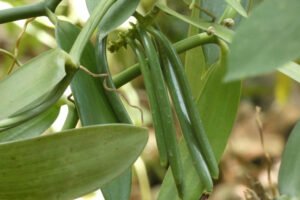
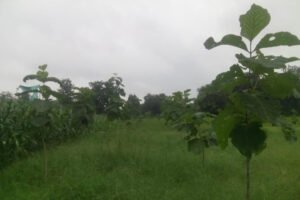
Vanilla. It’s one of the world’s great flavors and scents, coveted for centuries for use in everything from baked goods to soaps. And it is also helping expand tree cover in Indonesia. Indonesia’s islands have been inhabited for millennia. Dramatic increases in population over the last few decades and more recent expansions of unsustainable industrial agriculture have shifted what had been a system in balance.
The Centers for Disease Control and Prevention have provided clear guidance on the most critical measure we can all take to protect human health and reduce the spread of COVID-19: “Hands should be washed with soap and water.” While clear and simple, this directive is far from attainable for the 3 billion people around the world who lack access to soap and safe water at home.
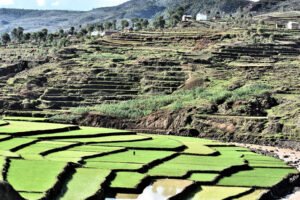
In 2015, India set an ambitious goal of creating a sink of as much as 3 billion tons of carbon by 2030. To do that, the country will need to increase tree cover by 10 million hectares and enhance forest stocks on a further 10 million hectares—about one-quarter the total area of California—which is a huge task.
Chittagong Hill Tracts (CHT) is a region in Southeast Bangladesh historically impacted by porous borders, instability and armed conflict. More than two decades of fighting formally came to a close in 1997 with the signing of the Chittagong Hill Tracts Peace Accord but social, economic and political integration is a work in progress.
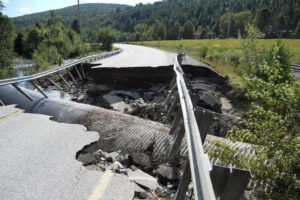
We are in a race against time to improve the resilience of the world’s infrastructure. Demand for infrastructure investment is increasing worldwide. From 2015 to 2030, $90 trillion in new infrastructure investments will be needed—an amount equivalent to the world’s total existing stock.
Long-term changes in climate and wildlife habitat can pose significant effects on human health and increase the risk of infectious diseases like the coronavirus (COVID-19). Several of the roots of climate change can increase the risk of pandemics; for example, deforestation increasingly places humans and animals in contact, which enables pathogens from animals to spillover to humans.
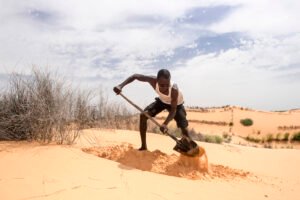
In Djetkoram village, Niger, Catholic Relief Services counters conflict and promotes stability through a Cash-for-Work project, which distributes cash tolocal community memberspeople recently displaced by Boko Haram violence in exchange for work on community projects. The majority of displaced people are seeking refuge in local communities, putting a strain on already vulnerable host families coping with the effects of climate change and poverty.
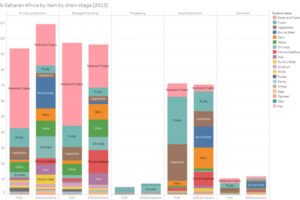
Our food systems are failing us. However, they are also complex and each is unique, which requires many different behavioral changes and interventions along the supply chain. Our food systems are failing us, and a new report from the Transforming Food Systems Under a Changing Climate initiative (launching June 25th) argues that nothing short of a systemic transformation of food systems is required if we are to feed the world’s current and future population sustainably under climate change.
According to the International Energy Agency, global energy demand during the first quarter of 2020 declined by almost 4% relative to the same period in 2019 due to the novel coronavirus pandemic and global lockdowns. Electricity demand was down by 20% in several countries, illustrating the magnitude of disruption of our society.
The amount of development assistance funds available for climate mitigation and adaptation is small relative to the increasing need for it and relative to the magnitude of private capital flowing to developing countries. Improving domestic revenue mobilization, for instance through taxation, can only go so far because many developing countries have relatively small economies. Furthermore, the global pandemic and economic recession only add to the numerous, urgent competing needs for public expenditures.
Implementors of international development projects as well as countries around the world increasingly recognize the private sector as a key partner to meet development and policy goals. But in order to make these collaborations most effective, there are best practices that all parties should follow, such as having a shared objective, equally investing in the relationship, and setting clear expectations.
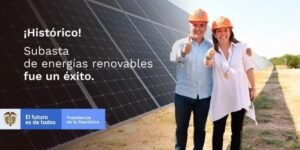
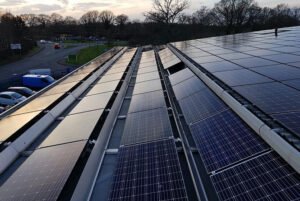
Colombia’s Ministry of Mines and Energy (MME) recently completed its first successful renewable energy auction, enabling the government to obtain variable renewable energy (VRE) at globally low-cost prices. The auction awarded contracts that are estimated to attract more than $1.3 billion of private sector investment and will enhance the country’s capacity to provide reliable electricity supplies to its communities.
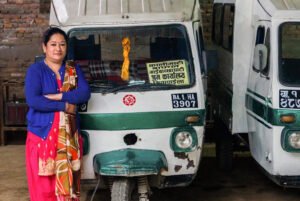
The USAID-funded Kathmandu Vehicle Alliance (KEVA) program, implemented by Winrock International from 2001 to 2006, continues to benefit the environment and people of Nepal due to its role in expanding the electric vehicle market, which has reduced GHG emissions that lower air quality and contribute to climate change.
Climate impacts social and economic development across sectors, in numerous ways. Each sector also has unique opportunities to contribute to climate solutions. USAID integrates climate change in development programming across a variety of technical fields.
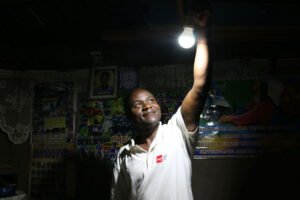
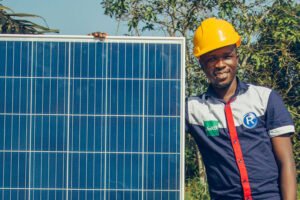
Less than half of Nigeria’s 186 million people have access to electricity. But in the rural village of Gbamu Gbamu, newly installed utility poles and wires act as markers of a brighter future, powered by a new solar minigrid. The grid, an effort of local developers Rubitec Solar and Winrock’s USAID-funded Renewable Energy and Energy Efficiency Project (REEEP), is empowering citizens and their enterprises, providing them with a better quality of life and more stable sources of income.
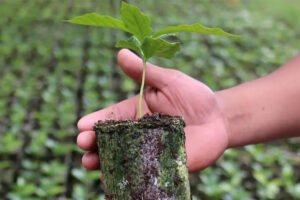
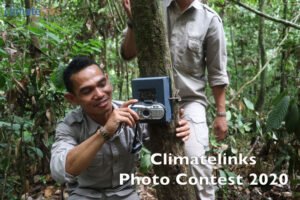
Do you have great photos of climate and development? Do you want to promote your work on Climatelinks? Now is your chance! Submit your photos so we can share your work or your organization’s work with our global community of climate practitioners. Our 2020 Photo Contest theme is Healthy Forests for a Healthy Future.
How can programs encourage and enable local commercial banks to lend to companies supplying solar home systems for off-grid customers? Power Africa supported the USAID-funded Climate Economic Analysis for Development, Investment, and Resilience (CEADIR) Activity’s training and technical assistance on this topic. In the process,
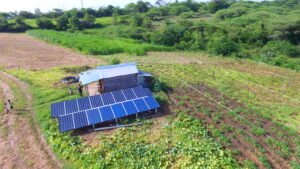
An irrigation system with solar photovoltaic energy at the Ramon Rodriguez farm, in Dominican Republic, provides resilience to drought using renewable energy. This system was installed in May 2017 under the USAID Climate Resilience and Index Insurance Program for Small Farmers in the Dominican Republic, executed by the REDDOM Foundation.