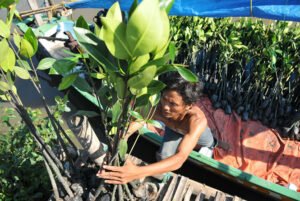
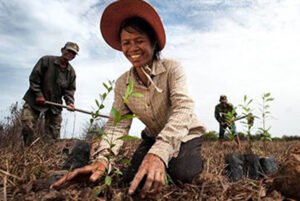
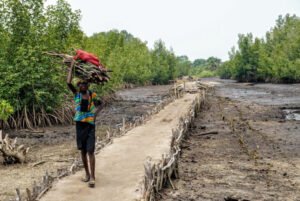
Half of the world’s total mangrove deforestation since 2000 has been in Indonesia, where the main driver has been conversion for shrimp ponds. A new cost-benefit analysis by the USAID-funded Climate Economic Analysis Development, Investment, and Resilience (CEADIR) Activity sheds light on the financial and economic value of mangrove conservation. Income losses from mangrove-supported activities eventually outweigh shrimp revenues in the converted areas.
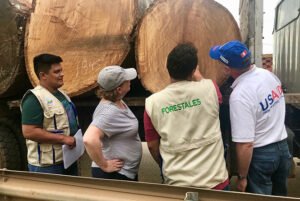
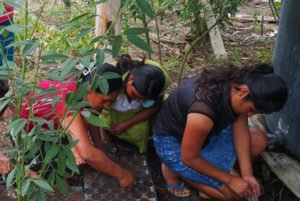
USAID/Peru’s Amazonia Verde project aims to conserve biodiversity and ecosystem services in priority areas of the Peruvian Amazon and to reduce greenhouse gas (GHG) emissions and land use change. To achieve these goals, an inter-office design team at the USAID/Peru Mission spent two years designing an integrated project that supports biodiversity conservation, combats illegal logging and deforestation, addresses negative impacts of extractive industries, strengthens Indigenous people’s rights and resources, and supports Peru’s international commitment to reduce GHG emissions
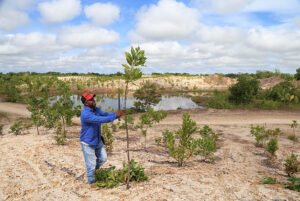
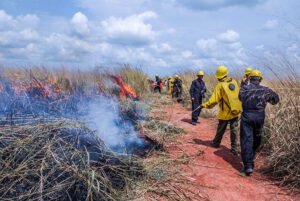
Illegal alluvial gold mining in Colombia is a complex phenomenon that not only sweeps away vegetation but alters the balance of ecosystems through aggressive mechanical extraction methods that create deserts. In Antioquia, Colombia, this has degraded over 45 thousand hectares of land, stripping away valuable trees that can absorb carbon dioxide, one of the main greenhouse gases.
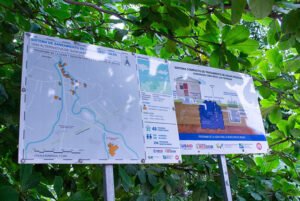
In the Dominican Republic, USAID works to jointly promote climate adaptation and resilience to address a lack of adequate sanitation and wastewater treatment facilities, which limits the population’s access to clean water and presents a key threat to the country’s coastal biodiversity in the form of untreated sewage. USAID/Dominican Republic originally implemented the Climate Adaptation: Climate Risk Reduction activity using only climate change adaptation funding.
Ecosystem-based adaptation (EbA) is a nature-based method for climate change adaptation that can reduce the vulnerability of people, natural systems and economies to climate stressors. EbA provides flexible and cost-effective approaches that enhance resilience through the improved management and conservation of ecosystems. EbA can be an effective adaptation strategy alone or as an element of broader national, regional and community adaptation plans.
Indonesia is considered a “mega-diverse” country and is home to unique ecosystems and species, including orangutans, tigers, rhinoceros, elephants, and birds of paradise. The country has a high rate of endemism and contains important terrestrial ecosystems, such as mangroves, lowland forests, peatland, swamp forests, and montane forests.
Climate adaptation and disaster risk management (DRM) are connected by the common goal of reducing the impacts of disasters, minimizing the consequences of extreme events, and increasing resilience. Valuable knowledge sharing and partnership opportunities exist for those willing to bridge climate adaptation and DRM. Climate change can increase the risk of disaster by increasing hydrometeorological hazards -- such as storms, flooding or drought -- that result in damage or loss of life.
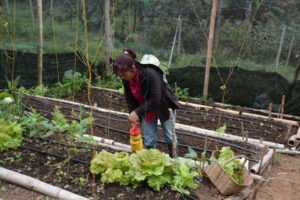
There is an increasing awareness of the importance of adapting agricultural systems and rural livelihoods to the challenges caused by climate change. This awareness has come hand in hand with the need to guarantee that both men and women — of different ages and ethnicities — can adapt equally to the effects of climate change. And while, in recent years, the importance of integrating gender issues in climate change initiatives in the agricultural sector has been increasingly acknowledged, it is not always obvious how to systemically and practically carry out gender integration.
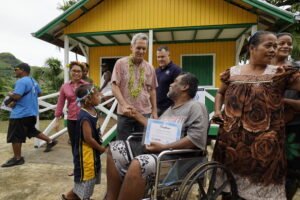
Typhoon Maysak crossed Chuuk and Yap States in Micronesia between March 29 and April 1, 2015, leaving a path of destruction in its wake. As USAID’s implementing partner under the Disaster Preparedness for Effective Response project, the International Organization for Migration mobilized to implement USAID’s Typhoon Maysak Reconstruction Project (TMRP).
Recent reports are taking an economic view of climate impacts, making a clear case for acting early rather than reacting late. The Global Commission on Adaptation’s 2019 report, Adapt Now: A Global Call for Leadership on Climate Resilience, warns leaders around the world that we simply cannot afford the costs of inaction on climate change.
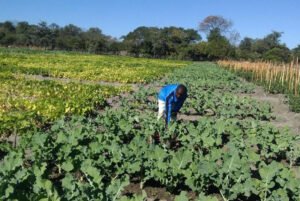
Over the past 13 years, I have had the opportunity to work with the poorest communities across Zimbabwe. I have seen families struggling to adapt to the changing climate, as their livelihoods mainly depend on limited and dwindling natural resources. However, through asset creation, I have also seen incredible strength, resilience, and community dedication to improving communal resources and food security.
Since 2012, the USAID Vietnam Forests and Deltas program (VFD) has been helping the Government of Vietnam develop and operationalize a national Payment for Forest Environmental Services (PFES) program that has already directed over USD $500 million to forest owners as financial compensation for maintaining forest cover. For example, Vietnam’s hydroelectric power plants now reward upstream forest owners whose trees keep soil in place, avoiding the sediment buildup that drives up operating costs.
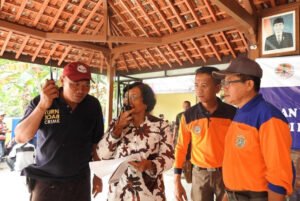
Located in Indonesia’s East Java Province, Kalikatir Village is prone to flash flooding caused by the Klorak River. The river runs through three villages: Dilem and Begaganlimo in the upstream, and Kalikatir in the downstream. A major flash flood that hit Kalikatir in 2017 was a warning for the 1,500 people that live there. Even though there were no casualties due to the flood, the physical damage was substantial, and had a big impact on people’s lives.
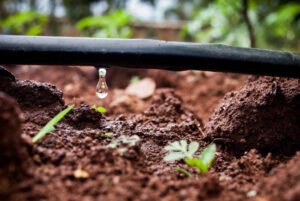
In this post, the Feed the Future Enabling Environment for Food Security (EEFS) project describes how its Water Governance Scorecard can inform policy discussions on water use within the agriculture sector. Water is at the nexus of food security and climate risk management. Smallholder farmers depend on reliable access to water to support production through rainfall and/or irrigation systems. As climate risks mount, variability in water availability and allocation will affect the competitiveness and resilience of the agriculture sector.
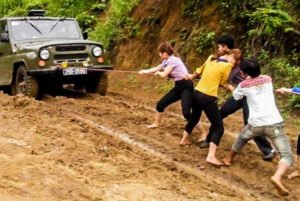
The wheels are spinning, but the vehicle is going nowhere. It’s rainy season in Vietnam, and dirt roads have become rivers of mud. It’s not uncommon for a vehicle to become mired in the muck. But in this case, the vehicle holds much-needed funds that won’t be delivered to community-based forest owners unless a team of determined forest fund staff rescues it. It’s a sticky situation — but one that may not happen much longer.
The tropical air hangs over the Sierra Leonean coastal village of Gbongboma like a moist towel. Musa Lahai sits in an enclave of thatched huts, surrounded by women and children sitting around two cooking fires. Orange flames lick the sides of several large kettles of fish stew. Each fish was hard to come by. “Before, we were catching good fish. Now, we’re not,” Lahai says. He is deputy chief of the village, where approximately 90 people survive off earth’s bounties, from harvesting oysters, to deep sea fishing, to farming and growing palm fruit.
The transformative process involved in implementing climate-smart agriculture (CSA) practices can be well observed in the villages of Los Cerrillos and El Danubio in the Cauca department of Colombia where a Climate-Smart Village (CSV) site is located. CSV is an initiative of the CGIAR Research Program on Climate Change, Agriculture and Food Security (CCAFS) in conjunction with the Ecohabitats Foundation and these two communities were chosen to be part of the project due to their vulnerability to climate change and high dependence on agricultural activities.
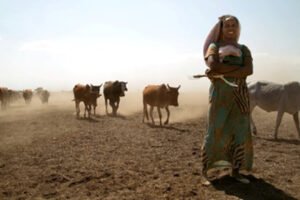
Resilience—the ability to manage through crisis without compromising future well-being—is increasingly recognized as an essential part of global development. Droughts, flooding, severe price fluctuations, and other shocks and crises threaten hard-won development gains and cost millions of dollars in humanitarian assistance each year. As a changing climate makes extreme weather events more intense and unpredictable, it is more urgent than ever that we understand how to effectively build individual, household, and community resilience.
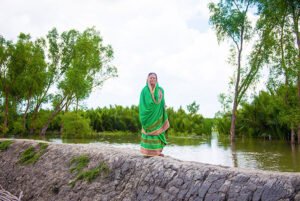
Southwest Bangladesh is a watery world. Houses perch on steep river banks. Storms pummel fragile coastlines. It’s hard not to see this starkly beautiful place as engaged in a battle between water and land — with the water winning. But the land has a new ally, a living hem of mangrove forests made possible by Winrock International’s Climate Resilient Ecosystems and Livelihoods (CREL) project, funded by USAID.
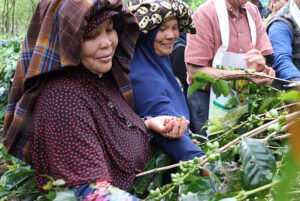
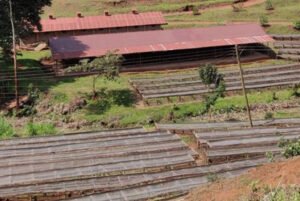
More than 80 percent of the world’s coffee is produced by smallholders. Despite their integral role, these farmers face significant challenges that threaten their livelihoods and the long-term viability of the global coffee supply chain. Limited access to financing and training means that farmers are unable to increase their productivity or rebound from fluctuating market prices.