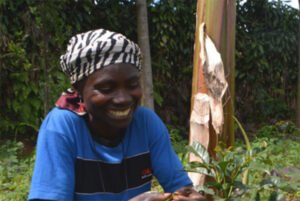
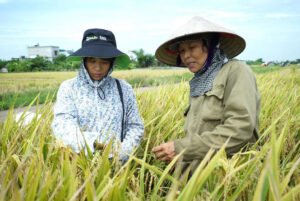
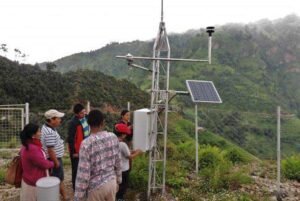
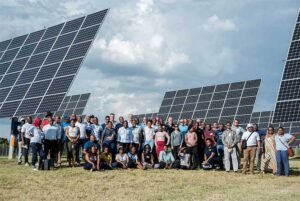
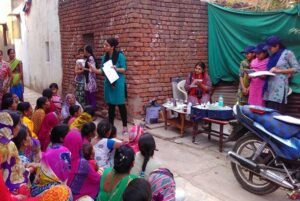
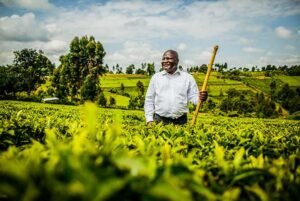
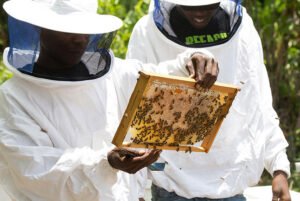
Looking to ensure that coffee farmers continue to invest in coffee in ways that enable them to grow production and quality in the face of climate change, Olam, a global agribusiness and one of the leading green coffee origin exporters, teamed up with the International Institute of Tropical Agriculture (IITA), investing to improve farmer resilience to climate change in the Mt. Elgon region in Uganda.
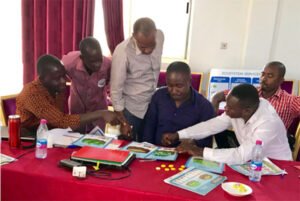
The game is simple. On a brown digital grassland with a single tree, tiny goats mill back and forth. When you decide how many of those goats to buy or sell and how many to insure, clouds float across the screen and one of two things happens: the clouds stop and rain falls, roughly doubling the goats and producing milk for sale, or the clouds move steadily across the screen and half your herd is wiped out.
Research[1] demonstrates that when environmental conditions worsen, the treatment of women and girls worsens. Agriculture has significant impact on the environment that can increase environmental degradation. As communities in environmentally-precarious situations face stress, gender-based violence (GBV) is a negative coping strategy that perpetrators sometimes use to reassert control over women’s bodies and minds.
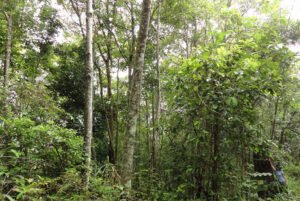
The recent forest fires in Brazil and Bolivia showed once more that traditional approaches to sustainable development and nature conservation are not sufficient to reduce carbon emissions from land use and stop the ongoing destruction of natural resources.
The USAID Climate Economic Analysis for Development, Investment and Resilience (CEADIR) activity designed and implemented a regional activity to accelerate CE private sector investment aligned with national climate change commitments (e.g., Nationally Determined Contributions or NDCs) and CE policy objectives in the target countries of India, Indonesia, the Philippines, and Vietnam.
The Climatelinks community contributed over 100 resources in 2019 on a wide range of topics, from monitoring and evaluation of urban climate adaptation to climate risk screening tools for low-emission energy development. Each contribution is available from the Climatelinks Resource Library.
USAID/Mozambique engaged in programming, assessing, and leading critical climate change technical assistance activities that support low-emission development strategies (LEDS), building climate change resilience, and strengthening local capacity.
Amid growing recognition that climate change is not just an environmental issue, but a concern in all sectors, USAID’s adaptation investments are helping the Agency and its partners more effectively assess, plan for, and manage climate risks.
During 2019, the Climatelinks community contributed over 100 resources on a wide range of topics, from clean cook stoves to sustainable forest management.
“No pilots fail, but no pilots scale.” Dr. Bruce Campbell, director of the CGIAR Research Program on Climate Change, Agriculture, and Food Security, lamented this on the first morning of the 5th Global Science Conference on Climate-Smart Agriculture (CSA).
Since 1991, USAID has been investing in actions that help the Agency in understanding climate change risks and opportunities to reduce vulnerabilities.
As residents of an island nation, Jamaicans are all too aware of the risks, and realities, of climate change. More than half of the population lives within a mile of the coast; most of the those who live inland are dependent on agriculture for their livelihoods.
Countries, like people, rely on stories of the past to guide them in the present and help them prepare for the unknown. The genocide against Tutsi in Rwanda ripped out many pages of stories, climate among them.
South America may be sitting, unaware, on a pile of climate gold, ammunition in efforts to forestall global warming. New maps of tropical and subtropical peatlands suggest these carbon-rich wetlands are more widespread in South America than on any other continent, with significant deposits in the Andean mountains.
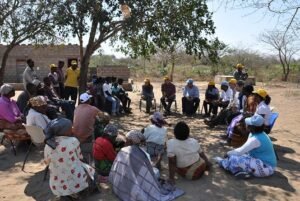
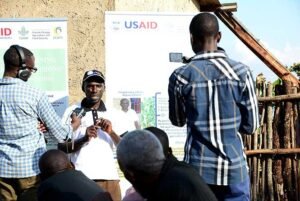
The Rwanda Climate Services for Agriculture project, funded by USAID, has been supporting farmers to use weather and climate information through participatory group processes and innovative radio programming.
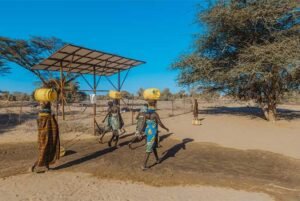
In arid regions with already unreliable water and sanitation services, climate change is a threat multiplier for those who rely on functional infrastructure for basic water, sanitation, and hygiene (WASH) needs.
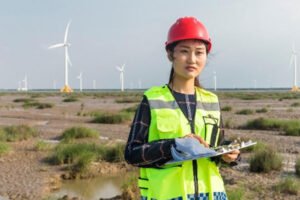
The clean energy sector has seen rapid growth. Countries around the world have embraced these technologies to achieve low emission development goals, increase infrastructure resilience and energy access, and reduce reliance on imported fossil fuels.