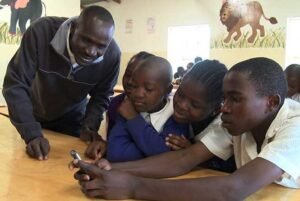
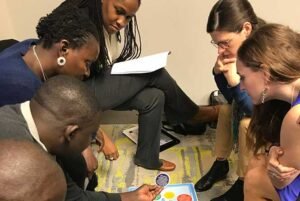
This month, Climatelinks focused on games for development. Games, usually seen as a leisure activity, are also useful learning tools. In general, games used in the context of international development are simplified versions of complex real-world experiences.
Climate change worsens familiar challenges to water and sanitation services, including limited access and poor infrastructure. Innovative approaches, such as games to inform sanitation enterprise development, have the potential to catalyze local solutions for sanitation.
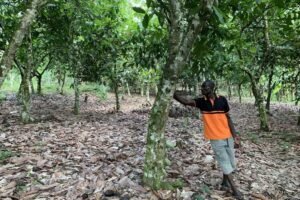
In Ghana, a changing climate is affecting the production of cocoa, one of the country’s major cash crops and its second leading foreign exchange earner.
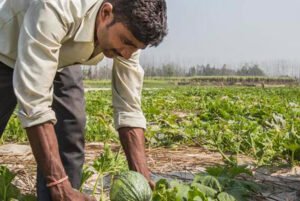
As the frequency and magnitude of climate-related hazards increases, these changes are affecting people’s livelihoods, particularly those of rural and vulnerable populations more than ever.
The USAID-NREL Partnership developed a suite of resources within the Grid Integration Toolkit that provides information about the role that battery energy storage systems (BESS) play in integrating variable renewable energy, such as wind and solar, into large-scale power systems.
Hanzel Cubangbang first learned about the National Renewable Energy Laboratory (NREL) in college. It became his dream to one day see the campus and conduct the types of research he was studying firsthand.
This October, Climatelinks is focusing on games for development, and we would like to hear from you! Games can take a variety of forms, from in-person tabletop games to web-based or mobile applications.
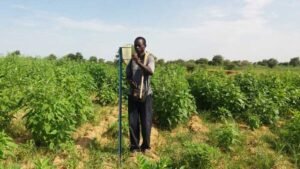
Farmers around the world increasingly rely on long-range weather forecasts when planning their crops. Traditional timing for planting is no longer as reliable as it used to be, and neither are the rains, thanks to shifts in climate patterns.
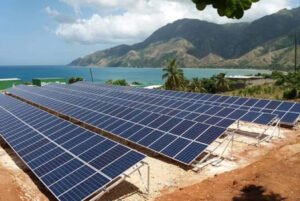
In March 2019, the Government of Haiti released an official request for proposals as part of a broader plan to support the development of minigrids. Minigrids generally involve small-scale electricity generation and can advance energy transitions in rural areas by enabling a power supply for communities lacking reliable electricity.
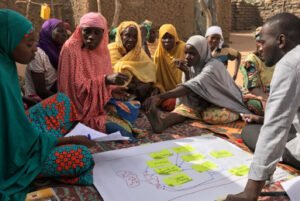
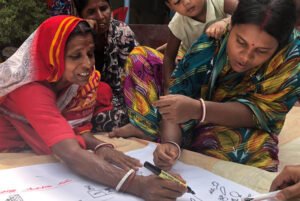
In a crowded banquet hall in Niamey, a dozen people gather around a large piece of paper, chatting excitedly in Hausa and French. They are a diverse group - farmers from hours outside the capital, radio broadcasters, extension agents, meteorologists, government officials and a smattering of NGO workers.
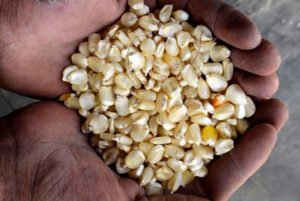
To mitigate the food security and economic risks of South Asia’s frequent and intense droughts, scientists and policymakers from the South Asian Association for Regional Cooperation (SAARC), the International Centre for Integrated Mountain Development (ICIMOD) and the International Maize and Wheat Improvement Center (CIMMYT) recently joined forces to launch an innovative decision support and agricultural planning system.
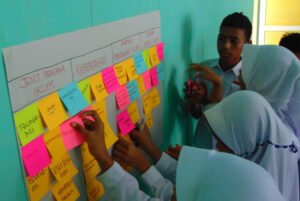
Children, along with women and the elderly, are especially vulnerable during natural disasters, according to the Indonesia National Disaster Management Agency (BNPB), which estimates that 60 to 70 percent of disaster victims fall in those demographic categories
This month we are exploring what it means to build local capacity to address climate change. Building local capacity starts with an understanding of the local stakeholders’ needs.
The Climate Hazards Center (CHC) has been using the CHC Early Estimates for agroclimatological monitoring and forecast-plus-observation rainfall scenarios since late 2018. The CHC Early Estimates are regional maps that show rainfall conditions for multiple accumulation periods, which are useful for agroclimatic monitoring.
Because of the wide array of threats faced by modern energy systems, power sector resilience is increasingly important. It is critical for policymakers, planners, and system operators to safeguard their power systems from these threats by proactively planning for future needs and investing in resilient power systems.
The CLIFF-GRADS program invites applications for short-term (4-6 month) scientific training and research on the measurement and management of greenhouse gas emissions and carbon storage in agricultural systems.
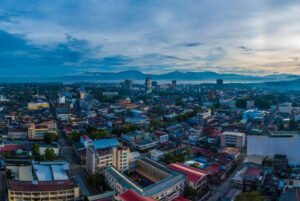
Increasingly, cities are taking control of assessing local risks associated with climate change and implementing adaptation activities to build the resilience of their residents, economy, and infrastructure.