How can countries ensure that the successes of greenhouse gas (GHG) mitigation initiatives are adequately captured and reflected in national GHG inventories?
Small Island Developing States (SIDS) in the Pacific are facing a future of sea level rise, increased frequency and intensity of weather events and ocean acidification. A new paper in the Resources to Advance LEDS Implementation (RALI) Series explores these climate challenges and the progress of SIDS.
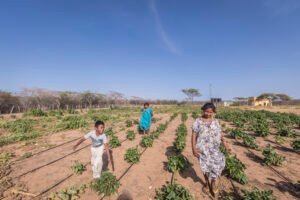
In the Dagana district of Senegal, Moustapha Aminata walks out to his rice paddies and looks to the sky for signs of rain. In 2009, floods wiped out his crop, but now dry years seem to come around more frequently than ever and Moustapha worries about how he and his family will withstand another year of low yields.
We’ve all heard the numbers – the global infrastructure investment needed to keep up with projected economic growth is severely lacking. In cities, where 54% of the world’s population now lives, it is estimated that US$4.1 to 4.3 trillion in urban infrastructure investments is needed. To make that infrastructure climate resilient and emission reducing, the estimate increases by 9-27%.
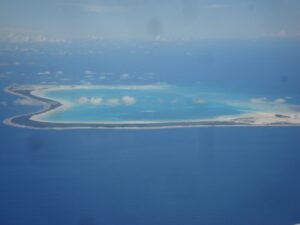
In the Pacific island nation of Kiribati, over 270 government officials, members of civil society organizations and atoll community leaders acquired skills to manage water supplies in the face of changing conditions.
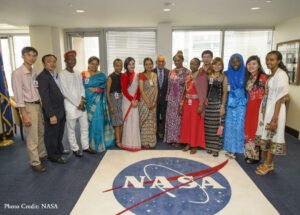
More than 30 women scientists and experts work with the USAID- and NASA- supported SERVIR program to solve their countries' most critical development challenges using freely available satellite data. These women are serving society while simultaneously paving the way for the next generation to see more women play a role in science, technology and public policy.
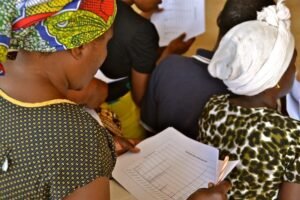
Gender equality and women’s empowerment – particularly when it comes to ensuring that women and men have equal opportunities in accessing, benefiting from and participating in environmental decision-making – are essential for effective conservation and sustainable development.
Last year, USAID and CARE International in Vanuatu worked together to strengthen disaster resilience in Tanna and three other islands, so they can bounce back faster from natural disasters and rely less on foreign aid.
The asymmetry between men’s and women’s participation in forestry decision-making is often rooted in two inter-related issues. First, forestry institutions and forest resources are generally male-dominated and second, village-level decision-making takes place in the public sphere. Women are traditionally associated with the private sphere of home and family life.
As climate patterns shift, governments around the world — whether national or local — are struggling to find reliable and comprehensive information about current and predicted weather conditions.
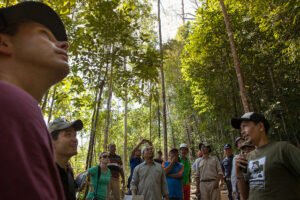
To help bolster both community and ecological resilience, USAID’s Hariyo Ban (Green Forests) program was established in 2011 to work in two biodiverse landscapes in Nepal: Terai Arc and Chitwan-Annapuran.
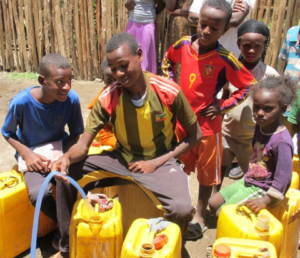
USAID’s Global Waters team invites readers, implementers, mission personnel and other water professionals to help illustrate the next phase of USAID’s commitment to addressing the world’s water challenges as outlined in the newly released U.S. Government Global Water Strategy through photos.
With collaboration between Winrock, the Government of Vietnam and the private sector, Vietnam’s payments for forest environmental services has the potential to be a model for other countries struggling to conserve forest areas — and a way to help people live more secure and prosperous lives.
We asked Climatelinks community members to share their PPP-related research, tools, blogs, knowledge portals and other resources, which you can find here!
USAID is building mutually beneficial partnerships with private sector actors that leverage their respective expertise, assets, technologies, networks and resources to achieve greater development impact.
While public sector interest in climate information services (CIS) is concerned with resilience in the face of climate variability and change, the private sector is beginning to recognize that there is a growing market for climate services. Public-private partnerships (PPPs) are helping to bridge gaps in public services around the globe.
One of South Africa’s largest and most well-known cities, Cape Town, has dominated headlines since the beginning of the year as the dreaded Day Zero approaches: the day when the city’s reservoirs go below a critical threshold and the city will turn off municipal water supply to many homes and businesses.
Hosted by the African Union, the inaugural African Ministerial Conference on Meteorology (AMCOMET) - Africa Hydromet Forum brought together more than 500 policy makers to discuss and identify priority areas for improving CIS and building regional climate resilience.