A USAID/Colombia program that concluded in 2017 saved manufacturing facilities hundreds of thousands of dollars and thousands of tons of greenhouse gas (GHG) emissions, according to an assessment of the environmental benefits and cost savings associated with the project’s energy efficiency interventions.
Senegal is taking a sectoral approach to its National Adaptation Planning (NAP) process with the development of sectoral NAPs. This process was first successfully completed in 2016 in one of the pillars of the country’s economy: the fisheries sector.
This month Climatelinks focused on the connections and complexities between climate change and conflict, environmental peacebuilding and conflict prevention, and effective environmental management and governance in fragile, vulnerable, and conflict-affected communities and regions.
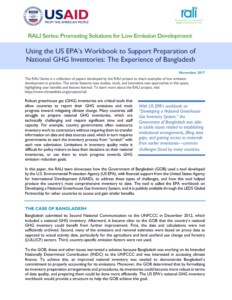
Government of Bangladesh inventory experts recently participated in USAID-organized focus group discussions to share practical knowledge and skills, including how to use the US EPA Template Workbook.
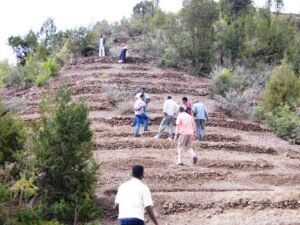
USAID’s Findings and Preliminary Lessons from Uganda, Ethiopia, and Peru looked at three countries facing challenges from climate change. In all three countries, climate change is disrupting communities’ long-held understandings of their environments.
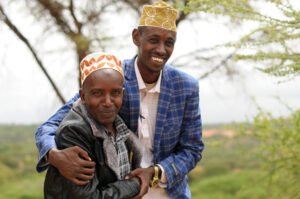
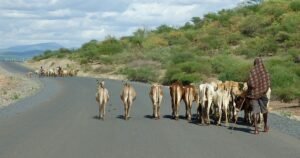
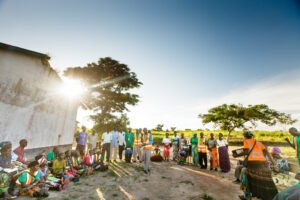
Motivated by more frequent droughts that have eroded their livelihoods and intensified food insecurity, competing groups of pastoralists in one area of Ethiopia are abandoning violence and working together to calm conflicts and adapt to changing conditions.
By working together to reduce fragility and vulnerability, could we not only better prepare for disaster, but also help prevent conflict? We have the policy tools to take an integrated approach to climate, conflict, and disaster—but we need the political will to use them.
Building peace in fragile and conflict-affected states is rarely if ever straightforward, and climate and environmental changes are exacerbating already complicated situations. It is increasingly evident that the interaction among social, political and ecological processes decisively shapes the post-conflict landscape.
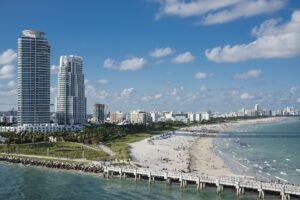
Sea-level rise poses challenges for cities in both developing and developed countries. One city in the United States offers an example of how coastal cities are coping with this challenge. Their approach may be of interest and use to practitioners working in developing countries.
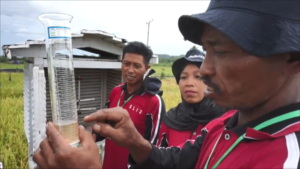
For farmers in Indonesia, climate change is more than scientific models and emissions scenarios; it is a harsh reality reflected in the day-to-day struggle to sustain their livelihood. Farmers are intimately familiar with the traditional ebb and flow of the weather, and the increasing chasm between how things used to be and how things are today.
Fortunately, there are proven ways to engage communities and bring them on board with renewable energy. A case in point is the USAID ProParque project in Honduras and its experience introducing small hydropower to highland communities.
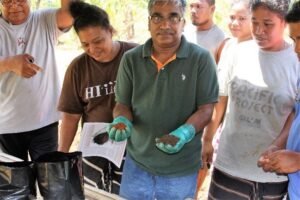
On Yap Island in the Federated States of Micronesia (FSM), four atoll communities—about 800 people from the outer islands who have migrated to the main island—have gained a reputation for growing good-quality vegetables.
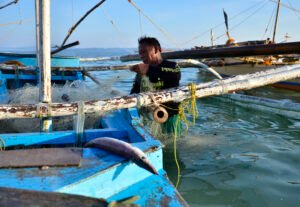
To update an old development adage, rather than teaching a person to fish, the USAID/Philippines Ecosystems Improved for Sustainable Fisheries (ECOFISH) project sought to teach fishing communities how much to fish, where to fish and how to monitor fish in order to manage their wild fish resources sustainably.
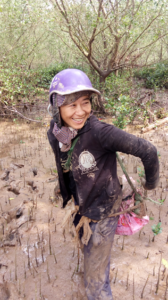
Women are playing a central role in protecting mangroves and building climate-resilient coastal communities, as projects in Vietnam and Indonesia are demonstrating.
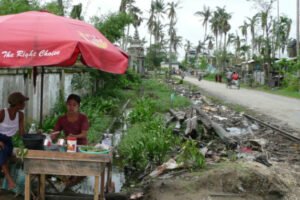
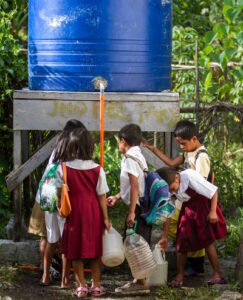
Water supply and sanitation systems have withstood three strong typhoons in facilities rebuilt after Haiyan, the typhoon that hit the Philippines in 2013, thanks to pro-active, community-oriented planning, good data and technically rigorous design.
Here in Nepal, more than 13,000 kilometers (8,077 miles) away from Houston, the worst monsoon season in years is also inundating villages outside the capital. Extreme flooding has killed more than 1,400 people and impacted 41 million people across South Asia, and heavy rains have also claimed lives in Sierra Leone, China, Indonesia and Niger.
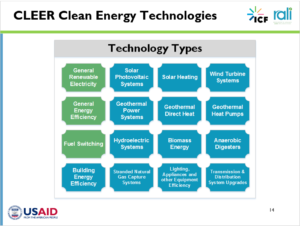
A new webinar is now available providing an overview and update on the CLEER Tool, a web-based platform for calculating and tracking GHG emission reductions, as well as energy generated or saved, from a wide range of clean energy actions.
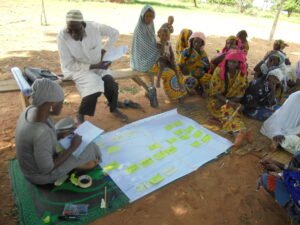
Under the USAID Learning Agenda on Climate Services in Sub-Saharan Africa, the Climate Information Services Research Initiative (CISRI) is looking at the user end of climate information to build a knowledge base of factors impacting the uptake and use of climate services.