A recent assessment of non-climate funded USAID programs found that including climate change in solicitations resulted in actions to manage climate risk or address climate change during program implementation about half the time.
Climatelinks is focusing on the nexus of agriculture and climate change throughout October. Through the Climatelinks blog and library, and via Twitter @climatelinks, we are sharing case studies, methods, tools and resources on this topic.
USAID supported research in Mozambique aims to understand the link between observed climate trends and disease outbreaks as well as offer recommendations on how this knowledge could be used to streamline future responses around malaria and diarrheal disease.
A new paper by Michael Clark and David Tilman reviewed 164 published life cycle analyses of more than 90 foods to compare how different ways of growing food, and choices about which food to produce, affect five aspects of the environment: land use, fuel consumption, nutrient run-off, ecosystem acidification and GHG emissions.
The Gender, Climate Change, and Nutrition Integration Initiative (GCAN) is seeking project case studies to identify promising practices and lessons learned from rural resilience projects that also advance gender equality and nutrition security.
The Conservation and Adaptation in Asia’s High Mountain Landscapes and Communities (AHM) Project, funded by USAID, has galvanized greater understanding and action at local, national and regional levels to conserve the snow leopard and promote human resilience.
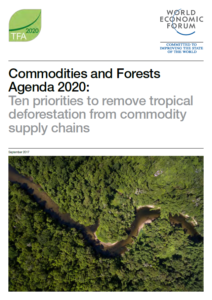
The Commodities and Forests Agenda 2020 report, launched September 19 by the Tropical Forest Alliance 2020 and World Economic Forum, lays out 10 priority areas that company executives, policy-makers and civil society leaders should focus on to accelerate progress in addressing commodity-driven deforestation.
This month Climatelinks focuses on ecosystem-based adaptation (EbA). Explore the many resources, blogs, knowledge portals and communities of practice related to this topic, shared with us by Climatelinks community members.
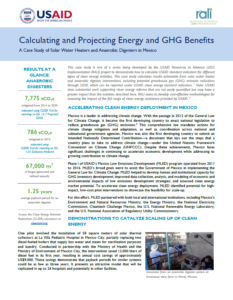
USAID/Mexico supported an assessment of the energy and greenhouse gas emission benefits associated with pilot projects designed to reduce emissions in Mexico. The online CLEER Tool calculated clean energy benefits for these pilots, providing an easy way to estimate and track current and future energy benefits and emissions reductions from a wide range of clean energy activities.
The Assessing Sustainability and Effectiveness of Climate Information Services in Africa (Sustainable CIS) project seeks to identify sustainable and effective models, including how to establish effective public-private partnerships.
A new tool, developed by the International Institute for Sustainable Development (IISD) in collaboration with IUCN, aims to provide practitioners with a systematic process to identify and prioritize Ecosystem-based Adaptation options.
USAID awarded a five-year blanket purchase agreement to support climate risk management. USAID operating units can release request for quotes for Purchase Orders immediately.
By providing innovative health services to communities around Gunung Palung, a national park in West Kalimantan, Indonesia, Dr. Kinari Webb and her colleagues have seen rapid and dramatic improvements in public health indicators while reducing the number of families involved in illegal logging by 90 percent.
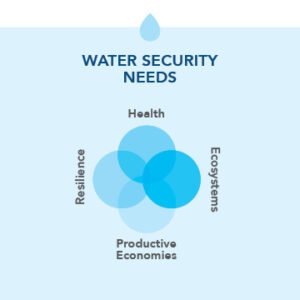
Throughout August, Climatelinks highlighted challenges and solutions for water security in the face of climate change. Explore below the many resources, blogs, videos, knowledge portals and events related to this topic, shared with us by Climatelinks community members.
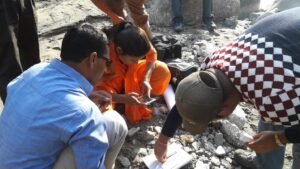
In January 2017, USAID Nepal’s water project, known locally as Paani, brought together over 150 change agents and students to a hack-a-thon hosted by Nepal’s Mid-Western University.
Globalwaters.org is a global knowledge resource for USAID staff, implementing partners and the broader community of development practitioners working in the water sector.
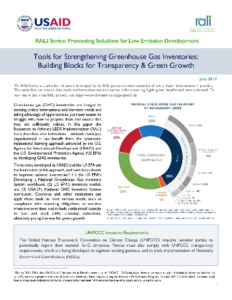
USAID’s RALI project described the benefits of a robust GHG inventory in a recent white paper, shining a light on three publicly available tools that demonstrably build capacity for improved emission inventories.