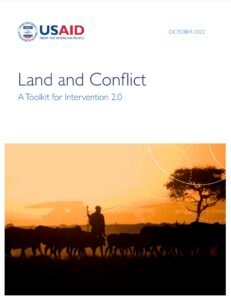
The purpose of this toolkit is to introduce readers to the complex relationship between land and violent conflict and to provide guidance on recommended approaches and actions to address some of the root causes of conflict.
ACE is a global USAID program that facilitates the Agency’s ambitious work to fight climate change, conserve biodiversity and manage natural resources, improve land governance, and expand access to secure, modern energy and resilient infrastructure.
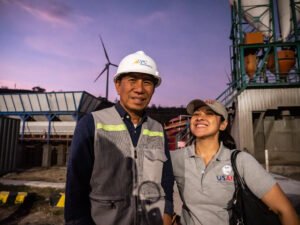
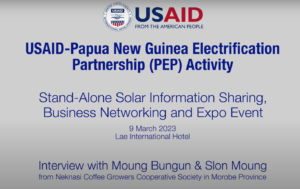
USAID-PEP held a networking event for prospective standalone solar retailers, distributors, and finance institutions, and interviewed a father-daughter reseller team that had attended the event.
The Amazon Business Alliance is a platform to promote green growth to improve the livelihoods of Amazonian communities, while decreasing deforestation and degradation of natural resources.
FOREST focused on strengthening national and regional government institutions in the forest sector in
Peru, and effective implementation of Peru’s new forestry framework.
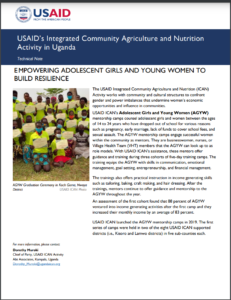
The USAID Integrated Community Agriculture and Nutrition (ICAN) Activity works with community and cultural structures to confront gender and power imbalances that undermine women’s economic opportunities and influence in communities.
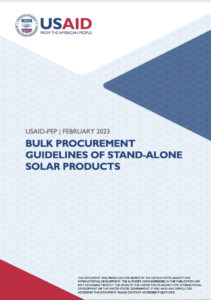
Stand-alone solar products have become common in Papua New Guinea (PNG) over the past several years. Bulk procurements of these products – in parallel with commercial sales of them - have significantly contributed to the provision of power to off-grid households, for lighting and other uses.
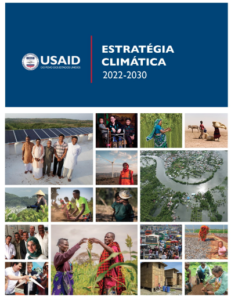
Esta nova Estratégia adota uma abordagem "de toda a Agência" sem precedentes, que convida todos os cantos da USAID a desempenhar um papel em nossa resposta.
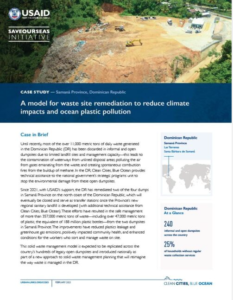
Until recently, most of the over 11,000 metric tons of daily waste generated in the Dominican Republic (DR) has been discarded in informal and open dumpsites due to limited landfill sites and management capacity.
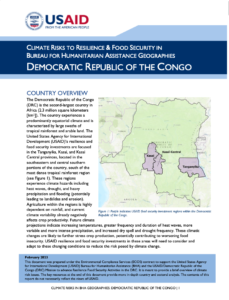
This profile provides an overview of climate risks to food security in the Democratic Republic of the Congo (DRC), including how climate change will impact agriculture, livestock, fisheries, water resources, human health, and natural resources management.
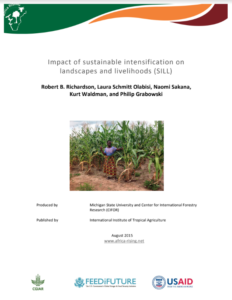
The objective of the Impact of Sustainable Intensification on Landscapes and Livelihoods (SILL) project is to advance the understanding of landscape-level implications of farm-level decisions related to sustainable intensification (SI) on forest and biodiversity conservation.
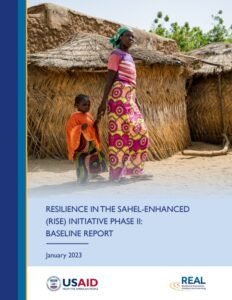
The second phase of the USAID “Resilience in the Sahel – Enhanced” (RISE) initiative is being implemented from 2019 to 2025 in targeted zones of Burkina Faso and Niger. The initiative focuses on building resilience in the face of recurrent shocks.
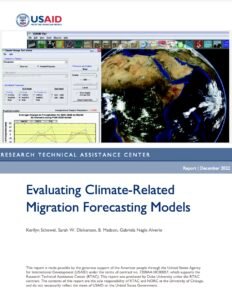
This report reviews a number of prevailing and promising modeling approaches for forecasting the nature, magnitude, and direction of climate-related migration over the next 30 years. This report pays particular attention to how well models are likely to forecast migration.