This project evaluated prevailing and promising modeling approaches for forecasting climate-related migration for the next 30 years. Climate-related migration experts reviewed 20 forecasting models relevant to USAID’s strategic interests and analyzed 9 models in-depth to better understand the strengths and weaknesses of different modeling approaches.
This report seeks to reframe existing discourses about migration, positioning mobility as a potentially positive response to existing or anticipated climate impacts to livelihoods, food security, and livability of particular areas.
This report details findings in the literature related to knowledge gaps that are inhibiting climate-related development programming and identifies potential future pathways to inform programming. The broad analysis is followed by a case study of smallholder farmers.
Based on an extensive review of available literature and discussions with experts in climate change and development, this brief provides findings and actions to consider that advance the efficiency and effectiveness of the development response to impacts of climate change.
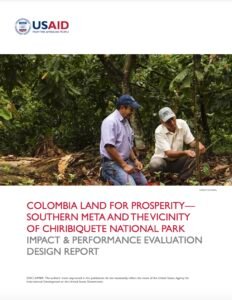
This document outlines the approach to the Land for Prosperity Southern Meta and the Vicinity of Chiribiquete National Park evaluation recommended by the Cloudburst evaluation team, including research questions, research methodology, analytical framework, sampling strategy, analysis plan, and detailed timeline for data collection.
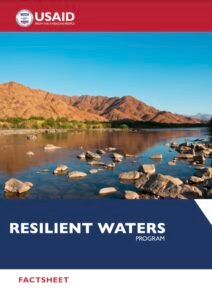
The USAID Resilient Waters Program supported initiatives to build resilient, water-secure communities and ecosystems in Southern Africa through the improved management of transboundary natural resources, increased access to safe drinking water, and improved sanitation services.
This How-To Note is intended as a reference to assist Washington-based Pillar Bureaus and other OUs developing technical and operational guidance for designing and implementing programming that contributes to USAID’s new Climate Strategy.
This How-To Note is a reference guide to assist Bureaus with internal discussions to develop their Bureau- specific Climate Action Plans for contributing to USAID’s new Climate Strategy.
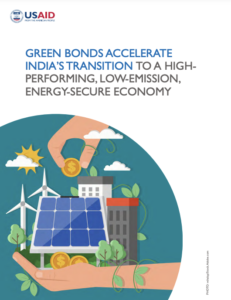
Renewable energy has the potential to reduce India’s dependence on imported fossil fuels, provide access to electricity for all Indians, reduce water and air pollution, and meet the growing energy needs of its more than one billion citizens.
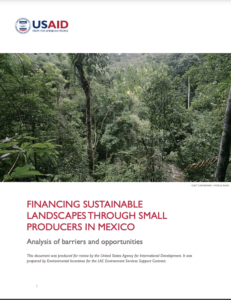
This report aims to synthesize barriers to inform USAID and other partners’ strategies to finance sustainable landscapes. This report takes stock of progress to date, the current situation, and priorities for the future.
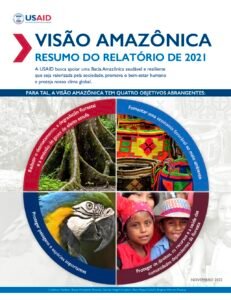
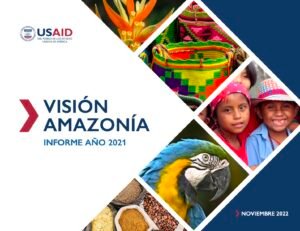
Este é um resumo do Relatório de Visão 2021 da Amazônia. Ele descreve o contexto regional, a situação atual e as realizações ilustrativas da biodiversidade da USAID e das iniciativas de paisagem sustentável na bacia amazônica através das lentes desta Visão.
O objetivo deste relatório é descrever o contexto regional, a situação atual e as conquistas da biodiversidade da USAID e as iniciativas de paisagem sustentável na bacia amazônica através das lentes da Visão Amazônica.
El propósito de este informe es describir el contexto regional, el estado actual y los logros de las iniciativas de biodiversidad y paisaje sostenible de USAID en la cuenca del Amazonas a través de la lente de la Visión Amazónica.
USAID is assisting Mexico in addressing illegal logging, reducing its greenhouse gas emissions through economic incentives, and partnering with the private sector to help small farmers integrate into markets.
USAID has prepared an e-textbook and an online training module to help develop this capacity. The e-textbook is a reference guide on finance terms and principles and the characteristics, advantages, and disadvantages of various types of financial instruments for climate change mitigation and adaptation. The online training module provides practical examples on scaling up financing for clean energy, natural climate solutions, and climate adaptation.
This fact sheet reviews how USAID’s Integrated Natural Resources Management (INRM) activity began assessing the impacts of the COVID-19 pandemic on USAID environment programs.
Une subvention d’un montant plafonné à 150 000 $ et des services d’assistance technique ciblés seront mis à contribution pour soutenir les projets du secteur privé visant à pénétrer dans les régions et départements ciblés par SURE Sénégal.
Grant funding up to $150,000 and targeted technical assistance will be mobilized in support of private sector plans to enter, or expand their presence in, the regions and departments targeted by SURE Senegal.
USAID’s decades of experience working with young people and local communities on the transition from youth to adulthood inform the foundation of this Policy.