This is the final report of the second phase of the Hariyo Ban Program. “Hariyo Ban” means “green forests” in Nepali. Hariyo Ban was a United States Agency for International Development (USAID)-funded initiative implemented by a consortium comprising World Wide Fund for Nature (WWF) (lead organization), Cooperative for Assistance and Relief Everywhere (CARE), National Trust for Nature Conservation (NTNC), and the Federation of Community Forestry Users Nepal (FECOFUN). The first phase of the Program (Hariyo Ban I) ran from 2011 to 2016, and the second phase (Hariyo Ban II) from 2016 to 2021.
Blended finance can catalyze private sector investment for climate action with financial structuring that enables impact-oriented donors and commercial capital providers to invest alongside each other to increase the speed and scale of climate solutions.
Catalyzing private finance for climate action is essential to achieving goals for limiting global warming. USAID can play a pivotal role in climate action across partner countries by increasing funding for activities that catalyze and crowd in private capital to climate-focused investments. The Intergovernmental Panel on Climate Change (IPCC) estimates USD 1.6 trillion is needed annually to keep global warming to the 1.5-2°C target range; only 38 percent of this was funded in 2019. Blended finance, the strategic use of public resources to attract private capital, represents an opportunity for USAID to help close this gap and dramatically increase the scale and scope of climate finance in the coming years.
Millennial Cities is an interactive web mapping site that provides access to important maps, data, and web mapping applications related to climate change, social justice, the environment, and more.
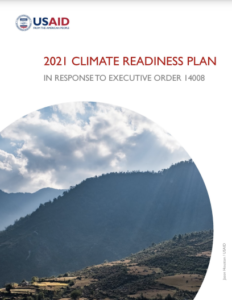
USAID’s Climate Readiness Plan outlines actions USAID will implement across the Agency’s operations management functions and programs to adapt to the effects of the changing climate.
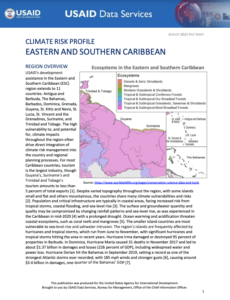
USAID’s development assistance in the Eastern and Southern Caribbean (ESC) region extends to 11 countries: Antigua and Barbuda, The Bahamas, Barbados, Dominica, Grenada, Guyana, St. Kitts and Nevis, St. Lucia, St. Vincent and the Grenadines, Suriname, and Trinidad and Tobago. The high vulnerability to, and potential for, climate impacts throughout the region often drive direct integration of climate risk management into the country and regional planning processes.
Ce document d'accompagnement aide la communauté des praticiens du développement de l'USAID à gérer les risques climatiques de manière adaptative, à tirer des enseignements du processus et à enregistrer et partager les apprentissages.
Este documento complementario ayuda a la comunidad de profesionales del desarrollo de USAID a gestionar los riesgos climáticos de forma adaptativa, aprender del proceso y registrar y compartir el aprendizaje. El documento cubre la incorporación de la gestión del riesgo climático en el seguimiento, incluidos los indicadores de desempeño, los indicadores de contexto y los métodos de seguimiento, los procesos de evaluación, aprendizaje y gestión adaptativa y la gestión del conocimiento.
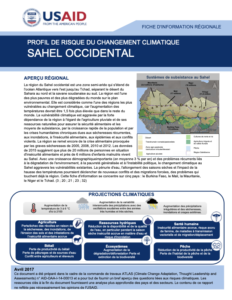
Ce profil donne un aperçu des problèmes de risque climatique dans le Sahel d'Afrique de l'Ouest, en mettant l'accent sur le Burkina Faso, le Tchad, le Mali, la Mauritanie et le Niger. Le profil comprend des informations sur l'impact potentiel du changement climatique sur l'agriculture, les ressources en eau, la santé humaine, les écosystèmes, l'élevage et la pêche.
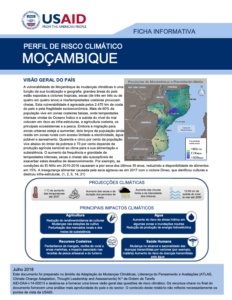
Este perfil fornece uma visão geral das questões de risco climático em Moçambique, incluindo como as mudanças climáticas terão impacto na agricultura, saúde humana, recursos costeiros e água.
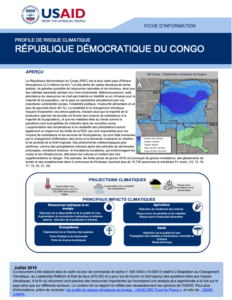
Ce profil donne un aperçu des problèmes liés aux risques climatiques en République démocratique du Congo (RDC), y compris l'impact potentiel du changement climatique sur quatre secteurs clés du pays : les ressources en eau et l'énergie, les écosystèmes, l'agriculture et la santé.
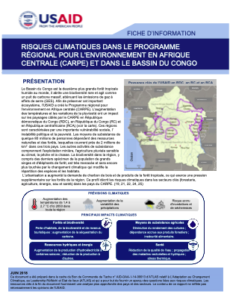
Le Bassin du Congo est la deuxième plus grande forêt tropicale humide au monde, il abrite une biodiversité rare et agit comme un puit de carbone massif, atténuant les émissions de gaz à effets de serre (GES). Afin de préserver cet important écosystème, l’USAID a créé le Programme régional pour l'environnement en Afrique centrale (CARPE).
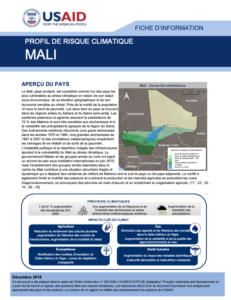
Ce profil donne un aperçu des risques climatiques au Mali, y compris la manière dont le changement climatique aura potentiellement un impact sur quatre secteurs clés du pays : l'eau, l'agriculture, la santé humaine et les écosystèmes.
The ESC region’s GHG emissions represent less than 2.42 percent of global emissions. However, per capita emissions in the region are higher than the world average.
In the northern Uganda region of Karamoja, the peacebuilding USAID Securing Peace and Promoting Prosperity (EKISIL) Activity strengthens communities' access to and management of water and pasture. Resource imbalances and competition for natural resources, especially water and grazing land, chronically exacerbate conflict and violent disputes in Karamoja.
This brief is part of USAID 's Water and Development Technical Series, which provides guidance on important topics for developing and implementing water and sanitation activities in support of the U.S. Government Global Water Strategy and USAID’s plan under the strategy.
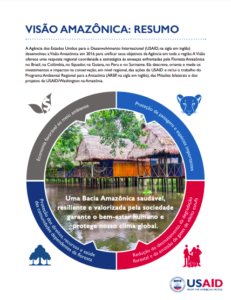
Este é um resumo do Relatório de Visão 2020 da Amazônia. Ele descreve o contexto regional, a situação atual e as realizações ilustrativas da biodiversidade da USAID e das iniciativas de paisagem sustentável na bacia amazônica através das lentes desta Visão.
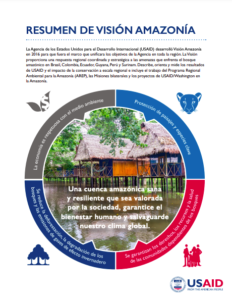
Este es un resumen del Informe de visión de Amazon 2020. Describe el contexto regional, el estado actual y los logros ilustrativos de las iniciativas de biodiversidad y paisaje sostenible de USAID en la cuenca del Amazonas a través de la lente de esta Visión.
O objetivo deste relatório é descrever o contexto regional, a situação atual e as conquistas da biodiversidade da USAID e as iniciativas de paisagem sustentável na bacia amazônica através das lentes da Visão Amazônica.