The climate change analysis summarized in this annex aims to inform USAID/Bangladesh's CDCS and ensure that the strategy is responsive to climate risks while strengthening Bangladesh's resilience and self-reliance.
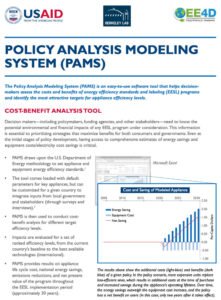
This fact sheet provides an overview of the Policy Analysis Modeling System (PAMS), an easy-to-use software tool that helps decision-makers assess the costs and benefits of energy efficiency standards and labeling (EESL) programs and identify the most attractive targets for appliance efficiency levels.
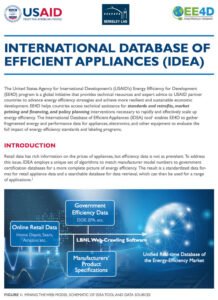
This fact sheet provides an overview of the International Database of Efficient Appliances (IDEA) tool, which enables EE4D to gather fragmented energy and performance data for appliances, electronics, and other equipment to evaluate the full impact of energy efficiency standards and labeling programs.
The active and meaningful participation of Indigenous Peoples in development planning and decisions impacting the Amazon is the foundation for long-term conservation of the world’s largest tropical rainforest. Safeguarding Indigenous Peoples’ rights and resources will help conserve irreplaceable biodiversity and promote cultural survival and self-determined development.
This final report describes CEADIR’s activities, approaches, and results of its technical, analytical, and financial mobilization assistance in 32 countries in Africa, Asia, and Latin America and the Caribbean.
The climate change analysis summarized in this annex aims to inform USAID/Nepal's CDCS and ensure that the strategy is responsive to climate risks while strengthening Nepal's resilience and self-reliance.
The climate change analysis summarized in this annex aims to inform USAID/Morocco's CDCS and ensure that the strategy is responsive to climate risks while strengthening Morocco's resilience and self-reliance.
This report highlights USAID INVEST’s climate finance portfolio, illustrating a variety of climate-focused activities for both mitigation and adaptation.
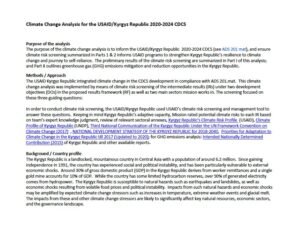
The climate change analysis summarized in this annex aims to inform USAID/Kyrgyz Republic's CDCS and ensure that the strategy is responsive to climate risks while strengthening Kyrgyz Republic's resilience and self-reliance.
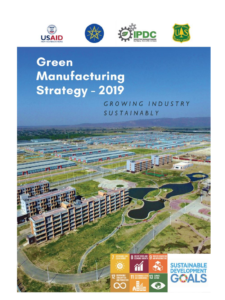
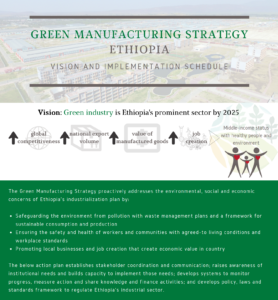
The vision of the Government of Ethiopia (GoE) is for the country to achieve lower middle-income status by 2025 following a green economic development pathway.
Ethiopia has set an ambition to increase gross national income through growth in the manufacturing sector as part of the goal to become a middle-income country by 2025.
The pace of natural resource exploitation in LAC is alarming, unsustainable, and worsened by increased illegality in sectors such as forestry, mining, wildlife trafficking, and fishing. LAC countries play a crucial role in global natural resource markets.
Although LAC countries continue to rely heavily on non-renewable energies, renewables have grown in the region and represent a significant share of the total energy supply. More than half of electricity generation comes from renewable sources, mainly hydropower, which is more than twice the global average.
The LAC region has experienced a surge in planetary health issues in recent years. This trend is projected to get worse because of humanity’s persistently destructive relationship with the environment.
Market-based mechanisms for environmental management and conservation are on the rise in LAC, with payments for ecosystem services (PES), tradable permits and quotas (P&Q), environmental taxes, and green bonds gaining momentum.
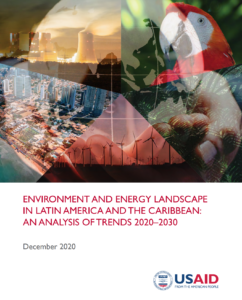
The U.S. Agency for International Development (USAID) partnered with Environmental Incentives and Dalberg Advisors to conduct an analysis of key environmental and energy trends that will affect Latin America and the Caribbean (LAC) from 2020 to 2030 in order to improve environmental and energy programming in LAC.
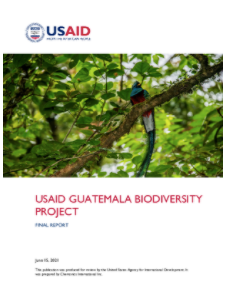
The Guatemala Biodiversity Project was a critical and timely response to growing trends impacting protected areas that, if continued, could have led to significant loss of key conservation gains made in Guatemala. The project addressed institutional and resource challenges and constraints at the heart of encroaching threats to key ecosystems. Through a local systems approach, it improved management and governance of the country’s System of Protected Areas (SIGAP) at the national level and in interventions areas in Sierra de las Minas Biosphere Reserve, Maya Biosphere Reserve, and the Pacific Coast. This final report describes the project’s activities, approaches and results achieved, and recommendations for sustainability of the achievements.