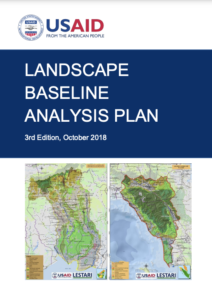
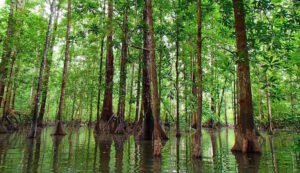
USAID LESTARI supports the Government of Indonesia to reduce greenhouse gas (GHG) emissions and conserve biodiversity in carbon rich and biologically significant forest and mangrove ecosystems.
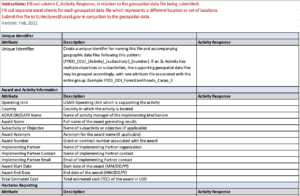
A Sustainable Landscapes Activity Attribute Reporting Template helps provide a standardized background data collection form associated with the guidance.
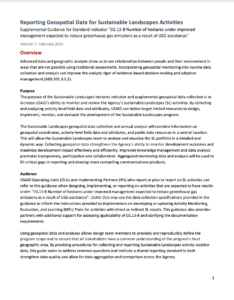
The Reporting Geospatial Data for Sustainable Landscapes Activities Supplemental Guidance for Standard Indicator EG.13-8, offers additional guidance for partners designing, implementing, or reporting on Sustainable Landscapes activities, or any activity with a land-based emission reduction result.
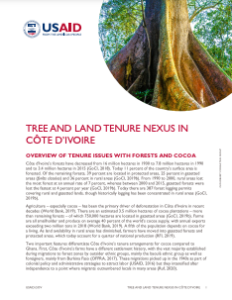
This research report explores the historic background of tree tenure in Cote d'Ivoire and identifies gaps in the legal and policy frameworks that make it challenging to achieve "zero deforestation cocoa."
USAID’s LESTARI project, implemented from 2015–2020, advanced the Government of Indonesia’s self-reliance to reduce greenhouse gas emissions from land use and to conserve biodiversity in carbon-rich and biologically significant forest and mangrove ecosystems.
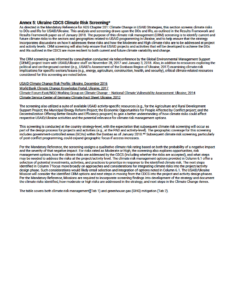
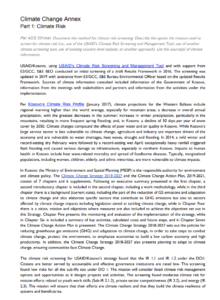
The climate change analysis summarized in this annex aims to inform USAID/Ukraine's CDCS and ensure that the strategy is responsive to climate risks while strengthening Ukraine's resilience and self-reliance.
The climate change analysis summarized in this annex aims to inform USAID/North Macedonia's CDCS and ensure that the strategy is responsive to climate risks while strengthening North Macedonia's resilience and self-reliance.
The climate change analysis summarized in this annex aims to inform USAID/Moldova's CDCS and ensure that the strategy is responsive to climate risks while strengthening Moldova's resilience and self-reliance.
The climate change analysis summarized in this annex aims to inform USAID/Kosovo's CDCS and ensure that the strategy is responsive to climate risks while strengthening Kosovo's resilience and self-reliance.
The climate change analysis summarized in this annex aims to inform USAID/Georgia's CDCS and ensure that the strategy is responsive to climate risks while strengthening Georgias resilience and self-reliance.
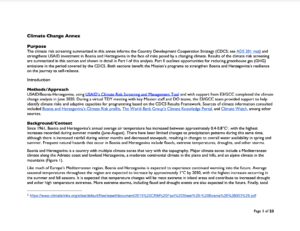
The climate change analysis summarized in this annex aims to inform USAID/Bosnia and Herzegovina's CDCS and ensure that the strategy is responsive to climate risks while strengthening Bosnia and Herzegovina's resilience and self-reliance.
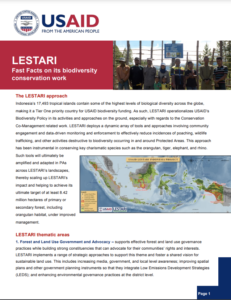
LESTARI, meaning "everlasting" in Bahasa Indonesia, is a sustainable forest management project. For more information on LESTARI, download the LESTARI Fast Facts.
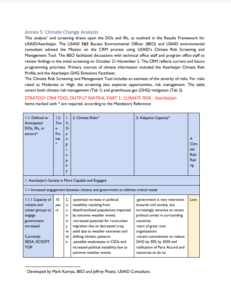
The climate change analysis summarized in this annex aims to inform USAID/Azerbaijan's CDCS and ensure that the strategy is responsive to climate risks while strengthening Azerbaijan's resilience and self-reliance.
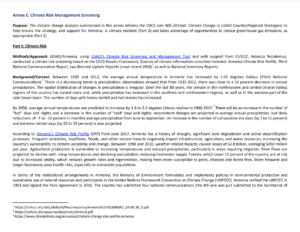
The climate change analysis summarized in this annex aims to inform USAID/Armenia's CDCS and ensure that the strategy is responsive to climate risks while strengthening Armenia's resilience and self-reliance.
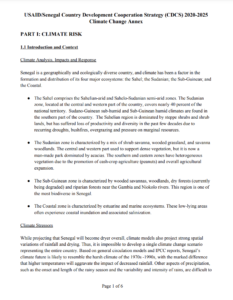
The climate change analysis summarized in this annex aims to inform USAID/Senegal's CDCS and ensure that the strategy is responsive to climate risks while strengthening Senegal's resilience and self-reliance.
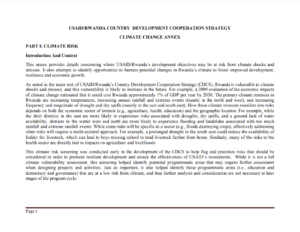
The climate change analysis summarized in this annex aims to inform USAID/Rwanda's CDCS and ensure that the strategy is responsive to climate risks while strengthening Rwanda's resilience and self-reliance.
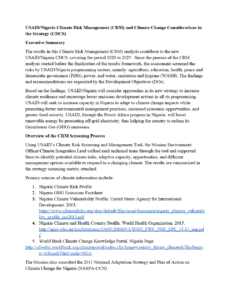
The climate change analysis summarized in this annex aims to inform USAID/Nigeria's CDCS and ensure that the strategy is responsive to climate risks while strengthening Nigeria's resilience and self-reliance.
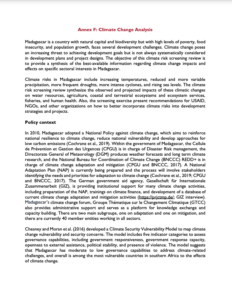
The climate change analysis summarized in this annex aims to inform USAID/Madagascar's CDCS and ensure that the strategy is responsive to climate risks while strengthening Madagascar's resilience and self-reliance.
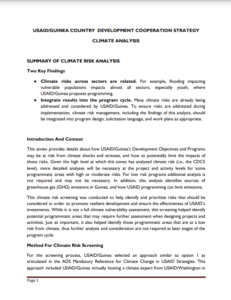
The climate change analysis summarized in this annex aims to inform USAID/Guinea's CDCS and ensure that the strategy is responsive to climate risks while strengthening Guinea's resilience and self-reliance.
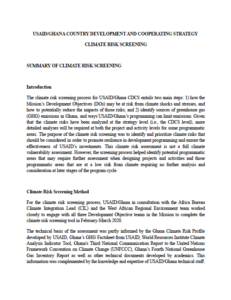
The climate change analysis summarized in this annex aims to inform USAID/Ghana's CDCS and ensure that the strategy is responsive to climate risks while strengthening Ghana's resilience and self-reliance.