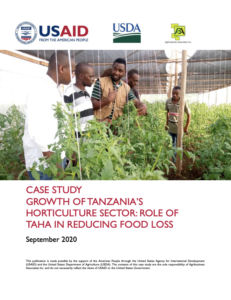
Horticulture is a fast-growing sector in Tanzanian agriculture. It is growing at a rate of 11% per annum compared to a 4% growth in the overall agriculture sector. However, Tanzania’s horticulture sector suffers from many challenges such as low and unequal capacities in quality management and production techniques, low produce quality and safety assurance, inadequate financial services, unreliable transport and electricity supply, and high postharvest losses.
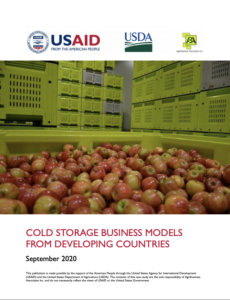
Temperature management is the major factor in reducing food loss and waste (FLW) in fruits and vegetables. Cold storage allows for produce to stay fresh for longer periods by slowing down its physiological changes that can lead to quality deterioration.
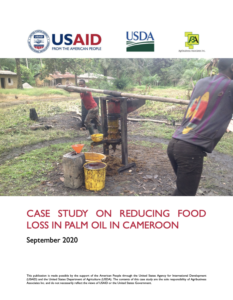
Cameroon is ‘Africa in miniature’ as it is home to 90% of Africa’s ecological systems. A large part of Cameroon is under the Congo basin, which holds over 15% of the world’s remaining tropical forests.
Fintech can bridge the gap between traditional finance and smallholders to help deliver needed investment in sustainable agriculture practices that have proven commercial value.
This study explores PHAD’s process of engaging partners to make water works more locally owned and sustainable and presents recommendations to be adapted into current activities and new designs.
Les systèmes de services d’information sur le climat (SIC) jouent un rôle essentiel en fournissant aux agriculteurs les renseignements dont ils ont besoin pour augmenter leur productivité, réduire les risques ou mieux résister aux chocs et aux contraintes climatiques.
Distributed energy resources (DER)—including smart transmission grids, energy storage and electric vehicle charging infrastructure—offer new opportunities for electricity cost savings, service reliability and quality improvements, as well as reduced pollution and greenhouse gas emissions
This report provides an analysis of encroachment and the drivers of deforestation and peatland conversion in the Leuser Landscape, with a focus on Rawa Singkil Wildlife Reserve (WR).
In the last half of 2020, Climatelinks and the Climate Economic Analysis for Development, Investment and Resilience (CEADIR) Activity collaborated on a series of webinars presenting work completed during CEADIR’s final year.
Protected areas are the cornerstone of biodiversity conservation in Indonesia. They must be well-managed if the country is to meet its Aichi Target commitments under the Convention of Biological Diversity.
Over the course of this 5-year project (July 2015 – July 2020), LESTARI has identified and empowered a host of Champions – individuals that demonstrate leadership, passion, and commitment towards forest conservation and sustainable development for local communities in their region.
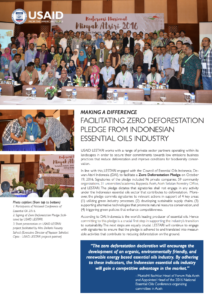
USAID LESTARI works with a range of private sector partners operating within its landscapes in order to secure their commitments towards low emissions business practices that reduce deforestation and improve conditions for biodiversity conservation.
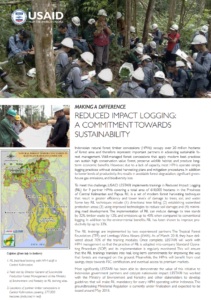
Indonesian natural forest timber concessions (HPHs) occupy over 20 million hectares of forest area and therefore represent important partners in advancing sustainable forest management.
Landslides and floods are common threats for the people living around the Cyclops Mountains. Every time heavy rains hit the region, the people fear that the same catastrophe in 2007 will happen again.