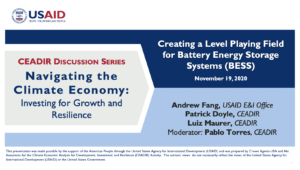
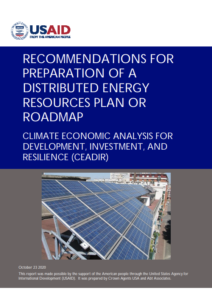
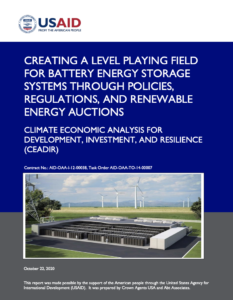
During this webinar, participants discussed recommendations of the USAID-funded Climate Economic Analysis for Development, Investment, and Resilience (CEADIR) Activity's report on ways to create a level playing field for energy storage in developing countries.
In the Pacific region, the private sector is largely comprised of small and medium-sized enterprises (SMEs) and about 70% of them operate in the agri-tourism-related sphere.
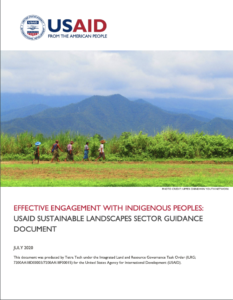
This sector guidance document is based on desktop research about SL related issues among Indigenous Peoples, international standards, and USAID program experiences.
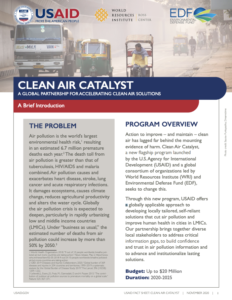
This new flagship program launched by USAID and a global consortium of organizations brings together stakeholders to advance and institutionalize lasting solutions to air pollution in low- and middle-income countries.
Distributed energy resource (DER) maps can help government planners and regulators, utilities, and other stakeholders make better decisions on distributed energy investment and use.
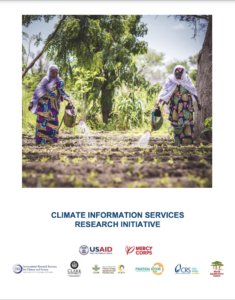
Valuable research exists on the impact of climate variability and change on farmers and the types of climate-related information farmers need for decision-making.
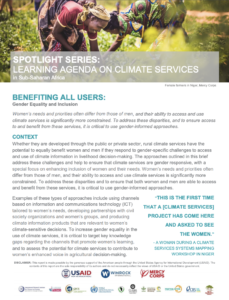
Whether they are developed through the public or private sector, rural climate services have the potential to equally benefit women and men if they respond to gender-specific challenges.
USAID Green Invest Asia and Barry Callebaut, with technical support from Grow Asia, convened the 4th Sustainable Coconut and Coconut Oil Roundtable on November 16, 2020 to launch the coconut industry’s first voluntary Sustainable Coconut Charter.
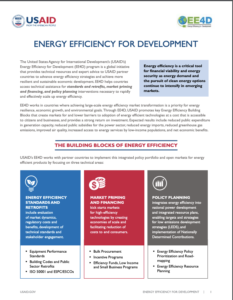
By reducing the amount of inputs needed to provide a desired energy service, energy efficiency minimizes the financial costs of energy and alleviates other negative effects.
USAID’s Energy Efficiency for Development program is a global initiative that provides technical resources and expert advice to USAID partner countries.
Utility-scale (front-of-the-meter), battery energy storage systems (BESS) are beginning to transform electricity generation, transmission, and distribution systems in the United States and Western Europe.
In East Africa’s semi-arid regions, low and unreliable returns leave many herders in poverty while degrading the natural resource base for future production.
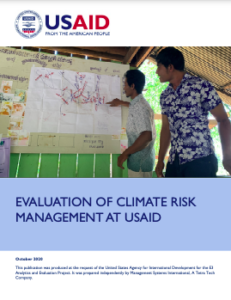
This report presents results from the performance evaluation of climate risk management (CRM) at the United States Agency for International Development (USAID). The evaluation found that CRM integration into the program cycle should be viewed as a longer-term process of institutional change.
Climate change adaptation literature on pastoralists often embraces a systems approach that uses aggregate analysis, giving a false assumption of community homogeneity.