As cities around the world face more acute climate events, global pandemics, humanitarian crises and other shocks, there is rapidly growing attention on the need for urban resilience.
Este informe del proyecto Paisajes Productivos (ProLand) resume las conclusiones de un análisis en México, concentrado en las lecciones aprendidas de las experiencias de modelos menos conocidos de empresas forestales comunitarias (EFC).
In Papua New Guinea, the agriculture, forestry, and other land use sectors are responsible for nearly three quarters of all national greenhouse gas emissions.
This Productive Landscapes (ProLand) project report summarizes findings from an analysis in Mexico focused on learning from the experiences of less well-known community-based forestry enterprise (CBFE) models.
Hydro, wind, and solar power are variable renewable energy (VRE) resources with normal daily and/or seasonal fluctuations that are taken into in financial planning for these investments.
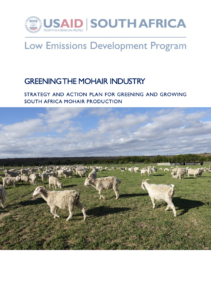
This strategy and action plan identifies several challenges constraining the production of mohair and proposes solutions to green and grow the mohair industry in South Africa.
The objective of this guide is to develop a short, conceptual approach for sub-national spheres of government, and municipalities in particular, for the financial evaluation of low emissions development (LED) projects.
One of the challenges that policymakers face in promoting and justifying low emissions development (LED) or ‘green economy’ projects is effectively articulating and quantifying the positive socio-economic benefits that LED projects produce.
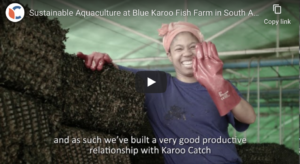
As part of its support to various municipalities and organizations in South Africa in mainstreaming low emissions development, the South Africa Low Emissions Development (SA-LED) Program supported Blue Karoo Trust, a fish farm specializing in breeding catfish as an alternative to pilchards to sell commercially.
In South Africa, comprehensive baseline data on energy consumption is the key to accessing grant funding from the national government’s Energy Efficient and Demand Side Management (EEDSM) program.
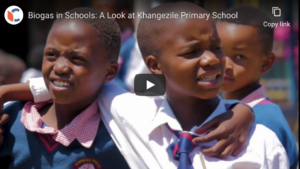
Khangezile Primary School in South Africa was one of four schools chosen by Earthlife Africa, an environmental justice organization, to have renewable energy technology installed in the school as part of the Sustainable Energy and Livelihoods project.
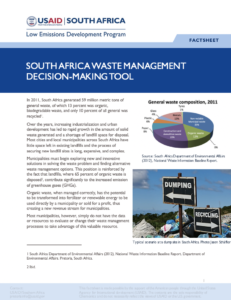
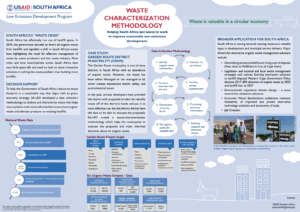
To help the Government of South Africa reduce its waste footprint in a sustainable way that aligns with the green economy vision in its National Development Plan 2030, the USAID South Africa Low Emissions Development (SA-LED) program developed the South Africa Waste Management Decision-Making Tool.
This simplified financial model for the procurement of solar photovoltaic projects is designed to appraise the affordability of municipal solar photovoltaic projects.
The municipal fleet costs and environmental impacts calculator can be used to estimate the costs, air pollution emissions of fossil fuel and alternative bus fleets, and greenhouse gas emissions associated with a given municipal bus fleet over ten years.
Wastewater treatment plants consume electricity for the operation of equipment and produce methane gas, a greenhouse gas, from the process of anaerobic digestion, used to break down solid waste.
This webinar presented highlights from the USAID-funded Climate Economic Analysis, Development, Investment, and Resilience (CEADIR) Activity’s Climate Finance Assessment: Opportunities for Scaling Up Financing for Clean Energy, Sustainable Landscapes, and Adaptation.
To help the Government of South Africa to reduce its waste footprint in a sustainable way, the USAID South Africa Low Emissions Development (SA-LED) program developed a data collection methodology to analyze and characterize various waste streams.