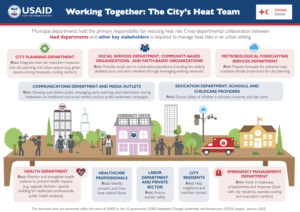
This infographic summarizes the cross-departmental municipal collaboration that is needed to manage heat risks in urban settings, outlining the key stakeholders and their roles.
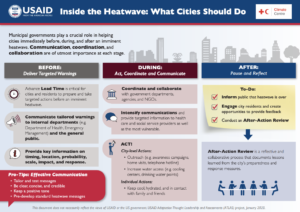
This infographic summarizes the steps cities should take before, during, and after a heatwave, and highlights the importance of communication, coordination, and collaboration at each stage.
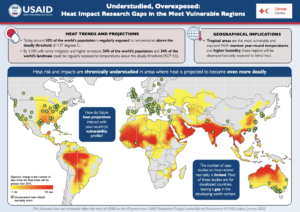
This infographic highlights the global research gaps on heat risks and impacts in the most vulnerable regions, summarizing global heat trends and projections and geographical implications.
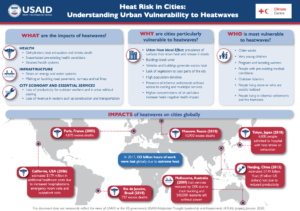
This infographic summarizes the impacts of heatwaves on health, infrastructure and essential services, why cities are particularly vulnerable to heatwaves, and which groups within the city are most vulnerable to heatwaves.
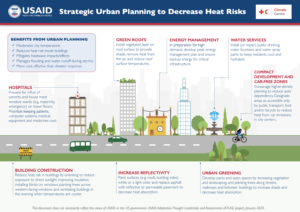
This infographic summarizes the benefits that urban planning can provide to reduce heat risk, and provides recommendations for green infrastructure and urban planning measures city officials can take to decrease heat risk.
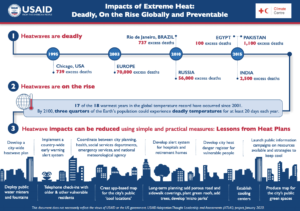
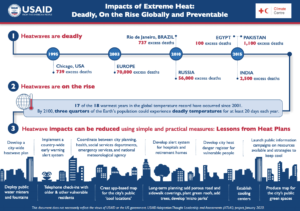
This infographic summarizes the past and future impacts of heatwaves on human wellbeing, and provides a summary of simple and practical measures cities can take to reduce heat risk.
The Resilient Energy Platform supports the development of resilient, sustainable, and secure power systems with expertly curated resources, training materials, data, tools, and direct technical assistance.
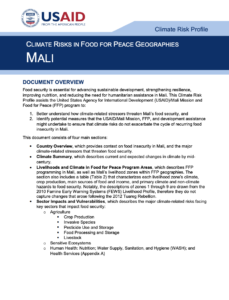
This profile provides an overview of climate risks to key sectors that impact food security in Mali: agriculture, sensitive ecosystems, and human health.
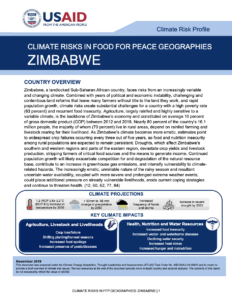
This profile provides an overview of climate risks to key sectors that impact food security in Zimbabwe: crop production; livestock; human health and nutrition; water, sanitation and hygiene (WASH); pesticide use; and invasive species.
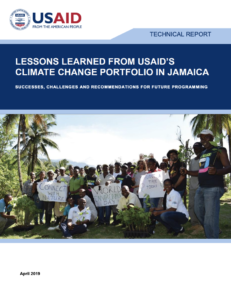
These videos were produced by the Adaptation Thought Leadership and Assessments (ATLAS) project to highlight successes from across USAID/Jamaica’s rich and diverse portfolio of climate change mitigation and adaptation activities from 2012-2018.
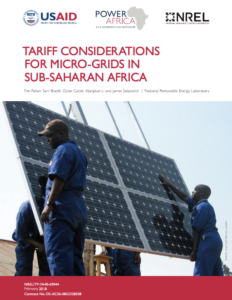
This report discusses of some of the key drivers and considerations that policymakers and decision-makers face when deciding if and how to regulate electricity tariffs for micro-grids.
This guide is intended to support policymakers and planners, as well as technical experts, consultants, and academics in incorporating improved data and analysis into renewable energy decision-making.