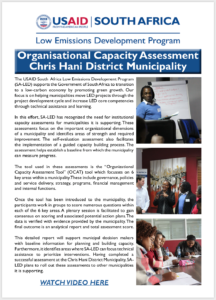
The USAID South Africa Low Emissions Development Program (SA-LED) supports the Government of South Africa to transition to a low-carbon economy by promoting green growth.
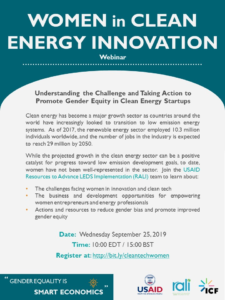
This workbook provides a step-by-step guide to help clean energy incubators and accelerators develop gender-inclusive recruitment and selection processes.
This is a guide on how to measure and track the impact of interventions to improve gender representation in clean energy startup incubators and accelerators.
Between 1980 and 2010, droughts, earthquakes, epidemics, floods, cyclones, and extreme temperatures caused more than $1 billion in economic damage in Madagascar.
In March 2019, USAID Green Invest Asia and Barry Callebaut co-organized an inaugural Sustainable Coconut and Coconut Oil Roundtable, where industry leaders agreed on broad areas of improvement.
At the October Adaptation Community Meeting, André Mershon from the Bureau for Food Security presented on USAID’s guidance for shock responsive programming and outlined methods for proactively designing adaptive and shock responsive activities.
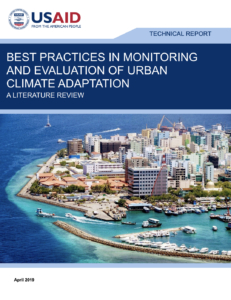
This report from the USAID-funded Adaptation Thought Leadership and Assessments project examines a range of monitoring and evaluation (M&E) approaches to guide cities toward robust, practical, and resource-efficient urban adaptation M&E systems.
Climate variability and change have been identified as major threats to important sectors that drive economic growth and sustainable development in Africa.
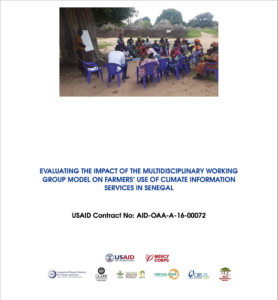
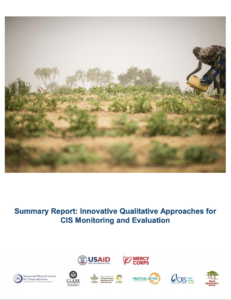
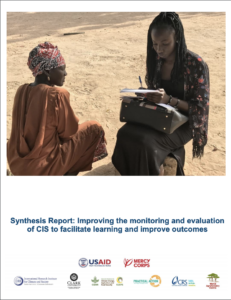
Climate information services (CIS) for agriculture and development are useful only when farmers have the ability to make changes in their activities and practices based on the information received.
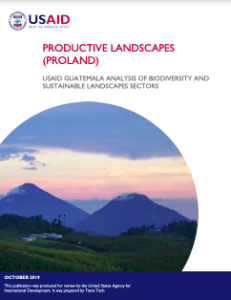
The USAID Guatemala Analysis of Biodiversity and Sustainable Landscapes Sectors report identifies high impact opportunities for USG support to Guatemala towards achieving biodiversity, sustainable landscapes, and other objectives.
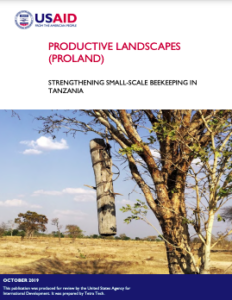
This assessment reviews options for USAID landscape partners to promote sustainable growth in Tanzania’s bee product industries. The report analyzes honey and beeswax value chains to identify constraints and opportunities to increase production, refine processing, streamline transportation and meet domestic and export market specifications and demand in ways that target conservation outcomes, and increased producer incomes. Recommendations focus on producer group institutional capacity, market information, financing, and market access.
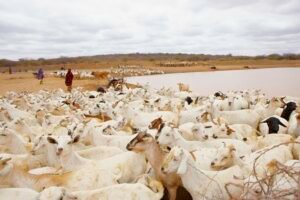
Competition for natural resources, including water, land, and forests, have long been recognized as a source of contention, and sometimes even violence.
While much is known about the biology of plague in Madagascar, linking climate and environmental drivers to plague incidence remains a poorly understood but important challenge.
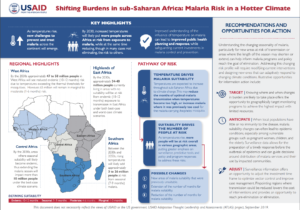
This infographic captures the changing risk profile of malaria across sub-Saharan Africa and outlines recommendations that can help malaria policy and programs reach the goal of elimination.
The Resources to Advance LEDS Implementation (RALI) project was a five-year project designed by USAID to mitigate climate change and promote sustainable economic growth through low emissions development strategies (LEDS).