This evidence summary highlights the economics of ecosystem-based adaptation (EbA) approaches, which can offer cost savings compared with other approaches, as well as additional benefits.
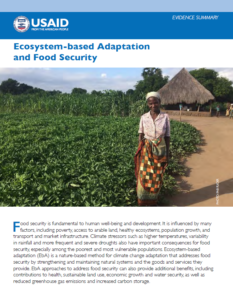
This evidence summary highlights specific ecosystem-based adaptation (EbA) approaches that can address food security by strengthening and maintaining natural systems and the goods and services they provide.
This factsheet provides information on the USAID supported learning agenda to better understand how to develop effective, sustainable, country-led climate information services (CIS) programs in sub-Saharan Africa (SSA).
This fact sheet provides information on a USAID supported project to address the sustainability and effectiveness of climate information services (CIS) in Africa.
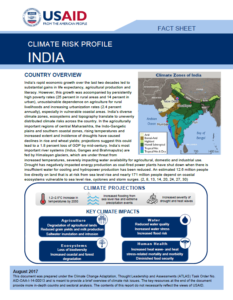
This profile provides an overview of climate risk issues in India, including how climate change will potentially impact agriculture, water, human health and ecosystems.
USAID's Office of Energy and Infrastructure issued a $1.4 million Development Credit Authority (DCA) guarantee in 2012 to a local bank which then lent to SolarNow, a growing private solar company in Uganda.
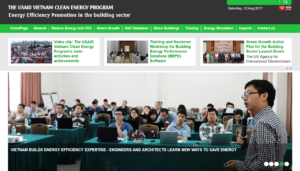
The Vietnam Clean Energy Program is a five year program funded by the United States Agency for International Development (USAID). The program website provides information on Vietnam's Green Growth Action Plan.
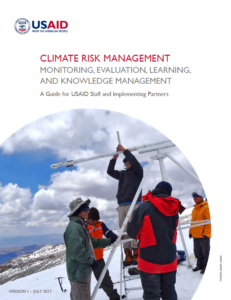
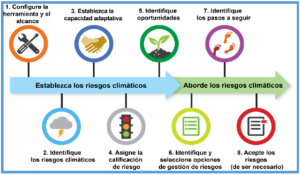
This companion document helps USAID’s community of development practitioners manage climate risks adaptively, learn from the process and record and share learning.
This guide, produced by the USAID Adapt Asia-Pacific project, aims to assist government and non-government agencies at all scales in preparing bankable climate change adaptation proposals to access various sources of financing.
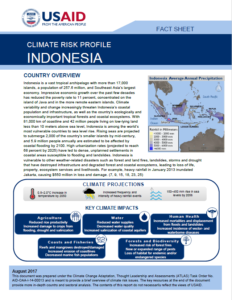
This profile provides an overview of climate risk issues in Indonesia, including how climate change will potentially impact agriculture, water, human health, coasts and fisheries, and forests and biodiversity.
The Sustainable Water Partnership (SWP) is a participatory, holistic approach to water resource management that aims to strengthen water security, improve public health and livelihoods, alleviate poverty, encourage economic growth and promote political stability.
This assessment sought to understand how the integration of climate change considerations takes form during implementation of USAID development projects and to what end.
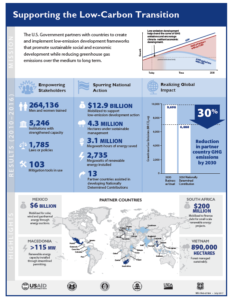
This infographic highlights key results and highlights from the flagship U.S. government initiative Enhancing Capacity for Low Emission Development (EC-LEDS) between 2010-2016.